
Peach fruit moth
Carposina niponensis
Description
How to identify
The peach fruit moth (Carposina niponensis) is a destructive species belonging to the family Carposinidae. Adult moths are relatively small with a wingspan of approximately 12–16 mm, featuring greyish-brown forewings.
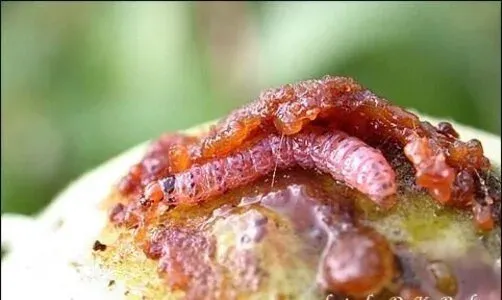
The larvae, which are the main damaging stage, are easily recognized by their pale pink or reddish dorsal side and a smaller, brown head capsule.
The insect typically overwinters as a mature larva inside a silken cocoon located in the soil or under debris around the base of host trees.
Pupation occurs in the spring, and adult emergence is synchronized with the development of fruits on host trees, leading to several generations per season.
Environmental factors like temperature and humidity play a critical role in the moth's life cycle, dictating the timing of egg-laying and larval hatching.
What it damages
This pest is a significant threat to various fruit-bearing trees, primarily targeting peaches, apricots, plums, apples, pears, and quinces.
Newly hatched larvae bore into the fruit, creating complex tunnels that extend toward the center, often causing the fruit tissue to break down.
The internal damage caused by the larvae ruins the fruit quality, making them unsuitable for fresh consumption, storage, or processing.
In addition to physical destruction, the entry points serve as entry gates for pathogens, leading to secondary fungal infections like fruit rot.
Severe infestations can lead to massive premature fruit drop, causing substantial economic losses for commercial orchardists and home growers alike.
Signs of infestation
Small resinous droplets appearing on the surface of the fruit are the most distinct initial sign of infestation as the larva bores into the skin.
Uneven development and lumpy fruit shapes suggest internal damage caused by larval feeding, which disrupts normal growth patterns of the fruit.
Early ripening or discoloration of fruits while still on the tree is a clear indicator that internal tissues are being consumed by the larvae.
Finding excrement-filled galleries inside the fruit during inspection confirms the presence of Carposina niponensis.
Monitoring the adult population with pheromone traps provides early warning signs, allowing growers to time their intervention strategies correctly.
Control measures
Successful management of the peach fruit moth requires an integrated pest management (IPM) strategy that combines physical, chemical, and biological methods.
Cultural practices are fundamental, including the removal and destruction of infested fallen fruit and the cultivation of soil around trees to disturb cocoons.
Chemical applications should be strictly timed based on pheromone trap data to ensure that sprays are applied during the susceptible larval stage.
Biological control agents, such as parasitoid wasps (e.g., Trichogramma species), are effective in suppressing moth populations in sustainable fruit production.
- Regular orchard sanitation and fruit debris removal.
- Strategic timing of insecticide applications.
- Use of pheromone mating disruption techniques.
- Application of environmentally friendly biological pesticides.
Taxonomy
- Latin name
- Carposina niponensis
- Order
- Lepidoptera (butterflies)
- Family
- Carposinidae
- EPPO code
- CARSNI
Discussion
No discussions yet — be the first.