
Peach fruit moth
Carposina sasakii
Description
How to identify
The Peach fruit moth (Carposina sasakii) is a member of the Carposinidae family within the Lepidoptera order. The adult moth has a wing span of approximately 16 mm and possesses greyish-brown forewings with distinct dark markings for camouflage.
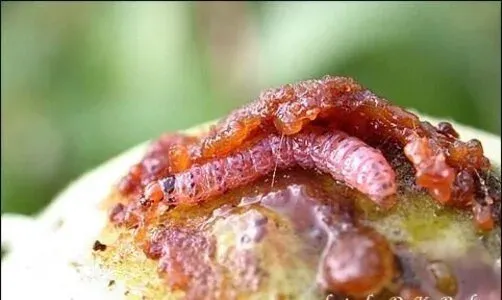
The larvae, which are the main destructive stage, are easily recognized by their pinkish or reddish-orange body color. When fully grown, the larvae reach a length of about 12 to 15 mm.
These pests overwinter as mature larvae in tough, silken cocoons. They typically bury themselves in the soil under host trees or hide within bark crevices to survive the winter period.
In temperate zones, the species completes two to three generations per year. The timing of their life cycle is highly dependent on ambient temperatures, which dictate the speed of development from egg to adult.
Adult moths are nocturnal and fly during the evening. Females deposit eggs individually, usually near the surface or the calyx end of host fruits, where they are protected by a sticky secretion.
What it damages
Carposina sasakii is a significant polyphagous pest. It primarily targets peach, apple, pear, apricot, plum, and quince trees, causing widespread economic loss in fruit production.
Upon hatching, young larvae bore directly into the fruit. They create complex, winding tunnels towards the core, often making multiple entry and exit points, which renders the entire fruit unmarketable.
Infested fruits are prone to premature drop. Furthermore, the tunnels created by the larvae serve as entry points for secondary pathogens, such as fungi, leading to rot and rapid decay on the tree.
In years of high population density, the moth can inflict severe damage, sometimes ruining over 80% of the potential harvest if left uncontrolled during the critical growth phases.
Late-season generations are particularly problematic as they infest nearly mature fruits, causing hidden damage that is often discovered only after the harvest is gathered or during storage.
Signs of infestation
A primary visual indicator of an infestation is the appearance of sap or gum exudation at the point of entry on the fruit surface, commonly seen on peaches and other stone fruits.
In pome fruits like apples or pears, the entry site may appear as a slight depression or a dark spot on the skin, often accompanied by surrounding tissue discoloration due to decay.
Premature ripening and the sudden drop of fruits that appear otherwise healthy is a common sign that the inner flesh has been compromised by larval feeding activity.
Dissecting an infested fruit reveals tunnels filled with dark frass (excrement), which confirms the presence of the pest and distinguishes it from environmental damage or diseases.
Monitoring using pheromone traps provides the most reliable data on moth activity, allowing growers to identify the peak flight times and adjust their intervention schedules accordingly.
Control measures
Effective management begins with strict sanitation. Removing and destroying fallen fruit daily is essential to break the life cycle by preventing larvae from emerging and pupating in the soil.
Cultivating the soil around the base of trees in autumn and early spring can help expose overwintering cocoons to predators and harsh environmental conditions, significantly reducing the next generation.
Biological control, including the use of microbial insecticides like Bacillus thuringiensis, can be highly effective when applied during the egg-hatching phase, before the larvae bore into the fruit.
Chemical control programs should be timed based on pheromone trap monitoring. Applying systemic or contact insecticides during peak egg-laying prevents larvae from establishing themselves within the fruit.
- Installation of pheromone traps for pest monitoring.
- Use of trunk bands to capture crawling larvae.
- Sanitary pruning to remove infested branches.
- Promotion of biodiversity to encourage natural predators.
Taxonomy
- Latin name
- Carposina sasakii
- Order
- Lepidoptera (butterflies)
- Family
- Carposinidae
- EPPO code
- CARSSA
Discussion
No discussions yet — be the first.