
Conwentzia pineticola
Conwentzia pineticola
Description
How to identify
Conwentzia pineticola belongs to the order Neuroptera and the family Coniopterygidae, commonly known as dusty lacewings. These are tiny insects with a wingspan of only 3–4 mm.
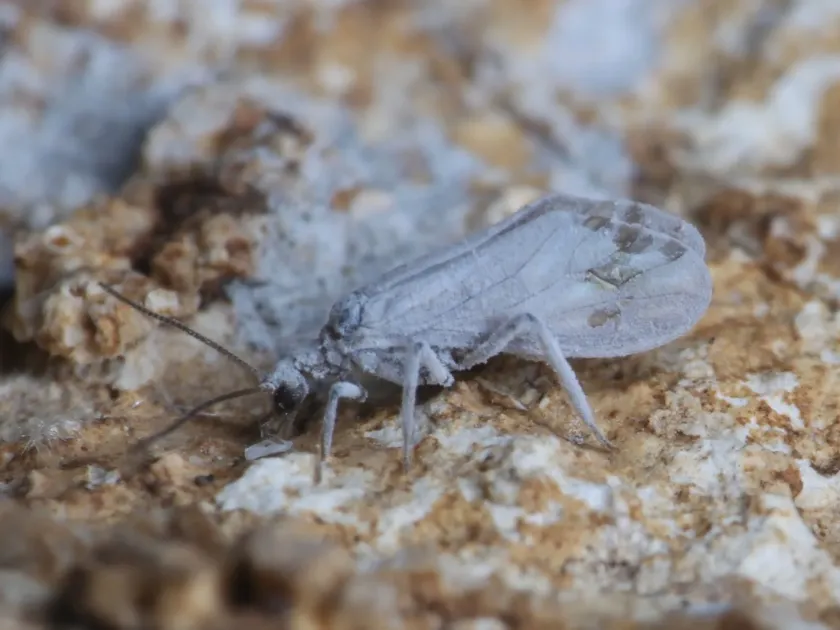
Adults are easily recognized by the dense white waxy secretion that covers their wings and body. This wax gives them a grayish-white, dusty appearance, which is why they are often mistaken for tiny whiteflies.
The larvae of this species are spindle-shaped and often display reddish or yellowish coloration with darker patterns. They possess specialized sickle-shaped mandibles for piercing and sucking fluids from their prey.
Eggs are typically laid singly on the needles of coniferous trees. They are oval-shaped and transition from a pale yellow to a darker orange hue as the larvae develop inside.
It is crucial to emphasize that this insect is a beneficial predator, acting as a natural regulator of various plant-feeding pests in forests and urban landscapes.
What it damages
This species is commonly found on a variety of coniferous trees, including pines, spruces, and firs, occupying the canopy layers regardless of the tree's age.
Unlike true pests, Conwentzia pineticola does not feed on plant tissues. It is a predatory insect that consumes other pests, thereby providing an essential ecological service to the trees it inhabits.
Their diet consists primarily of aphids, scale insects, and various species of spider mites. They are particularly effective at reducing the population density of these harmful organisms.
There is no physical damage to needles, shoots, or bark caused by this insect. On the contrary, their presence is an indicator of a healthy, functioning ecosystem capable of managing pest outbreaks.
In ornamental settings, the waxy deposits left behind by larvae might be confused with signs of disease, but these are harmless and temporary traces of the insect's predatory activity.
When it appears
Adult activity begins in the spring, typically around late April or May, once weather conditions provide stable positive temperatures for development.
The species usually completes two to three generations per year, which ensures a continuous presence of predators during the peak activity months of their prey.
The emergence of adults is often staggered, resulting in an overlap of generations that allows them to maintain consistent pressure on pest populations throughout the summer.
They overwinter in the pupal stage, encased in a silken cocoon. These cocoons are typically hidden within the deep fissures of tree bark or within the leaf litter beneath the trees.
As temperatures rise in the spring, the pupae complete their development, and the newly emerged adults immediately seek out mating partners and areas suitable for oviposition on fresh conifer growth.
Signs of infestation
The primary sign of Conwentzia pineticola presence is the accumulation of fine, white, powdery waxy scales on the needles, left behind after larval molting.
Close observation of the branches will reveal the larvae themselves. They are typically found in close proximity to aphid colonies or mite infestations, where they actively hunt for food.
Empty eggshells on the undersides of needles are another clear indicator that the population has successfully established itself in the area.
Any white, web-like, or powdery wax accumulation on needles that is not associated with spider mite silk or scale insect infestation usually points to the activity of dusty lacewings.
A noticeable decline in pest density on coniferous trees without any chemical intervention is the most reliable sign of the beneficial impact of this predator.
Control measures
No control measures are necessary for Conwentzia pineticola because it is a highly beneficial insect that serves as a natural enemy to several serious plant pests.
The use of broad-spectrum insecticides should be strictly avoided on trees where these predators are present, as such chemicals would destroy the natural balance and may lead to secondary pest outbreaks.
The best practice is to maintain a diverse garden environment that supports populations of natural enemies, ensuring that biological control mechanisms remain active.
If chemical protection against other pests is absolutely required, select highly specific or selective products that minimize impact on predatory insect populations.
Preserving natural habitats, such as windbreaks and undisturbed woody areas, is the most effective long-term strategy for maintaining populations of this beneficial species.
Taxonomy
- Latin name
- Conwentzia pineticola
- Family
- Coniopterygidae
- EPPO code
- CONWPI
Discussion
No discussions yet — be the first.