
Coniopteryx pygmaea
Coniopteryx pygmaea
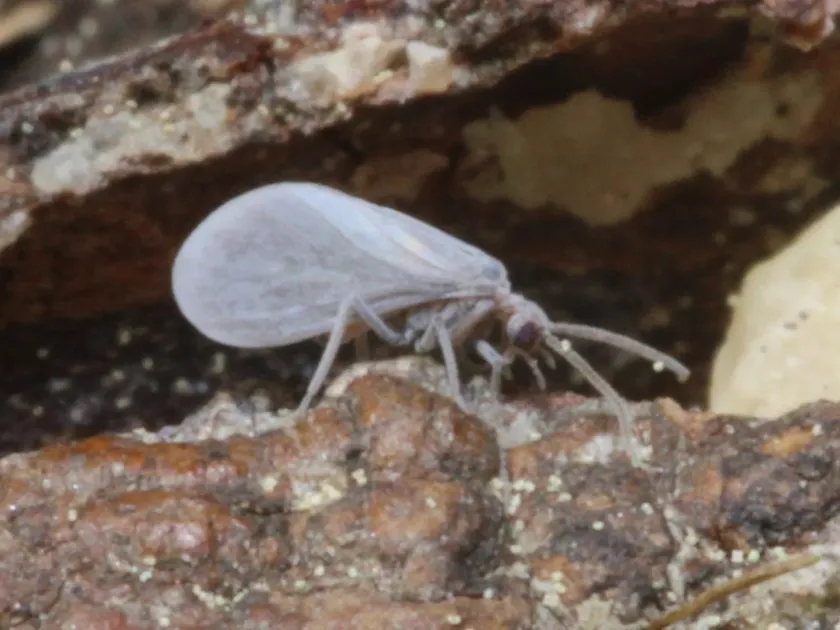
Description
How to identify
Coniopteryx pygmaea belongs to the order Neuroptera and the family Coniopterygidae, commonly known as dustywings. These are very small insects, often reaching only a few millimeters in length, with wings covered in a characteristic white waxy powder.
Adult insects have a distinct head structure with moniliform antennae. Their wing venation is significantly reduced compared to other lacewings, which is a key morphological feature for identification by specialists.
The larvae are predatory, possessing a spindle-shaped body and specialized sucking mouthparts. They are usually reddish-brown or yellowish, which allows them to camouflage against the bark of trees where they hunt for prey.
These insects are elusive and typically found deep within the foliage or on the trunks of fruit trees. Their life cycle is synchronized with the activity of their prey, ensuring high efficiency in pest control during the growing season.
Identification in the field requires close observation, as their small size and cryptic behavior make them easy to overlook, especially during standard pest scouting procedures.
What it damages
Coniopteryx pygmaea is not a plant pest. In fact, it is a highly beneficial insect that serves as a predator of various orchard pests, including aphids, scale insects, and spider mites, which can cause significant damage to crops.
The larvae are voracious feeders that consume the eggs and nymphs of harmful sap-sucking insects. By feeding on these organisms, they actively contribute to keeping pest populations below the economic injury level.
These predators are particularly important in managed orchards where farmers aim for reduced chemical inputs. They act as a natural regulation factor, preventing outbreaks of pests that would otherwise require intensive chemical intervention.
Ecologically, the presence of Coniopteryx pygmaea indicates a healthy, balanced agricultural ecosystem. They are an essential part of the trophic network that maintains the stability of fruit-bearing and ornamental plant populations.
Therefore, any strategy in agriculture should avoid labeling this species as a pest. On the contrary, maintaining their habitat is considered a best practice for sustainable crop protection.
Control measures
There are no control measures for Coniopteryx pygmaea because it is an beneficial organism. Agronomic efforts should focus on conserving its population rather than eliminating it from the fields or orchards.
The most important control strategy is the rational use of pesticides. Broad-spectrum insecticides, especially pyrethroids, can severely impact populations of these beneficial insects and lead to secondary pest outbreaks.
Farmers are encouraged to adopt Integrated Pest Management (IPM) practices, prioritizing selective biological insecticides that target specific pests while remaining harmless to predatory insects like dustywings.
Creating refuges and maintaining biodiversity around the crops can help sustain the population of these insects. Providing nectar sources and undisturbed areas supports their survival during periods of low prey availability.
- Avoid broad-spectrum chemical pesticides.
- Implement selective pest control techniques.
- Monitor for beneficial insects during scouting to avoid unnecessary treatments.
Taxonomy
- Latin name
- Coniopteryx pygmaea
- Family
- Coniopterygidae
- EPPO code
- CPTXPY
Discussion
No discussions yet — be the first.