
Comstock palm scale
Comstockiella sabalis
Description
How to identify
The Comstock palm scale (Comstockiella sabalis) belongs to the Diaspididae family. These tiny insects are characterized by a protective waxy cover, often called a scale, which shields them from environmental hazards.
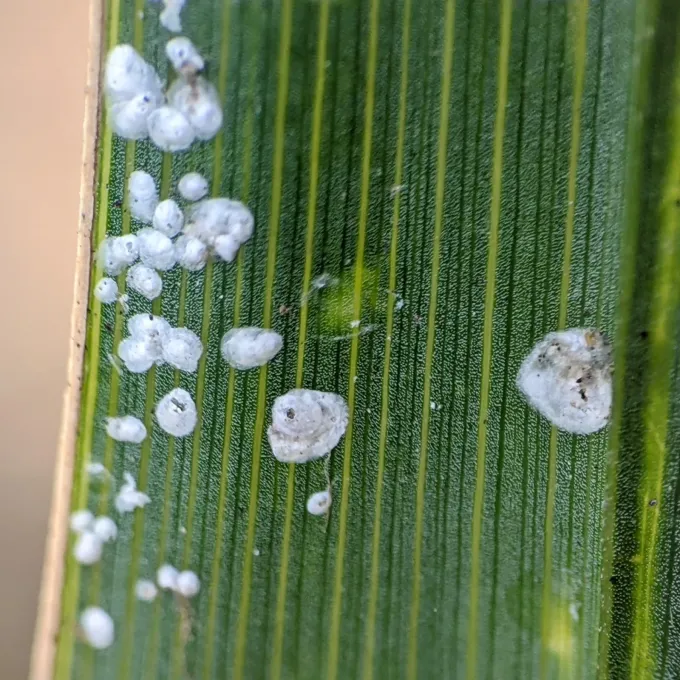
Adult females are sedentary and typically rounded or oval in shape. They firmly attach themselves to the host plant, remaining hidden under their secreted waxy armor throughout their adult life.
The life cycle involves incomplete metamorphosis. While adult males are winged and short-lived, the primary concern for agronomists and gardeners is the female population that feeds on the plant tissue.
This species is highly adapted to tropical and subtropical environments. In indoor gardens, greenhouses, or conservatory settings, they can complete multiple generations in a single year.
The dispersal of the pest occurs primarily at the crawler stage, when mobile first-instar larvae crawl across the plant surface before settling down to feed.
What it damages
This pest is a specialist that primarily affects various species of the Arecaceae (palm) family. It tends to cluster along the leaf veins and the undersides of the palm fronds.
By inserting their mouthparts into the plant tissue, these scales extract vital sap, which leads to nutrient depletion and overall stunted growth of the host palm.
Heavy infestations can result in significant chlorosis, where leaves turn yellow due to the loss of chlorophyll caused by the persistent feeding of the scale population.
If left unchecked, the damage progresses to leaf necrosis and eventual browning of the fronds, severely compromising the aesthetic and structural health of the palm.
Young, rapidly growing palms are especially susceptible to severe damage, which can lead to plant death if appropriate control measures are not implemented in time.
Signs of infestation
Early symptoms include the appearance of small, pale, or whitish spots on the leaves. These often look like minor debris but remain attached when wiped.
The presence of small, waxy, circular, or irregular raised bumps on the foliage is a definitive sign of an established infestation of Comstockiella sabalis.
General wilting and loss of vitality are common indicators. Since the damage is cumulative, the plant may look tired or dull well before severe browning occurs.
Observing the underside of the leaves is crucial, as this is where the majority of the scale population typically hides and feeds, sheltered from view.
Deformed or curled young fronds often emerge if the infestation is concentrated in the growing point or heart of the palm tree.
Control measures
Sanitation is the first line of defense. Quarantine all new plants and inspect existing ones regularly, especially during the warmer months when the pest is most active.
For minor infestations, mechanical removal is effective. Gently scrubbing the infested leaves with a cloth soaked in an insecticidal soap or rubbing alcohol can manually dislodge the scales.
Systemic insecticides are generally required for controlling larger populations. These chemicals are absorbed by the plant, targeting the insects as they feed on the sap.
Timing is critical when applying pesticides. Because the hard shell protects the scales from direct contact, treatments must be repeated to target emerging crawlers.
Maintaining optimal plant health through balanced fertilization and proper irrigation helps the palm withstand the stress caused by the pest and enhances its natural recovery.
Taxonomy
- Latin name
- Comstockiella sabalis
- Order
- Hemiptera (bugs, aphids, leafhoppers)
- Family
- Diaspididae
- EPPO code
- COMTSA
Discussion
No discussions yet — be the first.