
Pigeon louse
Columbicola columbae
Description
How to identify
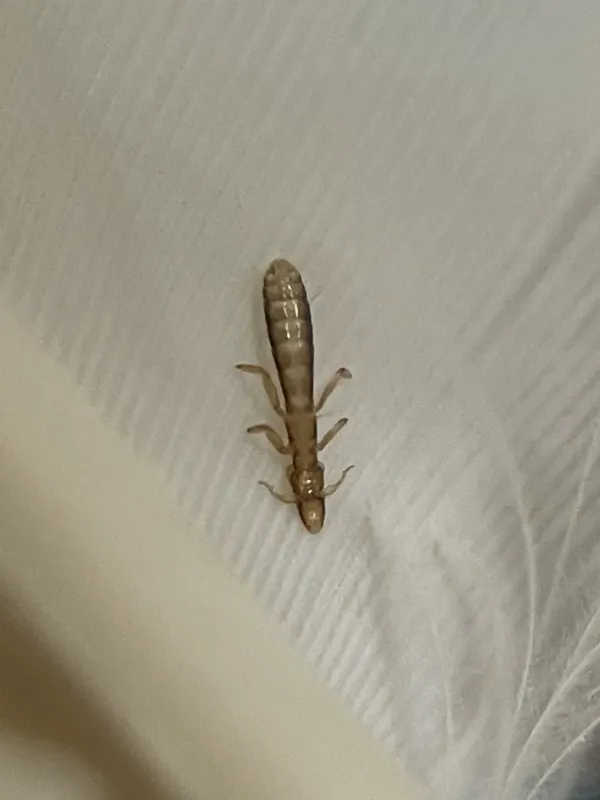
The pigeon louse (Columbicola columbae) is a small parasitic insect belonging to the order Phthiraptera (suborder Ischnocera). It is a highly host-specific ectoparasite that lives its entire life cycle on domestic and wild pigeons.
Adult lice are slender and elongated, measuring approximately 2–2.5 mm in length. Their body color is generally yellowish-brown, allowing them to blend in with the pigeon's feather shafts.
They possess a chewing-type mouthpart, which is specifically adapted for feeding on feather barbs, barbules, and skin debris. They are fast-moving insects that quickly retreat into the deeper layers of feathers when disturbed.
The life cycle progresses through the egg (nit), three nymphal stages, and the adult stage. All development occurs directly on the host bird, making the infestation persistent without proper veterinary treatment.
Under optimal conditions, the life cycle is completed in about 3–4 weeks, allowing for rapid population growth and significant infestation levels within a flock.
What it damages
Pigeon lice primarily target the wing and tail feathers of pigeons. They reside on the inner vanes of the primary and secondary flight feathers, feeding on the structure of the feather itself.
The damage is characterized by the destruction of feather barbs, which results in the appearance of ragged edges and small holes in the feathers, known as "barb destruction."
Infestation causes intense irritation and itching for the bird. The constant discomfort leads to excessive preening, restlessness, and energy loss, which significantly stresses the pigeon.
In heavy infestations, the health of the bird declines, leading to poor feather condition, weight loss, and reduced immune response, which can predispose the pigeon to secondary illnesses.
The loss of feather integrity impacts the bird's flight performance and thermoregulation, which is particularly detrimental for racing and show pigeons.
Signs of infestation
The most visible sign of an infestation is the presence of parallel "lines" of small holes or gaps along the vanes of the flight feathers, caused by the lice feeding on the barbs.
When spreading the wings of an infested bird, one can observe the lice running rapidly between the barbs. They are photophobic and will move quickly away from light to hide.
Observed restlessness, frequent shaking, and aggressive preening, especially during the night, are strong behavioral indicators of lice infestation.
Checking the base of the feathers often reveals clusters of nits, which look like small, hard, whitish or translucent capsules attached firmly to the feather shafts.
A dull, brittle, or "moth-eaten" appearance of the wings is a classic clinical sign that the pigeon has a severe louse population and requires immediate attention.
Control measures
Effective control involves the application of appropriate veterinary-grade insecticides, such as spot-on treatments, sprays, or dusting powders specifically formulated for avian use.
Environmental sanitation is critical. The loft must be cleaned thoroughly, and all nesting materials should be replaced or treated to eliminate lice that may have fallen off the host.
- Treat all birds in the flock simultaneously to break the life cycle.
- Perform deep cleaning and disinfection of the loft environment.
- Use insecticide sprays designed for bird housing areas, ensuring safety for the birds.
- Quarantine all new birds before introducing them to the main population to prevent re-infestation.
Maintenance of high hygiene standards, proper nutrition to support feather health, and routine physical examinations of birds are essential for preventing and managing lice infestations.
Taxonomy
- Latin name
- Columbicola columbae
- Family
- Philopteridae
- EPPO code
- COLMCO
Discussion
No discussions yet — be the first.