
Cup moths
Cochlidion
Description
How to identify
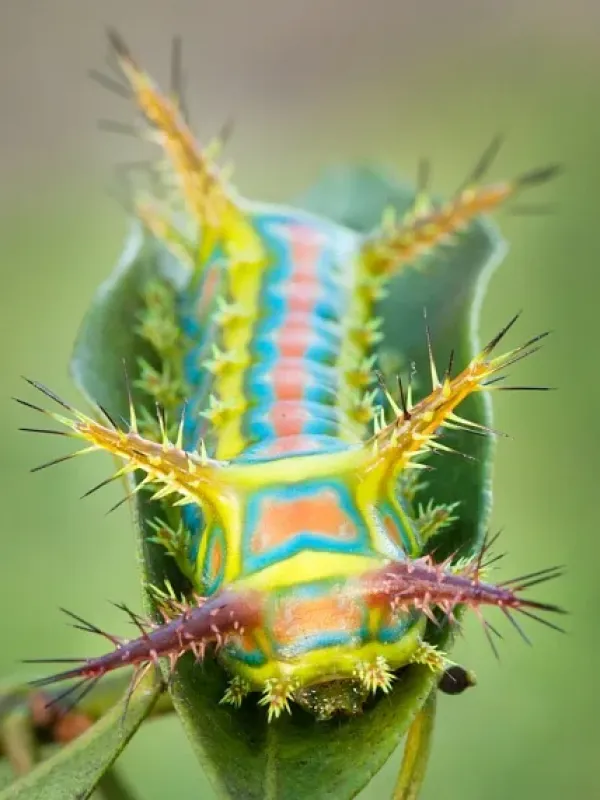
Cup moths (family Limacodidae) are aptly named for the unusual appearance of their larvae, which resemble small slugs. Their bodies are fleshy, lack distinct legs, and possess a smooth or slightly wrinkled skin texture.
Adult moths are generally small, characterized by a stout body shape and hairy thoracic segments. Their wings typically feature subdued brown or yellow tones, providing excellent camouflage against tree bark.
A notable defense mechanism of the larvae is the presence of specialized tubercles with stinging hairs. Contact with these hairs can cause painful irritation or chemical burns in humans and animals.
Systematically, cup moths belong to the order Lepidoptera. The genus Cochlidion is a representative of this family, with a life cycle intrinsically tied to woody plants, trees, and various shrubs.
Identifying this pest is often challenging because the larvae are cryptic, frequently resting on the underside of leaves and mimicking the leaf surface's color and vein structure.
What it damages
These pests primarily infest broad-leaved trees and shrubs. Common host plants include oak, beech, birch, hazel, and various fruit-bearing trees found in orchards and home gardens.
The larvae feed on leaves, creating irregular holes or consuming the entire leaf margin. In cases of high infestation, significant skeletonization of the foliage can occur.
Damage to young shoots and buds during the spring and summer is particularly concerning. The destruction of leaf tissue hinders the plant's photosynthesis and overall vigor.
While cup moths rarely kill mature trees, they weaken the host plant significantly. This increased stress makes the trees more susceptible to secondary infestations and fungal infections.
In commercial orchards and tree nurseries, large-scale outbreaks can cause substantial economic losses, necessitating professional pest management strategies to protect the crop.
When it appears
The life cycle of most cup moths consists of a single generation per year. Larvae overwinter inside tough, spherical cocoons attached to tree trunks or tucked within leaf litter at the base.
In the spring, the larvae pupate inside their cocoons. Adult moths emerge during mid-summer, depending on regional climatic conditions and temperature patterns.
Eggs are typically deposited on the leaf surface, either individually or in small clusters. Embryonic development lasts about two weeks before the young larvae emerge to begin feeding.
The peak activity period for larvae occurs in late summer—specifically August and September. During this time, they feed intensively to build up energy reserves for the coming winter.
As autumn approaches, the larvae finish feeding and construct their protective cocoons, entering a state of diapause that lasts throughout the winter until the next growing season.
Signs of infestation
The primary symptom of an infestation is the presence of characteristic leaf damage: jagged edges or large holes in the foliage. Accumulations of frass (larval droppings) are often found beneath the canopy.
A thorough inspection of the underside of leaves may reveal the larvae themselves. Because of their slug-like appearance, they are often overlooked as mere imperfections on the leaf blade.
Empty cocoons left attached to trunks or branches after the adult moths have emerged serve as strong evidence of a previous or ongoing infestation in the area.
Increased bird activity in the canopy can sometimes signal an infestation, as birds feed on the larvae despite their stinging hairs. This predatory behavior helps keep populations in check.
The presence of adult moths near outdoor lights at night or resting on tree trunks provides a warning sign for growers to monitor the garden for potential larval development.
Control measures
Cultural control methods include clearing away leaf litter from around the base of trees and brushing off loose bark where larvae typically construct their overwintering cocoons.
Biological control is highly recommended for residential areas. Products containing Bacillus thuringiensis (Bt) are effective against early-instar larvae while being safe for beneficial insects.
Chemical intervention should be reserved for severe outbreaks. Always select registered insecticides and ensure strict adherence to safety guidelines and pre-harvest intervals for fruit trees.
Encourage natural predators such as insectivorous birds and parasitic wasps by maintaining a biodiverse environment. This reduces the reliance on synthetic chemicals for pest control.
Hand-picking is effective for small-scale infestations, but it must be done carefully. Always wear thick protective gloves to avoid contact with the stinging hairs that cause skin irritation.
Taxonomy
- Latin name
- Cochlidion
- Order
- Lepidoptera (butterflies)
- Family
- Limacodidae
- EPPO code
- COCDSP
Discussion
No discussions yet — be the first.