
Hen harrier
Circus cyaneus
Description
How to identify
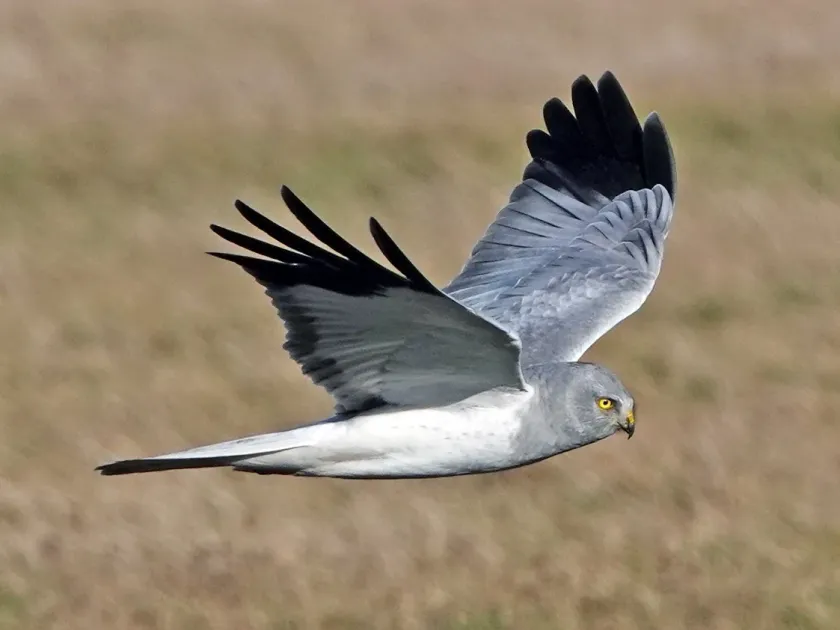
The Hen harrier (Circus cyaneus) is a bird of prey belonging to the family Accipitridae. It is characterized by a distinctive facial disc that aids in detecting prey by sound in tall vegetation.
Adult males are recognizable by their pale grey plumage and white rump. Females and juveniles are brown, providing effective camouflage while nesting on the ground.
These raptors prefer open habitats, such as moorlands, grasslands, and agricultural fields. They are known for their low, gliding flight over vegetation.
The wingspan of an adult typically ranges from 100 to 120 cm. This morphology allows for precise maneuverability when hunting small mammals in thick crop fields.
Hen harriers are widely distributed throughout the Northern Hemisphere, showing remarkable adaptation to human-altered landscapes and farmland.
What it damages
The Hen harrier is not a crop pest. It is an insectivorous and carnivorous predator that feeds almost exclusively on small mammals and occasionally small birds.
There is no evidence of Hen harriers damaging agricultural crops, as they do not consume seeds, fruits, or any plant material. They are considered beneficial to farmers.
The role of this raptor is strictly predatory, serving as a natural regulator of field vole and mouse populations that can cause significant damage to grain production.
Any concerns regarding their impact on agricultural yields are based on misconceptions. Their presence acts as an environmental service that reduces the need for rodenticides.
Even in cases where they nest near agricultural zones, the impact on crop yield is statistically non-existent and does not warrant any intervention.
When it appears
The Hen harrier is a migratory species in many regions, returning to breeding grounds during early spring as temperatures rise and snow melts.
The peak period of activity on farmland coincides with the nesting season, during which parents spend significant time hunting to feed their offspring.
As autumn approaches, the birds begin their migration towards warmer southern territories where hunting conditions remain stable throughout the winter months.
During the summer, these birds are frequently seen patrolling cultivated fields, actively reducing the pest population in the vicinity of their nesting sites.
In winter, populations in milder climates continue to utilize open fields as hunting grounds to secure prey in the absence of dense cover.
Signs of infestation
A typical sign of a Hen harrier's presence is a low-flying, buoyant patrol over crops. The bird often pauses, hovering in place to monitor the ground for movement.
Farmers may notice a reduction in rodent activity in areas frequently patrolled by these raptors. They act as effective controllers of small mammal outbreaks.
Presence of plucking posts or areas where prey is processed can be found, yet these sites contain absolutely no plant matter, confirming their non-pest status.
Hen harriers display a bold but cautious demeanor near farm machinery, allowing for easy identification during seasonal field operations.
Their presence is a positive biological indicator of a healthy, functioning agro-ecosystem that does not rely solely on chemical interventions.
Control measures
No control measures should be taken against the Hen harrier. This species is often legally protected and is an essential ally in integrated pest management.
Farmers are encouraged to maintain hedgerows and field margins to support the population of these beneficial raptors, which in turn reduces rodent pressure.
Responsible agricultural practices include minimizing the use of broad-spectrum pesticides to ensure the safety of these predators in the food chain.
During harvesting, if a nest is spotted, standard environmental mitigation practices should be followed to protect the breeding pair.
Integrated farm management should prioritize the preservation of these predators as they provide free, efficient, and natural rodent control services.
Taxonomy
- Latin name
- Circus cyaneus
- Family
- Accipitridae
- EPPO code
- CIRKCY
Discussion
No discussions yet — be the first.