
Marsh harrier
Circus aeruginosus
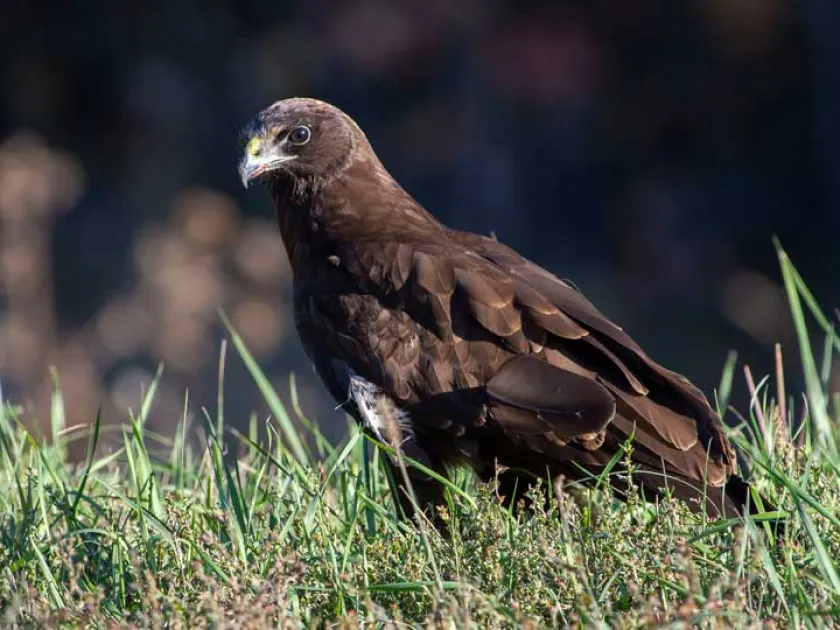
Description
How to identify
The Marsh harrier (Circus aeruginosus) is a large bird of prey belonging to the Accipitridae family, often found near wetlands and field margins.
Adult males are characterized by a striking plumage of reddish-brown and grey, while females are darker with a distinct cream-colored crown.
These raptors have a wingspan reaching up to 130 cm, providing them with excellent soaring capabilities over agricultural landscapes.
The flight pattern is highly recognizable: they glide low over the ground with their wings held in a pronounced V-shape.
They are primarily diurnal hunters, utilizing their sharp hearing and vision to detect prey in dense vegetation.
What it damages
The Marsh harrier is not a crop pest, as its diet does not consist of agricultural produce, seeds, or plant materials.
From an agronomical perspective, these birds are neutral or beneficial, focusing their efforts on controlling mammal populations.
Potential damage is limited to domestic poultry farms, where inadequate protection might attract the bird to small, vulnerable chicks.
Their diet is dominated by small rodents such as voles and mice, which are major agricultural pests capable of destroying grain yields.
By consuming large numbers of rodents annually, they provide a valuable ecosystem service to farmers without the need for chemicals.
When it appears
The breeding season generally spans from early spring to late summer, during which the birds are most active around their nesting sites.
After the breeding cycle, juveniles and adults may roam further into open agricultural fields to exploit food sources.
Migration timing varies by geographical location, with populations in northern ranges moving south for the winter months.
Increased activity is often observed during harvest periods when the reduction of vegetation cover makes hunting for rodents more efficient.
The presence of these birds fluctuates with the seasonal availability of their prey, mirroring the demographic cycles of field mice.
Signs of infestation
Low, searching flights over field edges are the most prominent indicator of their activity in the area.
The discovery of pellets—small clusters of indigestible hair and bones—near field borders suggests regular hunting activity.
Disturbed behavior of small birds and local wildlife often signals the presence of a harrier patrolling the vicinity.
Nests hidden in thick reed beds or tall, undisturbed vegetation at the edges of fields are evidence of a resident breeding pair.
Occasional sighting of the birds perched on fence posts or stalks provides visual confirmation of their presence in the agro-ecosystem.
Control measures
The Marsh harrier is a protected species under international and local laws, making any lethal control methods strictly illegal.
Farmers are encouraged to view these raptors as biological control agents that help manage rodent populations naturally.
To prevent conflicts with poultry rearing, simple physical measures such as netting or enclosed runs are highly effective and humane.
Avoiding the use of anticoagulant rodenticides is essential to prevent secondary poisoning of raptors that feed on contaminated prey.
Integrating hedgerows and buffer zones into farming practices supports the survival of these beneficial predators within the agricultural landscape.
Taxonomy
- Latin name
- Circus aeruginosus
- Family
- Accipitridae
- EPPO code
- CIRKAE
Discussion
No discussions yet — be the first.