
Bat bug
Cimex pipistrelli
Description
How to identify
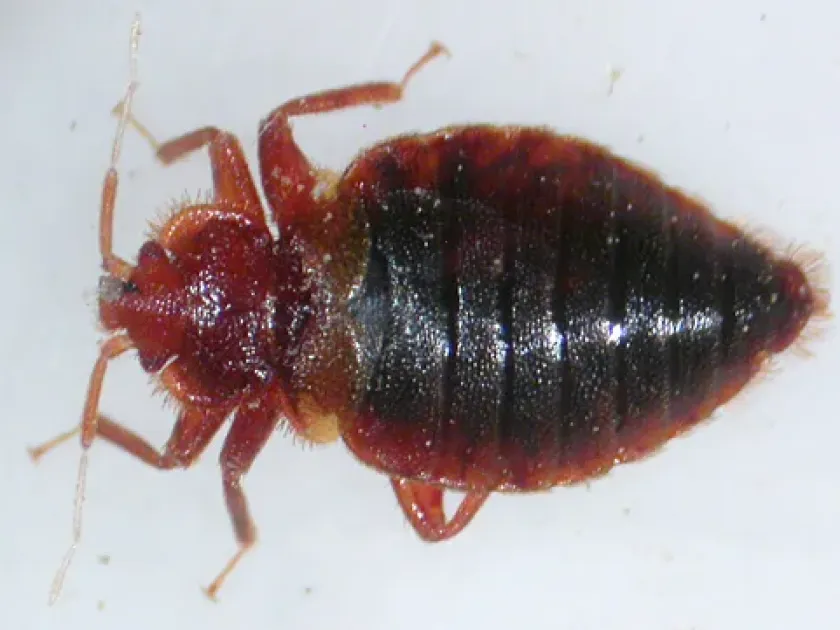
The bat bug (Cimex pipistrelli) is an ectoparasitic insect belonging to the Cimicidae family, order Hemiptera. It is morphologically similar to the common bed bug but is highly specialized for living on bats.
The insect possesses a flattened, brownish body adapted for concealment within narrow crevices, caves, or building voids where bat colonies reside. Adults measure approximately 4 to 5 mm in length.
It lacks wings, which restricts its movement to crawling near its hosts. Their mouthparts are strictly adapted for piercing skin and consuming mammalian blood.
The lifecycle of the bat bug is synchronized with the activity of its bat hosts. Reproduction occurs within the roosting sites, with development stages highly dependent on the stability of the microclimate provided by the colony.
This species remains inactive in the absence of hosts, relying on their return to roosts to sustain their population through blood meals.
What it damages
The bat bug is not a plant pest. It feeds exclusively on the blood of mammals, specifically various species of bats, and does not interact with any plant tissues or crops.
Agricultural damage attributed to "bugs" usually involves phytophagous species such as mirids or stink bugs, which are biologically distinct from the Cimicidae family.
There is no evidence of bat bugs causing economic loss to horticulture, viticulture, or general field crop production. They do not damage leaves, stems, roots, or fruits.
Farmers should not confuse this species with agricultural pests, as its presence in an area is entirely independent of crop health and plant protection strategies.
In conclusion, the species holds no negative relevance to agronomic practices or food security, as it is strictly a parasite of chiropterans.
Control measures
Since the bat bug does not damage crops, there are no agronomic control measures or chemical treatment protocols developed for this species in agriculture.
If an infestation occurs in human-occupied structures due to bat roosting, professional pest management services should be employed to ensure proper exclusion.
Chemical applications intended for crop protection have no effect on, and no application against, the bat bug, as their habitats do not overlap with managed fields.
Exclusion methods, such as sealing gaps and cracks that allow bat access into buildings, are the only recommended management strategies for those affected.
Given the ecological role of bats in controlling nocturnal insect populations, non-lethal management of bat bugs in structural settings is strongly advised.
Taxonomy
- Latin name
- Cimex pipistrelli
- Order
- Hemiptera (bugs, aphids, leafhoppers)
- Family
- Cimicidae
- EPPO code
- CIMXPP
Discussion
No discussions yet — be the first.