
Bat bug
Cimex pilosellus
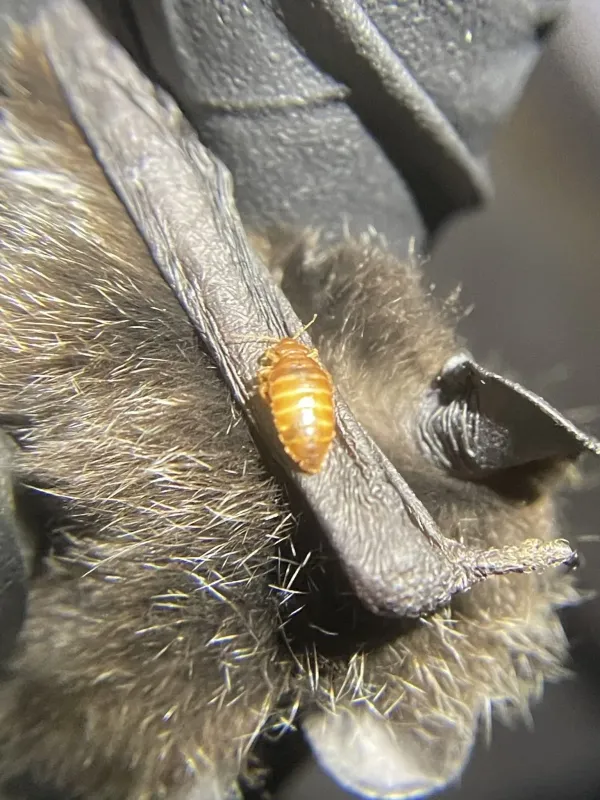
Description
How to identify
The bat bug (Cimex pilosellus) belongs to the order Hemiptera and the family Cimicidae. It is a specialized ectoparasite that has evolved to feed primarily on the blood of bats.
Physically, it is very similar to the common bed bug, possessing a dorso-ventrally flattened body that is reddish-brown in color. The most reliable diagnostic feature is the presence of long setae (hairs) on the pronotum, which distinguishes it from related species.
The life cycle involves an egg stage, five nymphal instars, and the adult stage. The duration of this cycle is highly dependent on ambient temperature and the frequency of blood meals.
These insects are highly resilient and capable of surviving long periods of starvation, allowing them to wait in abandoned bat roosts for new hosts.
They are primarily found in sheltered, dark environments such as caves, hollow trees, and the attics or wall voids of buildings where bat colonies roost.
What it damages
The bat bug is not a pest of agricultural crops. It is an obligate hematophage, meaning its survival depends entirely on consuming blood from vertebrate hosts, specifically bats.
Its impact on agriculture is indirect. By parasitizing bat colonies, they may reduce the population of these natural predators, who are essential for keeping nocturnal pest populations in check.
The bugs do not feed on plant tissues or stored grains; therefore, they pose no threat to the growth or quality of field crops.
If bat colonies are displaced or excluded from a building, these bugs may occasionally bite humans or pets in the vicinity, leading to skin irritation and discomfort.
In a farm management context, the primary concern is preventing these bugs from moving from wildlife roosts into human-occupied areas of buildings.
Signs of infestation
The presence of bat bugs is typically identified by small, dark fecal spots resembling ink splashes on walls or beams near bat roosting sites.
Finding cast-off skins (exuviae) from molting nymphs is a clear indicator of an established, reproducing population in the immediate area.
In heavy infestations, a distinct, sweet, or musty odor produced by the insects' scent glands can be detected in confined spaces.
Observed restlessness or distress in a bat colony can sometimes be attributed to high levels of parasitic pressure from these bugs.
Locating live adults or nymphs in wall crevices or attic spaces, particularly those shared with roosting bats, confirms an active infestation.
Control measures
The most effective strategy is structural exclusion, which involves sealing gaps and installing fine mesh to prevent bats from entering building voids.
Once bats are excluded, residual insecticide sprays approved for indoor use can be applied to cracks and crevices where bugs are likely to hide.
Sanitation is key; removing organic debris, guano, and dust from attics and roosting sites destroys harborages and makes the environment less hospitable.
It is recommended to use humane bat exclusion techniques rather than extermination, as bats provide valuable ecosystem services.
- Seal all entry points to prevent bat access.
- Apply professional-grade residual insecticides to infested voids.
- Thoroughly clean and disinfect areas previously occupied by bat colonies.
Taxonomy
- Latin name
- Cimex pilosellus
- Order
- Hemiptera (bugs, aphids, leafhoppers)
- Family
- Cimicidae
- EPPO code
- CIMXPL
Discussion
No discussions yet — be the first.