
Bed bug
Cimex lectularius
Description
How to identify
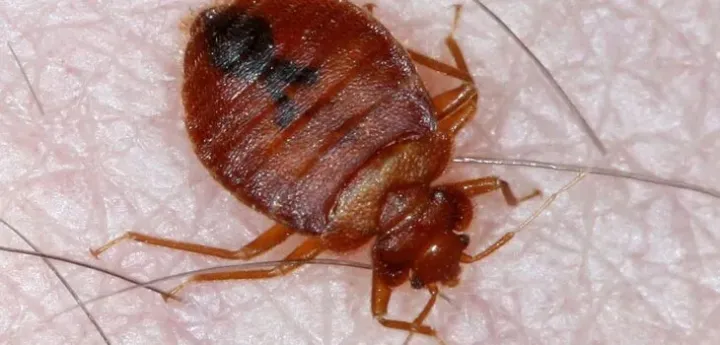
The bed bug (Cimex lectularius) belongs to the order Hemiptera and the family Cimicidae. These are flightless, oval-shaped insects typically measuring about 5 mm in length with a reddish-brown color.
They are nocturnal insects that hide during the day in crevices, mattresses, bed frames, and behind wallpaper. They are highly adapted to living in close proximity to humans.
The life cycle of the bed bug includes the egg stage, five nymphal stages, and the adult stage. Each nymphal stage requires at least one blood meal to progress to the next phase.
While they emit a distinct odor from their scent glands, they are primarily identified by their presence in sleeping areas and their habit of clustering in hidden harborages.
It is critical to distinguish this species from phytophagous bugs; Cimex lectularius is strictly a hematophagous parasite and poses no risk to agricultural crops.
What it damages
Bed bugs do not cause any damage to plants, vegetables, or agricultural infrastructure. They possess a specialized proboscis evolved solely for piercing the skin of warm-blooded mammals.
There is no ecological overlap between the feeding requirements of bed bugs and the survival needs of plants; they cannot consume plant sap or tissues.
In agronomy, bed bugs are considered an urban pest that may incidentally be found in staff facilities, but they are irrelevant to plant health management.
The confusion often stems from the visual similarity between bed bugs and certain species of shield bugs (Pentatomidae), which are major agricultural pests.
Consequently, no plant protection products or pesticides for crop protection are designed to target bed bugs, as they require specialized indoor control measures.
Signs of infestation
Signs of an infestation include itchy, red bite marks on the skin, typically appearing in a linear pattern or clustered in small groups.
Small, rusty, or reddish stains on bed sheets or mattresses occur when bed bugs are crushed after feeding or from their fecal spots.
Dark fecal spots, resembling black felt-tip marker dots, are often found along mattress seams and bed frame corners.
A sweet, musty odor, sometimes described as similar to rotting raspberries or coriander, may be present in heavily infested rooms.
The presence of shed skins, which are pale yellow or translucent, indicates that the population is actively growing through its nymphal stages.
Control measures
Managing bed bugs requires integrated pest management (IPM) practices, focusing on sanitation, heat treatment, and targeted insecticide application.
High-heat treatments, such as steam cleaning or laundering at temperatures above 60°C, are highly effective at killing all stages of the life cycle, including eggs.
Vacuuming harborages and sealing cracks and crevices in infrastructure can significantly reduce the hiding sites available to the population.
- Chemical treatment using registered indoor insecticides.
- Professional pest control services (heat or chemical fogging).
- Heat treatment of textiles and furniture components.
Ensuring that staff housing or office areas are kept free of clutter is the best preventative measure to avoid the establishment of bed bug colonies.
Taxonomy
- Latin name
- Cimex lectularius
- Order
- Hemiptera (bugs, aphids, leafhoppers)
- Family
- Cimicidae
- EPPO code
- CIMXLE
Discussion
No discussions yet — be the first.