
Tropical bed bug
Cimex hemipterus
Description
How to identify
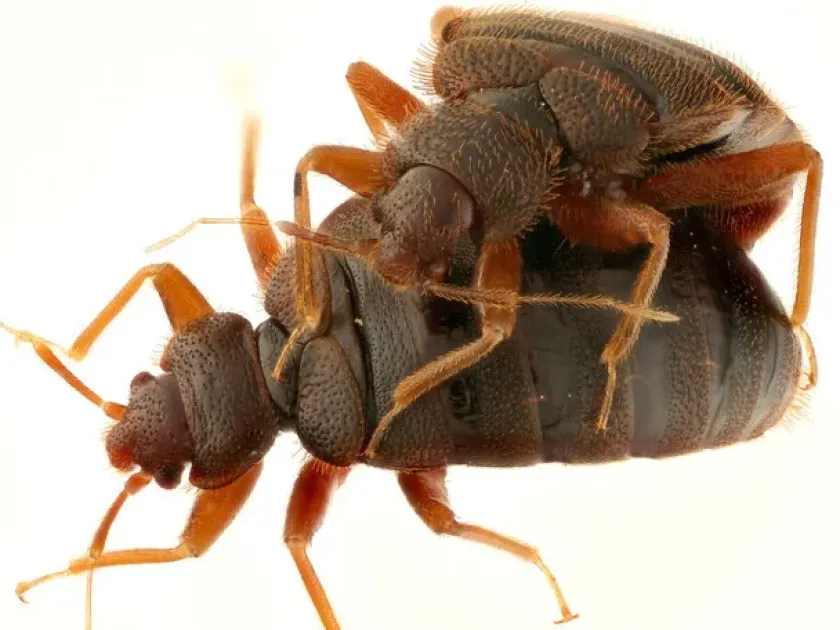
The tropical bed bug, scientifically known as Cimex hemipterus, belongs to the order Hemiptera and the family Cimicidae. It is a synanthropic species morphologically similar to the common bed bug but with a slightly more elongated body shape.
Adult bugs are flat, oval-shaped, and brown, measuring approximately 4 to 6 millimeters in length. They are uniquely adapted to warmer climates, making them a dominant species in tropical and subtropical regions worldwide.
Their life cycle consists of three developmental stages: egg, nymph (five instars), and adult. Every life stage requires a blood meal from a mammalian host to survive and develop further.
Females lay eggs in dark, protected crevices, anchoring them with a sticky secretion. Under optimal environmental conditions, the cycle from egg to adult takes approximately one month.
These insects are strictly nocturnal, spending their days in hiding spots such as wall voids, bed frames, and furniture joints, which makes them masters of concealment.
What it damages
While not a plant pest, the tropical bed bug causes severe hygiene and sanitary issues in agricultural housing, labor camps, and storage facilities.
The primary damage is to the health and well-being of staff and livestock, as constant blood feeding causes stress, skin irritation, and potential secondary infections.
Infestations in agricultural labor housing can lead to poor employee morale and decreased work efficiency due to sleep deprivation and severe discomfort.
The presence of these bugs in storage facilities may compromise sanitary certifications and hygiene standards, posing a risk to business reputation and compliance.
Economic losses arise from the need for frequent professional pest control services and the potential disposal of infested mattresses, furniture, and other inventory.
When it appears
The tropical bed bug is active year-round as long as indoor temperatures remain within the favorable range of 20 to 30 degrees Celsius.
They do not exhibit natural seasonality, as they live exclusively in human-controlled environments where access to food and shelter is consistent.
Population surges often correlate with periods of high humidity and heat, as these factors significantly accelerate the metabolism and reproductive rate of the insects.
Winter conditions do not hinder their activity if the structure is adequately heated, allowing for continuous generations throughout the calendar year.
Dispersal between rooms or buildings is most rapid during warmer seasons when insects can move through ventilation systems and building structures with greater ease.
Signs of infestation
The most common sign of an infestation is the presence of itchy, red bite marks on the skin, often arranged in clusters or linear patterns.
Bed sheets and pillowcases often feature tiny dark brown or reddish spots, which are dried bloodstains left behind after a bug is accidentally crushed during the night.
A distinctive, sweet, musty odor is often associated with large infestations, caused by the scent glands of the bugs when they congregate in high numbers.
- Small clusters of black or dark brown fecal droppings in the crevices of bed frames, baseboards, and mattresses.
- Presence of cast-off nymphal skins (exuviae) as they progress through developmental stages.
- Direct observation of live insects hidden in furniture joints, screw holes, or behind loose wallpaper during night inspections.
In cases of severe infestation, bugs may become visible even during daylight hours due to limited space in their preferred hiding spots.
Control measures
Effective control of the tropical bed bug requires a multidisciplinary strategy, combining mechanical removal with targeted chemical treatments.
Mechanical control, such as high-heat steaming of mattresses and upholstered furniture, is highly effective for killing eggs and nymphs without relying on chemicals.
Chemical control involving non-repellent insecticides or pyrethroids is standard, though care must be taken as some populations have developed resistance to common formulas.
Sealing cracks and crevices in the building structure is crucial to eliminate transit routes and hiding spots, effectively preventing re-infestation.
Engagement of professional pest management services is strongly advised to ensure the use of specialized equipment, such as aerosolized pesticides or thermal treatment for whole-room eradication.
Taxonomy
- Latin name
- Cimex hemipterus
- Order
- Hemiptera (bugs, aphids, leafhoppers)
- Family
- Cimicidae
- EPPO code
- CIMXHE
Discussion
No discussions yet — be the first.