
Chinese lacewing
Chrysoperla sinica
Description
How to identify
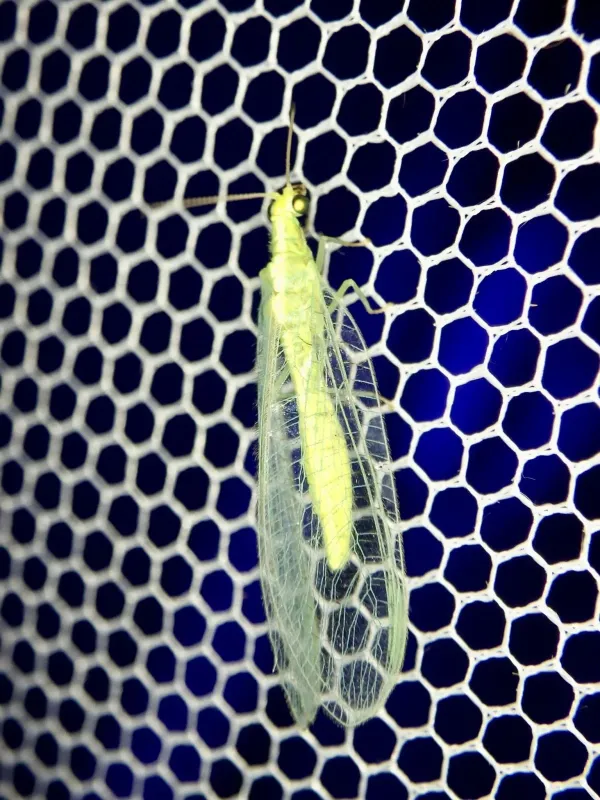
The Chinese lacewing (Chrysoperla sinica) belongs to the order Neuroptera and the family Chrysopidae. Adult specimens possess delicate light-green bodies, transparent wings with intricate venation, and striking gold-colored eyes.
While often recognized as a beneficial predator, in certain agricultural settings, the mass reproduction of Chrysoperla sinica can shift from beneficial to problematic, requiring careful monitoring.
The eggs are uniquely deposited on thin, long stalks to prevent cannibalism among emerging larvae. These stalks are a key diagnostic feature when scouting fields.
Larvae are spindle-shaped and equipped with sharp, sickle-like mandibles. When prey is scarce, they may inadvertently damage plant tissue, turning them into a potential agricultural concern.
The life cycle encompasses four stages: egg, three larval instars, pupa in a silk cocoon, and adult. Development rates are heavily dictated by ambient temperature and humidity levels.
What it damages
Damage primarily occurs during high-density infestations when natural population balances are disturbed, leading to increased feeding pressure on tender plant parts.
Vegetable crops, particularly in protected environments like greenhouses (tomatoes, cucumbers), are most susceptible due to the artificial confinement of the insect population.
Feeding behavior causes mechanical abrasions on the leaf epidermis. These small wounds disrupt the plant's photosynthetic efficiency and lead to water loss.
Persistent feeding creates entry points for secondary infections, including fungal pathogens and bacterial spots, which can significantly decrease marketable crop yield.
Large populations on foliage can also contaminate crops with excrement, hindering the plant's ability to respire and absorb light, thereby stunting vegetative growth.
When it appears
Activity commences in early spring as temperatures consistently exceed +12°C, marking the emergence of overwintering adults from their dormant state.
Population peaks typically occur during mid-to-late summer, coinciding with the peak vegetative growth or fruit development stages of many key crops.
Adults are nocturnal and highly attracted to artificial light sources, a behavior that is utilized for population monitoring using light traps.
As the season cools, adults seek shelter for overwintering in debris, leaf litter, or crevices in bark, which is a critical stage to target for sanitation.
Under optimal conditions, the generation time can be as short as three weeks, facilitating rapid population growth in favorable weather conditions.
Signs of infestation
The presence of eggs on stalks on the underside of leaves or on stems is the earliest indicator of a developing infestation within the crop.
Visual symptoms include light-colored patches or necrotic areas where larvae have attempted to feed. These spots can often be mistaken for early-stage disease.
The appearance of white, silk-like cocoons on plant surfaces or leaf axils is a clear indication that pupation is occurring and the next generation will soon emerge.
Sticky residues on foliage, not attributed to aphids, may indicate localized activity of lacewings feeding on plant-derived sugars or honeydew.
Curled or distorted young shoots often suggest intensive feeding activity by larvae during the early vegetative stage of the host plant.
Control measures
Integrated Pest Management (IPM) is the most effective approach, focusing on maintaining ecological balance to avoid the need for broad-spectrum chemical interventions.
Preserving natural predators of the lacewing, such as spiders and parasitic wasps, helps maintain the population within non-damaging thresholds.
- Regular crop scouting to identify egg-stalk clusters early.
- Sanitation of field borders to remove overwintering sites for adults.
- Deployment of light traps for monitoring and early warning.
- Strategic use of biological control agents where necessary.
- Maintaining crop health through optimal fertilization to promote resilience.
If chemical intervention is unavoidable, choose narrow-spectrum insecticides to avoid harming beneficial pollinators and natural enemies of other pests.
Tillage and soil management practices can help disrupt the pupation sites for the subsequent generation, reducing the overall pressure on the current crop cycle.
Taxonomy
- Latin name
- Chrysoperla sinica
- Family
- Chrysopidae
- EPPO code
- CHPRSI
Discussion
No discussions yet — be the first.