
Green lacewing
Chrysopa abbreviata
Description
How to identify
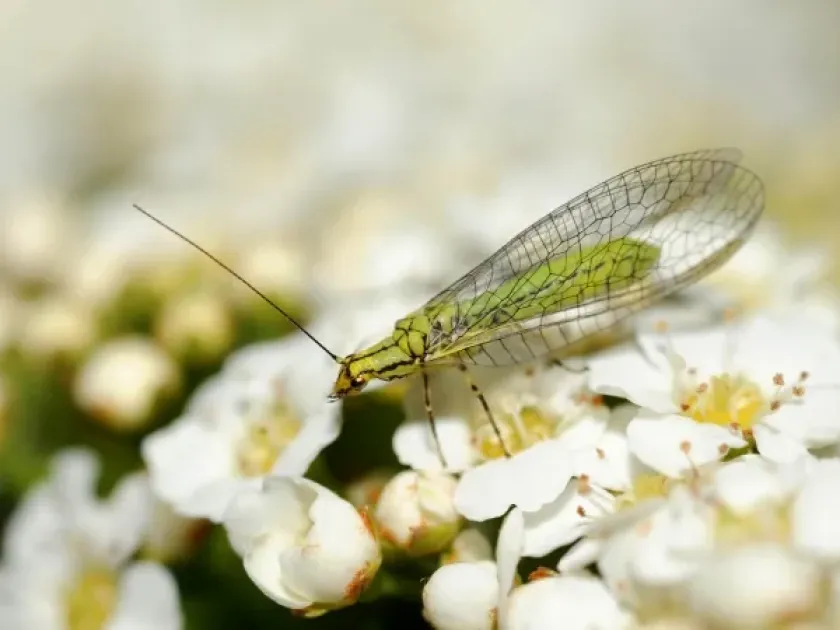
The green lacewing (Chrysopa abbreviata) belongs to the family Chrysopidae, order Neuroptera. These insects are characterized by a delicate green body, long antennae, and prominent golden eyes that give them their name.
The wings are transparent with a complex network of veins, typically held roof-like over the body when at rest. This specific species is identified by wing proportions and structural details that differentiate it from other lacewing groups.
The life cycle consists of four stages: egg, larva, pupa, and adult. Larvae are voracious predators but can cause incidental damage to delicate plant structures when food sources are scarce.
Adults typically overwinter in sheltered locations such as leaf litter, tree bark, or outbuildings. They emerge in the spring to begin the reproductive cycle, with females laying eggs on thin stalks.
The presence of stalks for eggs is a defensive adaptation that separates the developing embryo from both predators and cannibalistic siblings, ensuring higher survival rates for the offspring.
What it damages
Damage occurs when the insects pierce plant tissues to feed on cell sap. This feeding process causes localized wilting, tissue discolouration, and stunting of new growth.
These pests primarily target soft tissues, including young shoots, buds, and leaves of various agricultural crops. Plants under stress are particularly susceptible to severe tissue damage.
The punctures left by the insect serve as entry points for various pathogens, including secondary fungal and bacterial infections that can compromise the plant's overall vascular system.
Severe infestations result in distorted leaf shapes and impaired growth, leading to reduced overall vigour of the plant and a significant decline in harvest quality.
In addition to direct feeding, the insects' activity during the flowering stage can damage reproductive parts, leading to poor fruit set and reduced agricultural productivity.
Control measures
Monitoring is the first line of defense. Regular scouting of the underside of leaves and tips of young shoots is essential to identify the presence of eggs or larvae before they reach critical population levels.
Cultural practices are vital, such as removing debris and weeds that harbor overwintering adults. Maintaining healthy plant growth through proper irrigation and fertilization enhances the plant's natural resistance.
If population thresholds are exceeded, targeted chemical interventions may be necessary. Use selective insecticides that minimize harm to beneficial pollinators and other non-target organisms.
Biological control, such as encouraging local populations of spiders or birds, can help manage pest numbers naturally without disrupting the garden ecosystem.
Integrated Pest Management (IPM) strategies, combining physical barriers, biological agents, and minimal chemical use, provide the most sustainable long-term solution for crop protection.
Taxonomy
- Latin name
- Chrysopa abbreviata
- Family
- Chrysopidae
- EPPO code
- CHROAB
Discussion
No discussions yet — be the first.