
Green lacewing
Chrysopa albolineata
Description
How to identify
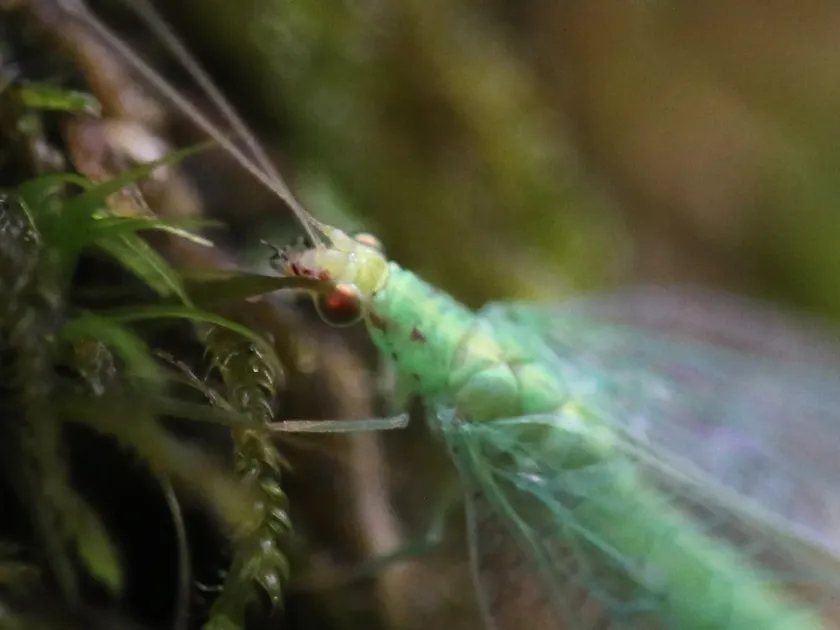
The green lacewing (Chrysopa albolineata) belongs to the order Neuroptera and the family Chrysopidae. It is recognized by its delicate green body and large, transparent wings.
A specific feature of this species is a distinct white longitudinal line running along the dorsal side of the head and thorax, which helps in field identification.
The life cycle encompasses four stages: egg, larva, pupa, and adult. The larvae possess specialized mandibles used for piercing and consuming plant tissues or small prey.
Adults are typically crepuscular or nocturnal, making them difficult to observe during the day. They possess golden, glistening eyes that are typical for the family.
The species overwinters primarily in the adult stage, seeking shelter in protected areas such as tree bark crevices or man-made structures until spring arrives.
What it damages
Both larvae and adults cause damage to crops. They feed on the leaf epidermis and young shoots, which weakens the plant and stunts its overall development.
This pest affects a wide range of vegetables and ornamental plants. It is particularly harmful to young seedlings that cannot withstand tissue loss during early growth.
Feeding sites on the leaves become necrotic, turning yellow or brown. Continuous feeding causes leaves to curl, twist, and eventually drop prematurely from the stem.
Large infestations lead to significant yield reduction because the plants lose their ability to photosynthesize effectively due to extensive leaf damage.
The secondary impact includes increased susceptibility of the plants to various fungal and bacterial pathogens that enter through the feeding wounds.
When it appears
The active development season starts in late spring once average temperatures reach at least 15 degrees Celsius, allowing the first generation to emerge.
Multiple generations can occur throughout the growing season, which explains why the pest remains a constant threat from early June until the end of summer.
Peak population levels are usually reached during the hottest months of the summer, as warm weather accelerates the developmental speed of the larvae.
As autumn approaches and days become shorter, the adults stop active feeding and begin the search for overwintering sites to survive the cold season.
Environmental humidity plays a crucial role in the survival rate of the larvae; moderate to high humidity levels are generally preferred by the species.
Signs of infestation
One of the most obvious signs is the presence of curled leaves containing larvae. These leaves often show signs of irregular feeding patterns or "windowing".
Eggs attached to long, thin stalks on the undersides of leaves are a diagnostic indicator that the pest is breeding actively within the current crop planting.
Small dark droplets of excrement on the leaf surface indicate that larvae have been feeding recently, confirming their presence in the immediate vicinity.
Plants affected by the pest often show signs of severe stress, including wilting and a pale appearance compared to healthy, vigorous plants in the same field.
The presence of fine webbing or debris inside the leaf folds, created by the larvae as they feed and prepare for pupation, is another common symptom.
Control measures
Biological control using microbial insecticides based on entomopathogenic fungi is highly effective and safe for the surrounding environment.
Good agricultural practices, such as controlling weeds in and around the fields, are essential to remove alternative food sources and overwintering sites for the pest.
For large-scale farming, pheromone-based monitoring tools help determine the timing for targeted applications, ensuring the pest is managed before it spreads.
Conserving natural predators, such as wasps and birds that prey on larvae, can help keep the population below the economic damage threshold naturally.
If chemical control becomes necessary, use systemic insecticides and strictly adhere to pre-harvest intervals to ensure the safety of the final agricultural produce.
Taxonomy
- Latin name
- Chrysopa albolineata
- Family
- Chrysopidae
- EPPO code
- CHROAL
Discussion
No discussions yet — be the first.