
California lacewing
Chrysopa californica
Description
How to identify
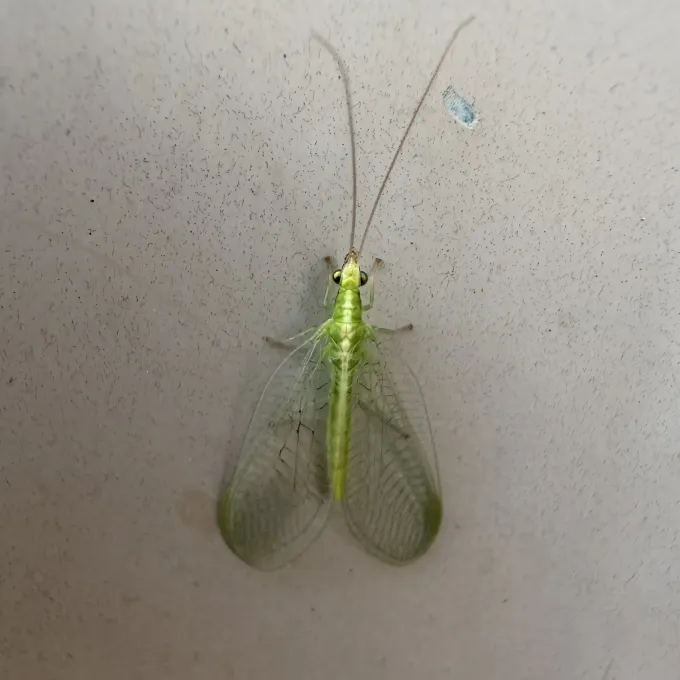
The California lacewing, scientifically known as Chrysoperla californica, is a member of the Chrysopidae family within the order Neuroptera. Adult insects are characterized by their delicate, lace-like wings, slender green bodies, and large, shimmering eyes that give them their common name.
Larvae of this species are often referred to as aphid lions due to their predatory behavior. They possess robust, sickle-shaped mandibles used to capture and consume soft-bodied prey such as aphids, mites, and various insect eggs, making them a significant presence in diverse ecosystems.
The life cycle encompasses four main stages: egg, larva (three instars), pupa within a silk cocoon, and adult. Development speed is highly sensitive to environmental temperatures, with multiple generations possible during a single growing season under optimal conditions.
Adults typically overwinter in sheltered habitats, such as tree bark crevices, leaf litter, or man-made structures. They emerge in the spring to initiate mating, often becoming active in the early stages of the pest season.
Recognizing the species in the field involves looking for the distinctive eggs laid on thin stalks to protect them from cannibalistic larvae. The presence of larvae on foliage is a positive sign for natural pest regulation in most agricultural settings.
What it damages
While primarily considered beneficial predators, excessive populations of California lacewing in specific environments can occasionally cause minor aesthetic damage to plants. Adults may inadvertently damage floral parts or tender shoots while seeking sugars and nectar.
In high-value horticultural crops like grapes or certain orchard fruits, large aggregations of adults during harvest time can be a nuisance, although they rarely cause significant economic yield loss. Their impact is generally considered negligible compared to the benefits they provide as biological control agents.
The main concern arises when the lacewing population outcompetes other specialized natural enemies or when their feeding activity interferes with sensitive crop stages. However, direct plant damage is sporadic and usually does not require intervention.
Crops prone to attracting lacewings include those with high nectar secretion or those heavily infested with honeydew-producing pests. In these scenarios, the presence of lacewings is a symptom of an existing pest issue rather than the cause of the crop damage.
Agronomic assessments focus on balancing the predator-prey ratio. If the lacewing population is high, it usually indicates a successful establishment of biological control rather than a threat to the plant health itself.
Control measures
The management of California lacewing involves conservation biological control. The most effective approach is to minimize the use of broad-spectrum synthetic pesticides, which are toxic to lacewings and can cause secondary pest outbreaks by eliminating these natural predators.
Providing supplementary food sources, such as pollen and nectar from companion plantings like buckwheat or dill, helps maintain a stable population of lacewings throughout the season. This ensures they are present when pest populations begin to rise.
When chemical control of actual crop pests is necessary, preference should be given to selective or biorational insecticides that have minimal residual impact on beneficial insects. Timing applications to avoid periods of high lacewing activity is essential.
Monitoring populations using sticky traps or visual leaf counts allows for informed decision-making. These tools help differentiate between beneficial predator activity and the presence of primary pests that require immediate management.
- Minimize the use of broad-spectrum chemical pesticides.
- Incorporate floral strips into the landscape to provide nectar sources.
- Use selective biorational insecticides for pest outbreaks.
- Implement regular scouting to distinguish predators from target pests.
- Promote overwintering sites like hedgerows and undisturbed vegetation.
Taxonomy
- Latin name
- Chrysopa californica
- Family
- Chrysopidae
- EPPO code
- CHROCA
Discussion
No discussions yet — be the first.