
Green lacewing
Chrysoperla lucasina
Description
How to identify
Chrysoperla lucasina is a species of insect belonging to the family Chrysopidae, known as green lacewings.
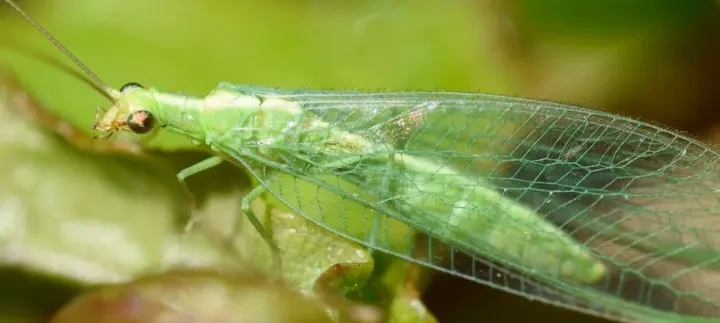
Adults are characterized by their slender bright green bodies, large iridescent gold eyes, and delicate, transparent wings with a complex network of veins.
The wings are typically held roof-like over the body when resting, and the body length ranges between 10 to 15 millimeters.
The larvae, often referred to as "aphid lions," have elongated, flattened bodies with a grayish or brownish color, covered in bristles and tubercles.
Their mouthparts are sickle-shaped and highly specialized, designed to pierce prey and extract fluids, reflecting their predatory nature.
What it damages
Although widely regarded as beneficial predators of aphids and other small insects, Chrysoperla lucasina can sometimes reach high densities.
When natural prey is scarce, larvae may occasionally probe plant tissues, causing minor necrotic spots or leaf deformation on young growth.
Feeding activity on soft plant parts can weaken younger seedlings, making them more susceptible to subsequent environmental stress.
While generally not considered a major agricultural pest, their unexpected behavioral shifts in disturbed ecosystems require careful observation.
Significant damage is rare and typically occurs only when the population balance is disrupted by excessive use of broad-spectrum chemical sprays.
When it appears
The life cycle begins in spring, with adult activity starting when temperatures rise consistently above 10–12 degrees Celsius.
The first generation appears in late spring, at which point females lay their eggs on long stalks attached to the underside of leaves.
This species is multivoltine, typically completing two to three generations annually, depending on the specific climatic conditions of the region.
Population peaks are generally observed during the warmer months, coinciding with the peak development of both prey and host plants.
As autumn approaches and temperatures drop, adults seek protected refuges such as bark crevices, leaf litter, or debris to survive the winter.
Signs of infestation
The most distinctive sign of presence is the discovery of eggs attached to individual, slender threads on the underside of leaves.
Evidence of larval activity includes small, localized punctures on tender leaf surfaces that may lead to minor wilting or discoloration.
The presence of shed exoskeletons (exuviae) resulting from larval molting is a clear indication that a population is developing on the plant.
High numbers of adults attracted to artificial light sources during the night are often a sign of a robust local population.
Observing larvae actively exploring stems and foliage is a direct sign, usually indicating a healthy but potentially dense concentration of these insects.
Control measures
The most effective strategy for managing these insects is the preservation of natural habitats to maintain a healthy predator-prey equilibrium.
Avoid the use of broad-spectrum insecticides that inadvertently eliminate the natural predators that keep lacewing populations in check.
Implementing a diverse landscape with native plants ensures that adults have access to essential nectar and pollen resources.
If population control is required, utilize selective biological control agents that target specific life stages without harming the broader ecosystem.
- Monitor crops for the presence of stalked eggs.
- Promote biodiversity to maintain ecological balance.
- Avoid non-selective chemical pesticides.
Taxonomy
- Latin name
- Chrysoperla lucasina
- Family
- Chrysopidae
- EPPO code
- CHPRLU
Discussion
No discussions yet — be the first.