
Walker's lacewing
Chrysopa walkeri
Description
How to identify
Walker's lacewing Chrysopa walkeri belongs to the order Neuroptera and the family Chrysopidae. While many family members are beneficial predators, this specific species requires careful identification by agronomists.
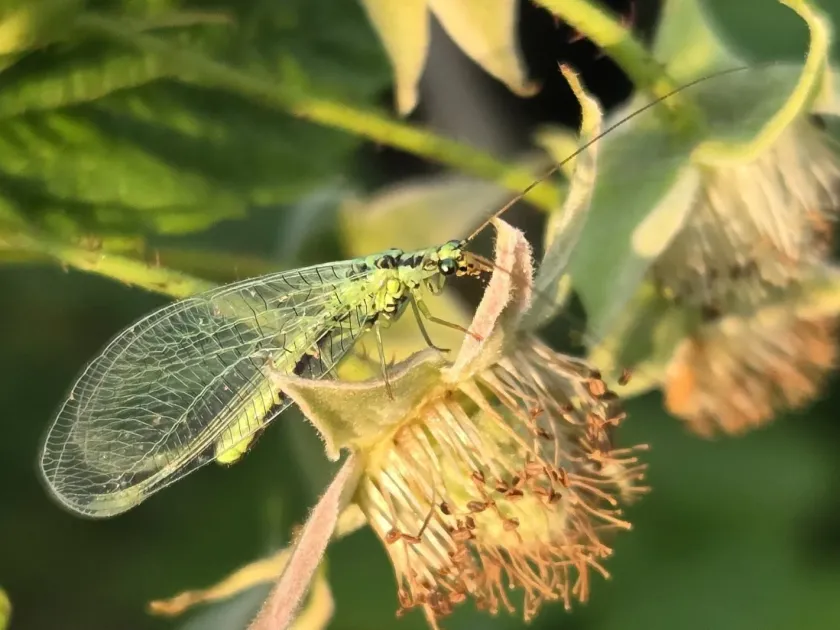
Adults typically display a bright green to yellowish body with long antennae and delicate wings characterized by complex venation. The golden, metallic appearance of the eyes is the most recognizable feature of this group.
The life cycle undergoes complete metamorphosis, consisting of egg, larva, pupa, and adult stages. Larvae are slender with sharp mandibles, adapted for feeding on both animal prey and plant juices.
Identifying the exact species involves examining the wing vein structure and male genitalia. Field conditions often make it difficult to distinguish this species from beneficial predatory lacewings.
They are primarily found in temperate zones, thriving in diverse environments such as orchards, field margins, and cultivated land where conditions favor their reproduction.
What it damages
Damage caused by Walker's lacewing is often related to the feeding habits of larvae and adults on tender tissues. They may target buds and young foliage, causing stunted development.
Host crops typically include stone and pome fruits. The pest damages the epidermal layer of leaves, leading to chlorosis, deformation, and necrotic spots that affect the plant's overall photosynthetic capacity.
Severe infestations can lead to significant physiological stress in young trees, reducing their vigor and overall yield potential for the current season. This weakening makes plants more susceptible to pathogens.
The damage often creates entry points for secondary bacterial and fungal infections, which can result in further tissue decay and branch dieback in sensitive cultivars.
Continuous monitoring of the leaf surface and terminal shoots is essential to assess the level of infestation and determine whether intervention is necessary.
When it appears
Activity begins in early spring as soon as temperatures rise above the development threshold. Adults emerge from their overwintering sites to mate and lay eggs on host plants.
Multiple generations may occur during the growing season, depending on the climatic conditions of the region. Warmer summers typically result in more rapid generation turnover.
Overwintering usually takes place in the adult stage within sheltered locations such as leaf litter, tree bark cracks, or dry debris. These sites provide protection against winter frost.
Population density typically peaks in mid-summer, when conditions for larval development and adult activity are optimal. This is when the most significant damage to vegetation occurs.
As autumn progresses, insects prepare for diapause. Changing day lengths and dropping temperatures trigger the move toward overwintering habitats to survive until the following spring.
Signs of infestation
Signs of infestation include visible lesions on young foliage, curled leaves, and areas of tissue browning. The presence of larvae on the underside of leaves is a clear indicator.
- Presence of slender larvae with pincer-like jaws on new growth.
- Deformed, stunted, or necrotic terminal buds.
- Characteristic stalked eggs found on the undersides of leaves or stems.
- General yellowing and loss of leaf turgor.
- Increased presence of flying adults near artificial light sources at night.
An experienced eye will notice the characteristic uneven growth patterns and leaf damage. Detecting these signs early is crucial for maintaining crop health and productivity.
Control measures
Integrated pest management starts with cultural practices, such as removing debris and weeds that serve as overwintering reservoirs for the insect populations.
When the population threshold is exceeded, application of specific insecticides is recommended. Selecting products that minimize impact on beneficial insects is a priority.
Rotating chemical classes is essential to manage resistance development. Adhering to manufacturer guidelines regarding application timing and dosage is mandatory for safety and efficacy.
Biological control agents, such as fungi or predatory insects, can play a role in reducing numbers. Maintaining a healthy ecosystem around the field encourages natural control.
Using pheromone traps and regular scouting allows for data-driven decisions regarding pesticide use, ensuring that treatments are cost-effective and environmentally conscious.
Taxonomy
- Latin name
- Chrysopa walkeri
- Family
- Chrysopidae
- EPPO code
- CHROWA
Discussion
No discussions yet — be the first.