
Chrysopa pallens
Chrysopa pallens
Description
How to identify
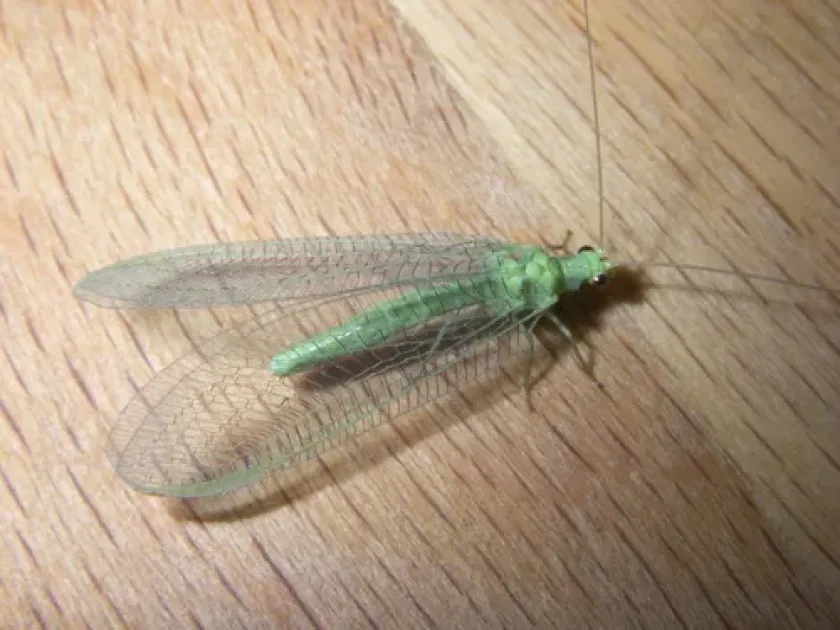
Chrysopa pallens belongs to the order Neuroptera and the family Chrysopidae. It is a green insect characterized by its delicate, net-veined wings and metallic golden eyes.
Unlike other related species, Chrysopa pallens is distinguished by the lack of dark spots on its wing veins. Its slender body and green coloration provide excellent camouflage among leaves.
The larvae are known for their spindle-shaped bodies and large, sickle-like jaws used to pierce prey. They are often covered in debris, which serves as a protective layer against predators.
The lifecycle includes four distinct stages: egg, larva, pupa, and adult. The development rate is highly dependent on ambient temperature and food availability.
While often beneficial, this species can occasionally cause damage to cultivated plants when natural prey populations are insufficient for their needs.
What it damages
The primary damage is caused by the larval stage, which, when prey is scarce, may feed on the tender sap of young plants, including vegetable crops and fruit trees.
Feeding often results in small puncture wounds on the leaf surface and buds, which disrupts the photosynthetic capacity of the plant and limits overall growth.
Severe infestations on young seedlings can lead to significant stunting and the deformation of new leaves, reducing the aesthetic and commercial value of the crops.
In fruit crops, feeding on the skin of developing fruits can leave scars, which serve as entry points for secondary infections or fungal pathogens.
The accumulation of waste products on plant surfaces can also attract sooty mold, further hindering the plant's ability to maintain healthy photosynthesis.
When it appears
The active season for Chrysopa pallens typically begins in late spring, as temperatures rise consistently above 15 degrees Celsius.
The population density usually peaks during mid-summer, coinciding with the development of the second and third generations of the year.
Activity continues into early autumn, with multiple generations completing their cycle depending on the climatic conditions of the specific geographic area.
As colder temperatures approach, adults seek sheltered locations, such as crevices in tree bark, leaf litter, or outbuildings, to enter diapause for the winter.
Environmental humidity plays a crucial role in their survival, with prolonged droughts sometimes forcing them to move towards irrigated cultivated areas.
Signs of infestation
The most recognizable sign is the presence of eggs attached to long, thin silk stalks on the undersides of leaves, which are unique to this family of insects.
Observing larvae on the terminal shoots of plants is another indicator, as they move rapidly while scouting for food sources.
Visible physical damage includes necrotic spots on leaves and the curling of young shoots, which suggests active feeding on plant tissues.
The presence of sticky excretions or mold growth on the foliage can also indicate that the pest has been active in that particular area for some time.
In evenings, the flight of adults toward external light sources can be used as a monitoring tool to assess population levels on a farm or garden.
Control measures
Integrated Pest Management (IPM) is the best approach, focusing on maintaining ecological balance rather than total eradication of the insect population.
Reducing the use of broad-spectrum insecticides is essential, as these chemicals often harm natural predators that keep the population in check naturally.
Cultural practices, such as removing weeds and cleaning up plant debris after the harvest, significantly reduce the available overwintering sites.
If population levels cross the economic threshold, biological pesticides or targeted selective treatments should be utilized to minimize environmental impact.
Monitoring fields regularly allows for timely intervention, ensuring that control measures are applied only when necessary to protect the health of the crops.
Taxonomy
- Latin name
- Chrysopa pallens
- Family
- Chrysopidae
- EPPO code
- CHROSE
Discussion
No discussions yet — be the first.