
Goldeneye lacewing
Chrysopa oculata
Description
How to identify
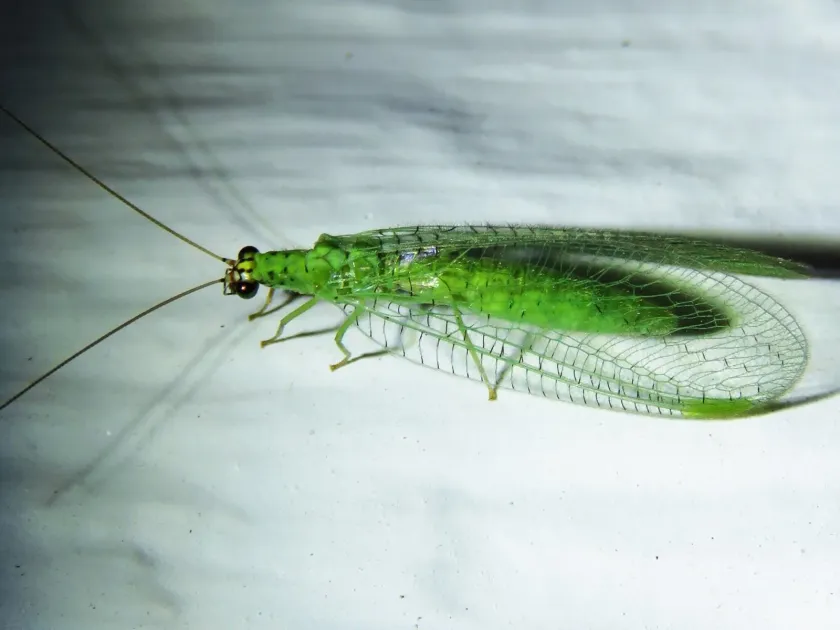
The Goldeneye lacewing (Chrysopa oculata) belongs to the Chrysopidae family within the order Neuroptera. These insects are easily recognized by their metallic, gold-colored eyes and delicate lace-like wings.
Distinguishing characteristics include prominent black spots at the base of the antennae and specific facial markings that separate them from related species.
The larvae are specialized predators, often referred to as "aphid lions" due to their aggressive hunting behavior and sickle-shaped mandibles used to capture prey.
While the larvae are predatory, the adult insects primarily feed on nectar, pollen, and honeydew, making them important components of the ecosystem.
Their life cycle typically consists of four stages: egg, larva, pupa, and adult. They are prolific breeders capable of multiple generations per season in favorable climates.
What it damages
Contrary to being a pest, the Goldeneye lacewing is an essential beneficial insect that provides natural pest suppression services in agricultural settings.
The larvae feed voraciously on soft-bodied pests such as aphids, spider mites, mealybugs, and whiteflies, significantly reducing their impact on crops.
Adult lacewings do not harm plants; they assist in pollination, which can contribute to better crop yields in fruit orchards and vegetable farms.
Damage to plants by this species is non-existent. They are considered a cornerstone of integrated pest management (IPM) strategies worldwide.
By keeping aphid populations in check, they prevent the transmission of plant viruses that are commonly vectored by those sap-sucking pests.
When it appears
Lacewing activity begins in early spring, as temperatures rise and the first pest populations emerge on growing crops.
The peak period for larval activity occurs during mid-summer, coinciding with the peak aphid population growth on leafy greens and ornamental plants.
As daylight hours decrease and temperatures drop in autumn, the adults seek protected areas such as bark crevices or sheds to enter diapause.
The synchronization between the emergence of the lacewing and the prey insects is critical for maintaining population balance in the agroecosystem.
Depending on the latitude, these insects may complete several life cycles, ensuring continuous protection throughout the growing season.
Signs of infestation
The most distinctive sign of lacewings is the presence of eggs laid on long, slender stalks, which protect them from predators and cannibalistic siblings.
Observing larvae actively feeding on aphid clusters on the undersides of leaves is a clear indicator of successful biological control.
Empty, shriveled exoskeletons of aphids indicate that the larvae have effectively consumed the contents of their prey.
The presence of adult lacewings, often spotted around lights at night, signifies a healthy population in the surrounding area.
A noticeable decrease in the population of sucking pests without the use of chemical interventions confirms the activity of these beneficial predators.
Control measures
To encourage the presence of Goldeneye lacewings, gardeners and farmers should avoid using broad-spectrum insecticides that kill beneficial insects.
Providing a diverse habitat with flowering plants ensures a consistent supply of nectar and pollen to support the adult stages of the lacewing.
In greenhouse operations, commercial biological control programs often release lab-reared larvae to manage pest outbreaks effectively and sustainably.
Strategic timing of pest management efforts ensures that natural enemies are protected during their most vulnerable developmental stages.
- Avoid non-selective pesticides.
- Plant nectar-rich flower borders.
- Preserve overwintering sites.
- Use selective biological agents.
- Monitor pest thresholds before treating.
Taxonomy
- Latin name
- Chrysopa oculata
- Family
- Chrysopidae
- EPPO code
- CHROOC
Discussion
No discussions yet — be the first.