
Chrysopa nigricornis
Chrysopa nigricornis
Description
How to identify
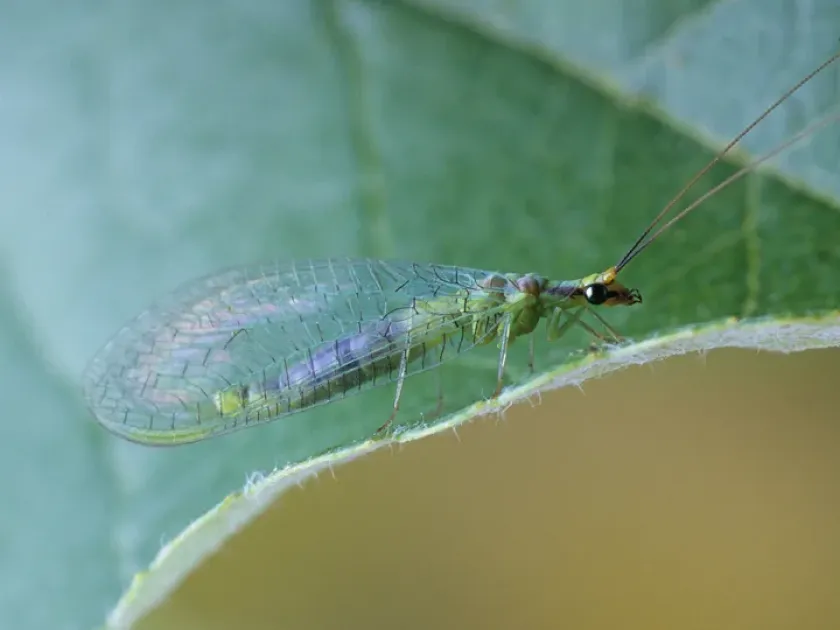
Chrysopa nigricornis, commonly known as a type of green lacewing, belongs to the order Neuroptera and the family Chrysopidae. They are slender insects with delicate, transparent wings and distinctive golden eyes.
The primary identification characteristic of this species is the blackish coloration of the antennal bases, which sets it apart from many other similar species found within the same family.
The larvae are specialized predators. They are often called "aphid lions" due to their aggressive hunting behavior, using their sickle-shaped mandibles to capture and consume various soft-bodied prey.
The life cycle involves complete metamorphosis: egg, larva, pupa, and adult. Eggs are laid on long, thin stalks, a classic adaptation that prevents the early-stage larvae from eating each other.
This species is highly adaptable to various climatic zones, making it an efficient natural regulator of pest populations in both agricultural and forest environments throughout the season.
What it damages
Chrysopa nigricornis is not considered a crop pest. On the contrary, it is recognized as a beneficial entomophagous insect that plays a crucial role in suppressing populations of aphids, mites, and scales.
Sometimes, farmers may misidentify these insects as pests because they are observed on plants already suffering from damage, while in reality, they are present to feed on the actual pests.
The reduction of lacewing populations in agricultural landscapes is a major driver of pest outbreaks, as it removes one of the most effective natural checks on insect numbers.
While some adult lacewings feed on pollen and nectar, this does not result in significant plant damage, and the overall benefit provided by their predatory larvae far outweighs any minor feeding activities.
Managing for the presence of this insect is essentially a strategy for crop health, as they actively reduce the need for chemical interventions to control common garden pests.
Control measures
The most effective strategy to "control" or manage this species is to promote its survival and reproduction through integrated pest management (IPM) practices.
Creating habitats that support beneficial insects, such as flower strips or natural boundary vegetation, ensures that Chrysopa nigricornis has access to alternative food sources during low-prey periods.
Implementing targeted pest management strategies helps avoid the accidental destruction of these beneficial predators, which often happens when broad-spectrum insecticides are applied unnecessarily.
Farmers should monitor fields for both pest density and the presence of natural enemies before deciding to apply any chemical control, prioritizing ecological balance.
- Maintain permanent vegetation cover.
- Avoid broad-spectrum chemical sprays.
- Prioritize selective biological control agents.
- Integrate landscape management strategies.
Taxonomy
- Latin name
- Chrysopa nigricornis
- Family
- Chrysopidae
- EPPO code
- CHRONI
Discussion
No discussions yet — be the first.