
Green lacewing
Chrysopa microphya
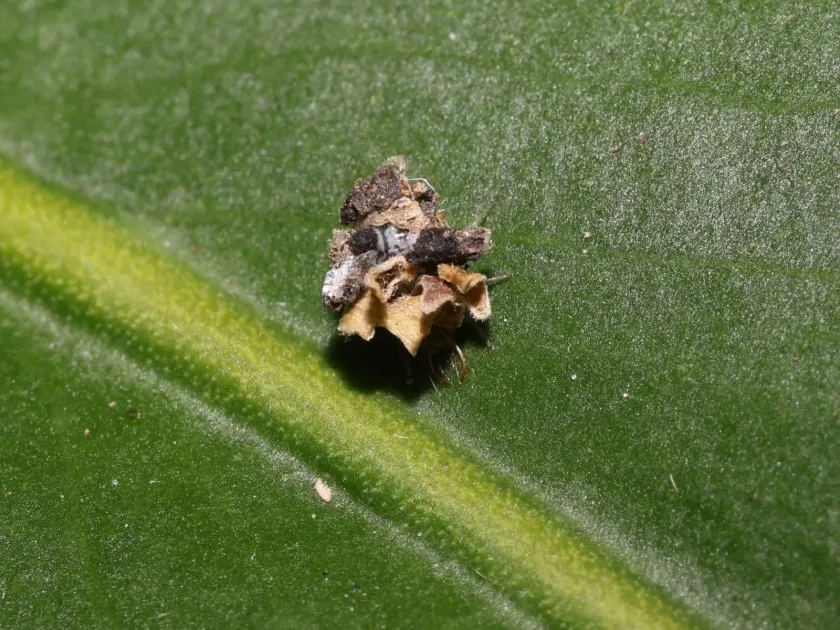
Description
How to identify
The green lacewing belongs to the order Neuroptera and the family Chrysopidae. It is characterized by its slender body, delicate green-to-brownish color, and large, shimmering, golden-colored compound eyes.
It is crucial to clarify that the green lacewing, specifically species like Chrysopa microphya, is not a plant pest but rather a highly valued beneficial insect in agriculture and horticulture.
The larvae, often referred to as "aphid lions," are renowned for their voracious appetite. They possess curved, pincer-like mandibles designed for piercing prey and consuming body fluids.
Adults are typically nocturnal and feed on non-prey items like nectar, pollen, and honeydew, making them harmless to crops and vital for maintaining ecosystem health.
Their physical appearance is highly adapted for camouflage among vegetation, allowing them to remain undetected while they search for aphid colonies and other pests.
What it damages
There is no evidence that the green lacewing causes any damage to plants. It does not feed on leaves, stems, or fruits, meaning it presents zero risk to agricultural production.
On the contrary, the presence of these insects is an indicator of a healthy, functioning ecosystem where natural predation keeps pest numbers below the economic threshold.
Farmers sometimes mistakenly identify lacewings as pests because they are frequently seen in proximity to damaged foliage, where they are actually actively hunting the true culprits.
By effectively removing harmful pests, the green lacewing acts as a natural biological control agent, reducing the need for chemical interventions on the farm.
Misidentifying this insect can lead to unnecessary pesticide application, which causes more harm than good by killing off the beneficial populations that protect the crops.
When it appears
The active season for green lacewings begins in early spring, as soon as temperatures rise sufficiently to trigger the emergence of adults from their overwintering sites.
Their life cycle consists of eggs, three larval instars, pupation in a silken cocoon, and the adult stage. In favorable climates, they can complete multiple generations per season.
During the summer months, when aphid and mite populations typically peak on vegetable and fruit crops, the activity of lacewing larvae reaches its maximum intensity.
As autumn approaches, the insects seek protected spots such as tree bark, leaf litter, or outbuildings to enter a state of diapause for the winter months.
Because they emerge early in the season, they are exceptionally effective at controlling the very first generations of pests before they can cause widespread plant damage.
Signs of infestation
A tell-tale sign of lacewing presence is the discovery of eggs laid on individual, long, slender stalks. This unique placement is an evolutionary strategy to prevent cannibalism among newly hatched larvae.
You may find discarded, shriveled exoskeletons of aphids on leaf surfaces, which indicates that a lacewing larva has successfully fed and moved on to its next prey.
Adults are often attracted to porch lights or artificial lamps at night, which can serve as a simple monitoring method to check for their presence in your garden.
If you observe small, mobile larvae with prominent pincer-like jaws patrolling leaves, you have a strong natural defense system working in your favor.
Healthy, thriving plants in an area known for high aphid pressure often suggest that beneficial predators like the green lacewing are effectively managing the pest load.
Control measures
The management approach for green lacewings should focus on conservation and encouragement rather than suppression or control.
To support these beneficial insects, it is essential to avoid the use of broad-spectrum insecticides, as these chemicals do not distinguish between pests and predators.
Planting flower strips or nectar-rich plants such as dill, fennel, or yarrow will provide necessary food sources for adult lacewings, keeping them in the vicinity of your crops.
If pest control is absolutely necessary, prioritize the use of biorational pesticides or selective treatments that spare beneficial predators.
- Minimize pesticide applications during peak flowering periods.
- Maintain patches of wild plants for natural winter habitats.
- Use selective biological controls instead of broad-spectrum toxins.
Taxonomy
- Latin name
- Chrysopa microphya
- Family
- Chrysopidae
- EPPO code
- CHROMI
Discussion
No discussions yet — be the first.