
Chrysopa microcephala
Chrysopa microcephala
Description
How to identify
Chrysopa microcephala belongs to the order Neuroptera and the family Chrysopidae. While many members of this family are beneficial predators, this specific species can display pest-like behavior in agricultural settings.
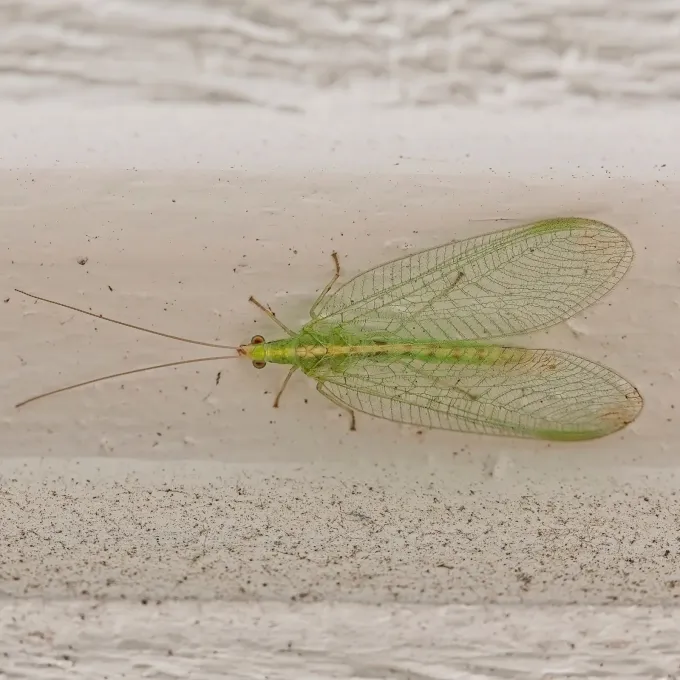
The adult insect has a delicate appearance with characteristic net-like wings. Its body color typically ranges from pale green to yellowish-green, providing effective camouflage against foliage.
The larvae are elongated and equipped with powerful, sickle-shaped mandibles. While these are usually used to catch aphids and other small insects, their feeding habits can shift in the absence of prey.
The life cycle involves complete metamorphosis, including egg, larva, pupa, and adult stages. Eggs are uniquely deposited on thin stalks to protect the developing offspring from predators.
Correct identification is crucial for farmers and agronomists, as it is essential to distinguish this species from the highly beneficial green lacewings that serve as primary biological control agents.
What it damages
The primary concern regarding Chrysopa microcephala is its potential to damage plant reproductive organs. When prey is scarce, adults feed on nectar and pollen, causing significant physical injury to flowers.
This feeding activity often results in destroyed pistils and stamens. Consequently, the pollination process is interrupted, leading to poor fruit set and reduced yields across various horticultural crops.
Fruit trees, berries, and greenhouse vegetables are the most vulnerable. Under heavy infestation, the damage can lead to a significant decline in the marketable quality of the produce.
The physical wounds left by the insects create entry points for secondary pathogens, such as fungal and bacterial infections, which can lead to further blossom blight or rot.
In controlled environments like greenhouses, the lack of natural enemies can lead to population spikes, making the pest impact much more severe than in open-field conditions.
When it appears
The emergence of adults typically occurs in late spring, around May, depending on regional soil temperatures. Adult activity increases significantly as the weather warms up.
The population reaches its peak during mid-summer, coinciding with the flowering phase of most agricultural crops. This is the period when damage risk is highest.
Depending on the climatic zone, multiple generations can occur within a single growing season. Warmer regions see a longer period of insect activity and faster reproductive turnover.
As autumn approaches, adults prepare for diapause. They seek shelter in plant debris, under tree bark, or in other protected nooks to survive the winter temperatures.
Monitoring the insect population is vital during the budding and flowering phenological stages. Early detection allows for more effective mitigation before substantial damage occurs.
Signs of infestation
The most visible sign of infestation is the presence of deformed or necrotic flowers. Close inspection of petals will reveal small, irregular holes or ragged edges caused by adult feeding.
Droppings from the insects may be visible on leaves near the damaged flower clusters. These appear as small, dark spots that often wash away during rain events.
A high rate of flower or young fruit drop is a common indicator of pest pressure. If blossoms fall off before fruit set, Chrysopa microcephala should be considered as a potential cause.
During the evening, when the insects are most active, they can be observed visually around the blooms. Using a flashlight at dusk is a common method for monitoring populations.
Prematurely yellowing or withered flower buds are another diagnostic feature, as the larvae or adults may have damaged the internal tissues responsible for flower development.
Control measures
Biological control remains the preferred approach. Utilizing entomopathogenic fungi can help suppress population levels while maintaining the overall ecological balance of the garden.
Sanitation practices are highly effective. Clearing away weeds and crop debris eliminates the daytime hiding spots that these insects utilize to avoid desiccation and predators.
If chemical intervention is necessary due to extreme pest density, selective insecticides should be applied carefully. Treatments must be timed to avoid peak pollinator activity.
- Deploy light traps to monitor adult flight and density.
- Implement crop rotation to disrupt the insect's life cycle.
- Apply bio-rational insecticides based on avermectins.
- Maintain clean field borders to reduce refuge areas for pests.
Preventive measures are always more effective than reactive treatments. Always assess the economic threshold before applying any broad-spectrum insecticides to protect your crop yield.
Taxonomy
- Latin name
- Chrysopa microcephala
- Family
- Chrysopidae
- EPPO code
- CHROMC
Discussion
No discussions yet — be the first.