
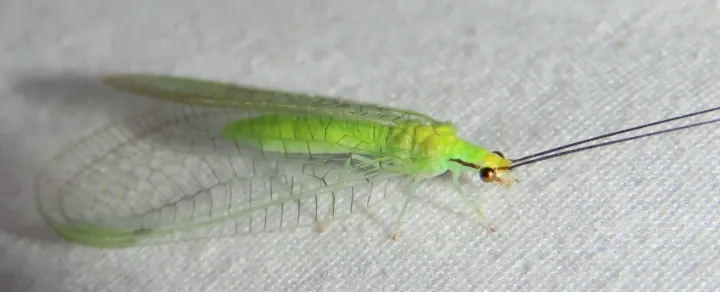
Green lacewing (Chrysopa lineaticornis)
Chrysopa lineaticornis
Description
How to identify
The green lacewing, specifically Chrysopa lineaticornis, belongs to the order Neuroptera and the family Chrysopidae. Adult specimens are identified by their slender, pale green bodies and expansive, clear wings with a dense network of veins.
The head features unique markings that distinguish this species from other lacewings. They possess long, thread-like antennae that serve as highly sensitive sensory organs for navigating their environment.
The larvae are campodeiform, featuring powerful sickle-shaped mandibles. While often considered beneficial in other contexts, this specific species can cause localized damage in certain monocultures.
A notable reproductive trait is the deposition of eggs on thin, stalk-like structures, which elevates them above the leaf surface and prevents cannibalism among newly hatched larvae.
These insects are primarily crepuscular or nocturnal, making them difficult to spot during the heat of the day, even when their population density is high.
What it damages
This species impacts a variety of agricultural crops, including fruit trees, cereal grains, and greenhouse-grown vegetables. The damage is primarily linked to high population densities.
Feeding behavior involves damage to young, tender plant tissues, including buds and shoots, which disrupts normal development and stunts overall growth.
In cases of severe infestation, the loss of photosynthetic tissue leads to significant drops in yield and a decrease in the overall quality of harvested produce.
Nursery stock is particularly vulnerable, as the deformation of terminal shoots can result in stunted or aesthetically compromised plants that are unfit for sale.
Plants undergoing stress due to environmental factors, such as drought or nutritional imbalances, are significantly more susceptible to damage from this pest.
When it appears
The developmental cycle of this insect typically initiates in late spring once temperatures consistently exceed 15 degrees Celsius, allowing the population to thrive.
The lifecycle includes complete metamorphosis, progressing through egg, three larval instars, pupa, and adult stages, with multiple generations possible in a single growing season.
Adult activity peaks during the twilight hours, as the species is most mobile when foraging for food and seeking mating partners in the cover of darkness.
Summer conditions, characterized by warmth and humidity, often trigger rapid life-cycle acceleration, necessitating frequent field scouting by agronomists.
The species survives the winter in a state of diapause, sequestering itself in protected areas such as tree bark, leaf litter, or debris inside farm structures.
Signs of infestation
The presence of Chrysopa lineaticornis is first signaled by the observation of egg clusters on the underside of foliage, positioned on long, delicate stalks.
Damage symptoms include the appearance of localized chlorotic spots or necrotic tissue on leaves, often concentrated near the veins where larvae or adults have been feeding.
Deformed growth patterns, such as twisted or curled young leaves and stunted buds, serve as a clear indicator of heavy infestation and active feeding.
The accumulation of frass on leaf surfaces can trigger secondary issues, such as the growth of sooty mold, further deteriorating the plant's physiological condition.
Farmers can monitor populations by utilizing light traps, as adults are naturally attracted to artificial light sources during the night.
Control measures
Effective management relies on integrated pest management (IPM) strategies, beginning with the removal of overwintering sites like weeds and crop debris.
Biological control options involve the use of entomopathogenic fungi or selective biopesticides that target larval populations without harming the wider ecosystem.
Chemical intervention should be treated as a last resort, utilized only when monitoring data indicates that the economic injury level has been exceeded.
Maintaining optimal soil health and irrigation schedules ensures plants are robust enough to withstand pest attacks, reducing the need for intensive chemical applications.
- Regular monitoring and field scouting protocols.
- Use of pheromone traps to track population fluctuations.
- Promotion of habitat corridors to support natural biodiversity.
Taxonomy
- Latin name
- Chrysopa lineaticornis
- Family
- Chrysopidae
- EPPO code
- CHROLI
Discussion
No discussions yet — be the first.