
Brown citrus scale
Chrysomphalus bifasciculatus
Description
How to identify
The brown citrus scale (Chrysomphalus bifasciculatus) is a small insect belonging to the Diaspididae family, commonly known as armored scales.
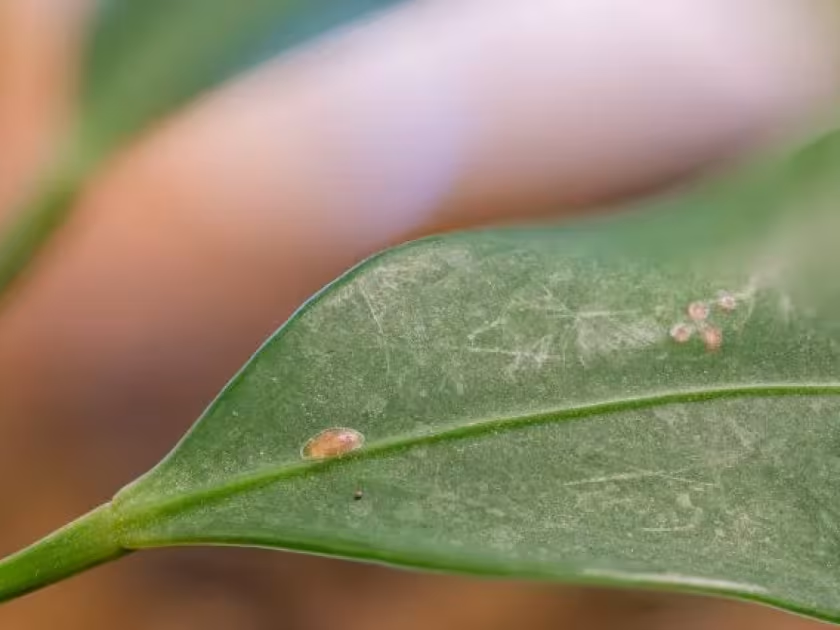
Adult females are characterized by a circular, slightly convex, brownish-red scale that acts as a protective shield against predators and chemicals.
The name of the species refers to the two characteristic tufts of setae found on the body of the crawler stage, which is the mobile juvenile form.
Adult females remain stationary for their entire life cycle, anchored to the host plant by their sucking mouthparts.
Males are small, winged insects, though they are rarely observed due to their short lifespan and limited activity compared to the females.
What it damages
This pest is a significant polyphage that attacks a wide variety of trees and shrubs, including citrus, palms, and various indoor ornamentals.
By extracting plant sap, the insect drains the host's vitality, leading to reduced nutrient availability and overall weakening of the plant structure.
The feeding process injects saliva into the plant, which often causes localized chlorosis and tissue necrosis around the feeding site.
Severe infestations can lead to stunted growth, leaf yellowing, and in extreme cases, the death of individual branches or the entire plant.
Fruit quality is also heavily impacted, as scale insects settle on the rind, making the produce unsellable or reducing its market value.
When it appears
The life cycle of this scale is highly dependent on ambient temperature, with continuous generations occurring in warm climates or greenhouses.
Crawlers, the active stage of the pest, typically emerge in larger numbers during the warmer spring and summer months.
During the cooler months, the population growth slows down, and the insects often overwinter in the nymphal or adult female stages.
Infestations often reach their peak during periods of high humidity and moderate to high temperatures, which favor rapid development.
Dispersal is primarily limited to the crawler stage, which can be moved by wind or through the transport of infested plant material.
Signs of infestation
The presence of Chrysomphalus bifasciculatus is easily identified by the appearance of small, hard, brown discs scattered across leaves and twigs.
Yellowing or pale spotting on the foliage is a primary symptom of the tissue damage caused by the insects feeding underneath their scales.
Sticky honeydew secretions are often present on infested leaves, leading to the growth of sooty mold, which appears as a black, powdery coating.
Increased leaf drop and premature wilting are common indicators that the scale population has reached a damaging density.
Deformed fruit and twisted, stunted young shoots are typical signs that the infestation has become chronic and severe.
Control measures
Managing the brown citrus scale effectively requires a combination of systemic insecticides and physical removal measures.
Systemic treatments are highly effective because the insect feeds on the plant sap, allowing the poison to reach the pest directly under its shield.
Quarantine measures and careful inspection of new plant stock are crucial to preventing the introduction of this pest into clean environments.
- Application of systemic pesticides such as organophosphates or neonicotinoids.
- Pruning and destruction of heavily infested branches to reduce population pressure.
- Biological control through the introduction of specific parasitoid wasps or predatory beetles.
Consistent monitoring and repeated treatments are essential, as the protective shield makes the insect resistant to contact-only sprays.
Taxonomy
- Latin name
- Chrysomphalus bifasciculatus
- Order
- Hemiptera (bugs, aphids, leafhoppers)
- Family
- Diaspididae
- EPPO code
- CHRYBI
Discussion
No discussions yet — be the first.