
Chrysochraon dispar
Chrysochraon dispar
Description
How to identify
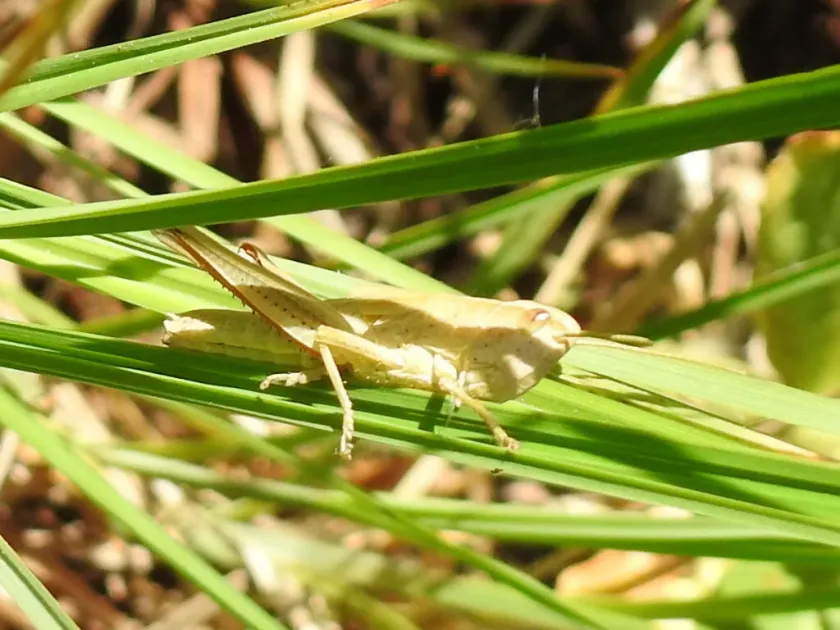
Chrysochraon dispar, commonly known as the large gold grasshopper, is a species of grasshopper belonging to the family Acrididae within the order Orthoptera.
This species exhibits significant sexual dimorphism. Males are usually bright green or yellowish-brown with well-developed wings, making them capable flyers.
Females are significantly larger and heavier, often possessing shortened or vestigial wings, which limits their mobility and restricts them to ground dwelling.
Adult body length typically ranges from 15 to 25 mm. Taxonomic identification relies on the specific shape of the pronotum and the wing venation patterns.
They are widely distributed across Eurasia and favor damp habitats such as floodplains, meadows, and areas near water bodies where vegetation remains lush.
What it damages
Chrysochraon dispar is a polyphagous insect that primarily consumes wild grasses and sedges. In favorable conditions, they can become a serious agricultural pest.
Target crops include various cereals such as wheat, barley, oats, and rye, as well as forage grasses cultivated for hay and pasture production.
Both nymphs and adults feed on plant foliage, significantly reducing the leaf area, which hinders photosynthesis and weakens the overall development of the crop.
During the grain-filling stage, the grasshoppers may also feed on the developing heads, resulting in reduced grain yield and lower quality of the final produce.
High population densities are particularly problematic during dry summer seasons, as the insects move from dried-out grasslands into irrigated or healthier crop fields.
When it appears
The life cycle involves one generation per year. The species overwinters in the egg stage, with eggs deposited in the soil or within the hollow stems of plants.
Nymph hatching typically occurs in late spring (May), triggered by rising soil temperatures that allow embryonic development to complete.
The transition from nymphs to adults occurs over several weeks, usually reaching the adult stage by early to mid-summer, depending on regional weather patterns.
Adult activity, including mating and egg-laying, peaks during the height of the summer season in July and August when environmental conditions are optimal.
As autumn approaches, adult populations decline as they complete their life cycle, leaving behind eggs that will remain dormant until the following spring.
Signs of infestation
The first signs of infestation include characteristic notched edges on the leaves of cereal plants, often appearing as if they have been chewed by a saw.
Heavy infestations can lead to patches of thinned or completely stripped vegetation, particularly in areas adjacent to natural meadows or field boundaries.
The presence of the pest is easily detected by the distinct stridulation (chirping) sounds made by males in sunny weather and the mass movement of grasshoppers when disturbed.
Field monitoring often reveals that the damage starts from the edges of the field, where the grasshoppers migrate from neighboring wild habitats.
Reduced crop vigor and potential lodging can occur if the feeding pressure is high enough to significantly weaken the stems and root systems of the plants.
Control measures
The most effective management strategy involves deep autumn plowing, which destroys overwintering egg pods located in the top layer of the soil.
Maintaining field hygiene by mowing weeds along roadsides and field margins is crucial to remove the alternative food sources that support the pest population.
When economic injury levels are exceeded, the application of registered insecticides (such as pyrethroids) is necessary to protect the standing crop.
- Utilizing biological control agents, including entomopathogenic fungi.
- Conserving natural predators like birds and predatory ground beetles.
- Adjusting planting dates to ensure crops reach a stage of maturity less susceptible to damage.
Regular monitoring starting from early spring is essential to track nymph development and intervene early before the insects reach the highly mobile adult stage.
Taxonomy
- Latin name
- Chrysochraon dispar
- Order
- Orthoptera (locusts)
- Family
- Acrididae
- EPPO code
- KHKHDI
Discussion
No discussions yet — be the first.