
Green-striped grasshopper
Chortophaga viridifasciata
Description
How to identify
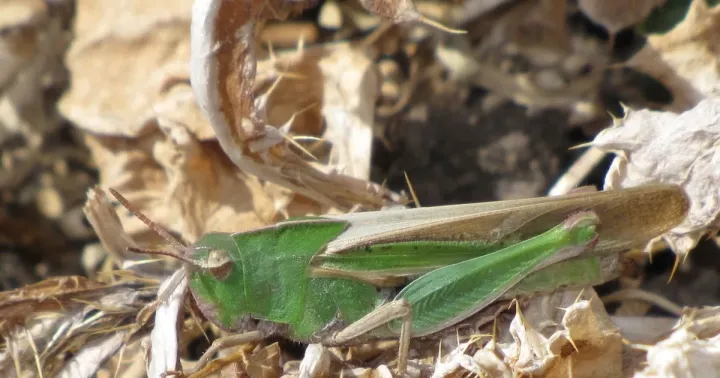
The Green-striped grasshopper Chortophaga viridifasciata is a member of the Acrididae family. It is known for its distinct color polymorphism, ranging from bright green with a stripe to brown or grayish tones.
Adults typically grow to between 25 and 40 mm in length. They possess well-developed wings, enabling significant movement, and strong hind legs designed for jumping, which helps them escape potential predators.
Nymphs resemble smaller versions of the adults but lack functional wings. They undergo several molting stages, gradually increasing in size and developing adult characteristics as they mature through the season.
The species features a chewing mouthpart, specifically adapted for consuming plant material. This anatomical trait allows them to feed on a wide variety of vegetation, from soft seedlings to mature grasses.
A unique biological trait of this species is its ability to overwinter as nymphs. This early-start strategy gives them a competitive advantage, allowing them to emerge and begin feeding much earlier in the spring.
What it damages
This species is a generalist herbivore. It primarily targets cereal crops such as wheat, barley, and oats, which are essential for their nutritional requirements during the active growth phase.
In addition to cultivated grains, they feed on various grasses and meadow vegetation. During years of high population density, they often migrate from wild pastures into agricultural plots, damaging vegetables and young trees.
Both nymphs and adults cause physical damage by consuming leaf tissue and stems. This herbivory reduces the photosynthetic surface area, leading to poor plant vigor and yield reduction.
Drought conditions significantly increase the risk of damage. When natural forage becomes sparse, these grasshoppers aggressively shift toward irrigated and lush agricultural crops to satisfy their needs.
Severe infestations on young crops can result in significant stand reduction. If left unchecked, the damage can lead to substantial financial losses for farmers, particularly in high-yield grain operations.
When it appears
The life cycle of Chortophaga viridifasciata is highly dependent on spring temperatures. Nymphs that have overwintered emerge as soon as the weather warms, often ahead of other pests.
Spring is the primary period for development, where nymphs feed intensely to complete their final molting stages. This leads to the emergence of adults, typically observed in late spring and early summer.
Mating and oviposition occur in early summer. Females deposit their egg pods in soil crevices, protected by a secretion that hardens into a protective casing, ensuring survival against environmental fluctuations.
In regions with longer growing seasons, the species may produce two generations per year. This creates continuous pressure on crops, requiring vigilant monitoring throughout the entire vegetative period.
As the summer progresses, adult populations peak and then decline after reproduction. The surviving offspring then prepare for the winter, usually as nymphs, to repeat the cycle the following year.
Signs of infestation
The primary sign of infestation is ragged or notched leaf margins on cereal crops. These grasshoppers often consume the leaf entirely, leaving only the midribs behind.
Mass infestations are often accompanied by the sound of numerous individuals moving through the field. When disturbed, they fly in visible groups, creating a distinct "cloud" effect over the crop rows.
The presence of frass, appearing as small, dark cylindrical pellets, is a clear indicator of heavy feeding activity on the plants and the surrounding soil surface.
Wilting and yellowing of the crop are common signs of localized damage. In areas where the grasshopper density is high, the plants may show signs of severe stress and partial drying.
Early morning inspection of field borders is the most effective way to detect the presence of nymphs before they reach adult size and become more mobile and destructive.
Control measures
Cultural control is the first line of defense. Deep autumn plowing is highly effective at destroying overwintering sites and killing egg pods hidden in the soil.
Field margins and non-cropped areas should be regularly mowed to eliminate potential breeding sites. Reducing habitat suitability helps prevent the buildup of local grasshopper populations.
Chemical control should be implemented when scouting indicates that the population has exceeded the economic injury level for the specific crop variety being grown.
Targeting nymphs is crucial, as they are more susceptible to insecticides and lack the ability to quickly migrate away from the treated areas of the field.
- Utilize crop rotation to disrupt the insect's life cycle.
- Encourage natural predators like birds and parasitic wasps.
- Apply biological insecticides, such as entomopathogenic fungi, if viable.
- Implement consistent field monitoring to catch outbreaks early.
Taxonomy
- Latin name
- Chortophaga viridifasciata
- Order
- Orthoptera (locusts)
- Family
- Acrididae
- EPPO code
- CHOTVI
Discussion
No discussions yet — be the first.