
Vagrant grasshopper
Chorthippus vagans
Description
How to identify
The vagrant grasshopper (Chorthippus vagans) is a member of the Acrididae family. It is typically found in dry, sandy, or stony habitats, where it blends into the arid environment.
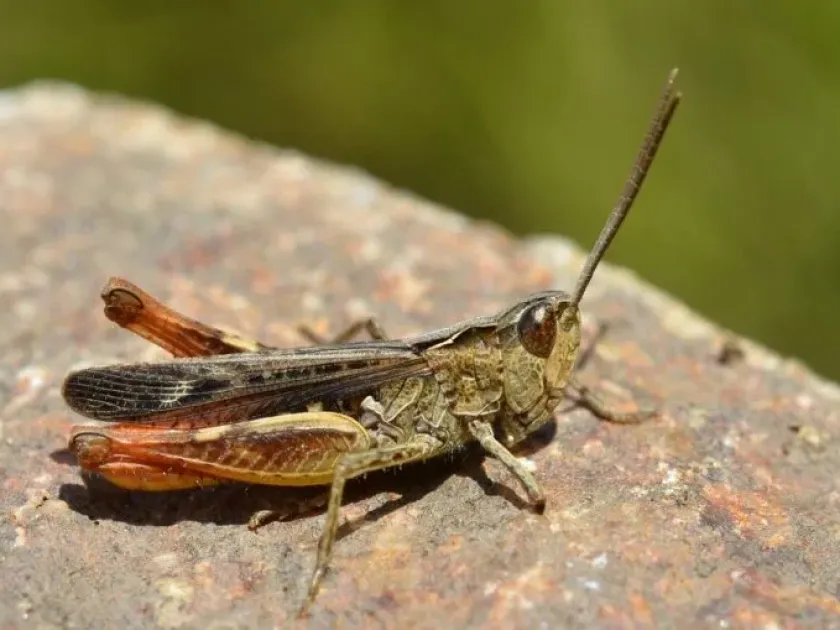
Adult insects reach 14–22 mm in length. Their coloration ranges from light gray to brownish, which provides effective camouflage against the dry soil and withered vegetation of their natural habitat.
Identification is based on the specific structure of the pronotum and the venation of the wings. These morphological details distinguish them from other common grasshopper species.
The life cycle consists of the egg, nymph, and adult stages. Females lay their eggs in the soil within protective pods, where they overwinter to ensure survival through harsh conditions.
Males produce characteristic stridulating sounds during the day to attract females. This behavior is most active during warm summer months, indicating peak reproductive periods.
What it damages
As a polyphagous insect, the vagrant grasshopper feeds on a wide range of plants, posing a threat to both native grasslands and agricultural crops.
Major damage occurs in pastures and cereal fields. Both nymphs and adults consume leaf tissue, which reduces the nutritional value of forage and the overall biomass of the crop.
In outbreak years, large swarms can consume significant portions of cereal crops, leading to severe yield losses. They target leaves and stems, often stripping the plants entirely.
The reduction of the photosynthetic surface area causes the plants to weaken. In stressed environments, this damage significantly stunts growth and can lead to total crop failure.
Feeding activity is most intense during dry periods when succulent vegetation is scarce, forcing the grasshoppers to migrate into cultivated fields to feed on irrigated crops.
Signs of infestation
The first signs of infestation are notched leaf margins. Grasshoppers graze on the edges of leaves, which may eventually lead to complete destruction of the foliage down to the midrib.
A noticeable indicator of high populations is the sudden jump of many insects when someone walks through the field. This movement is a key warning for farmers to inspect the area.
The presence of frass (small, cylindrical dark droppings) on the soil surface or the base of plants is a clear indication that a colony of grasshoppers has been feeding nearby.
During early morning or late evening, nymphs can often be spotted in the lower canopy of the crop, as they seek moderate temperatures before the heat of the day.
Yellowing and wilting of plants in patchy areas are visual cues that the grasshopper population has reached a level where it is actively impacting plant health and development.
Control measures
Deep autumn plowing is the most effective cultural practice, as it exposes the egg pods to freezing temperatures and predators, significantly reducing the population for the next season.
Maintaining clean field borders by removing weeds reduces the available habitat for grasshoppers to thrive and reproduce, effectively limiting their migration into the main crop.
Chemical control should be implemented using approved insecticides when monitoring shows that the pest density has exceeded the economic threshold for the specific crop.
Biological control using entomopathogenic fungi can be an environmentally friendly alternative, especially in areas where chemical pesticide use is restricted or limited.
- Monitor fields regularly using sweep nets to estimate population density.
- Clear non-crop vegetation around fields to break the life cycle.
- Apply targeted insecticides when nymphs are in the early stages of development.
Taxonomy
- Latin name
- Chorthippus vagans
- Order
- Orthoptera (locusts)
- Family
- Acrididae
- EPPO code
- CHOHVA
Discussion
No discussions yet — be the first.