
Lesser mottled grasshopper
Chorthippus mollis
Description
How to identify
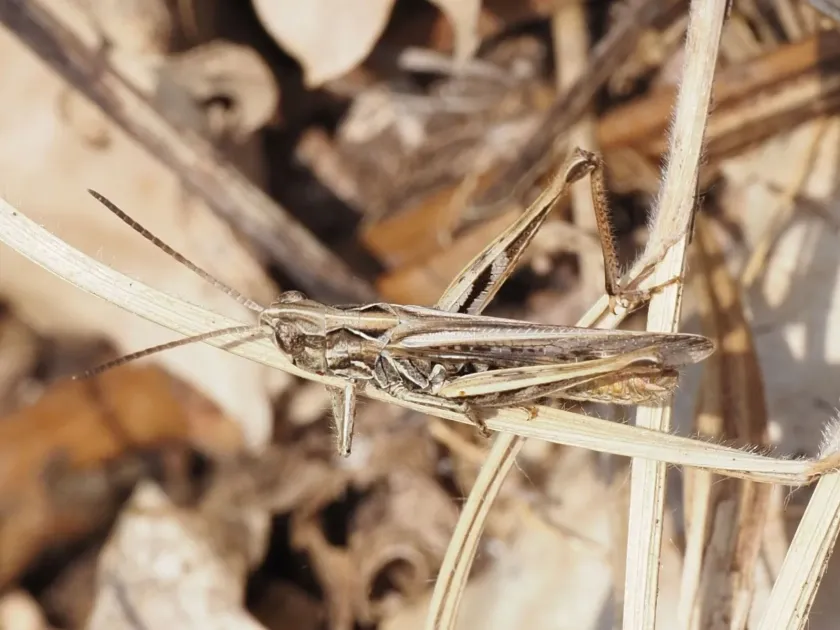
The Lesser mottled grasshopper (Chorthippus mollis) is a species of grasshopper belonging to the family Acrididae. It is typically small, with adult bodies measuring between 12 and 20 millimeters in length.
Their coloration ranges from greyish-brown to bright green, providing excellent camouflage in grassland habitats. A key diagnostic feature is the lateral keels of the pronotum, which are noticeably bent inwards.
The tympanal organs, used for hearing, are located on the sides of the first abdominal segment. Males are known for producing a distinct, rhythmic stridulation to attract females during the breeding season.
Nymphs resemble smaller, wingless versions of adults. They pass through several instar stages, growing significantly with each molt until they reach sexual maturity.
They prefer dry, sunny habitats with sparse vegetation, which allows the soil to warm up sufficiently for the development of their eggs laid underground.
What it damages
This grasshopper primarily feeds on wild grasses, but in high-density populations, it can migrate to cereal crops and pastures, causing significant agricultural damage.
The insects feed on the leaf blades, creating ragged edges. This reduces the photosynthetic area of the plant, leading to stunted growth and reduced overall yield potential.
Young cereal plants are particularly vulnerable, as significant defoliation during early growth stages can lead to total crop failure in heavily infested spots.
Beyond direct physical damage, the accumulation of excrement on the foliage can favor the colonization of opportunistic fungal pathogens, further weakening the plant.
Pastures and hayfields often suffer the most, as heavy grazing by grasshopper populations reduces the biomass available for livestock forage and decreases the nutritional value of the grass.
When it appears
The Lesser mottled grasshopper completes one generation per year. They overwinter in the egg stage, which the female deposits into the soil within a protective capsule called an egg pod.
Hatching occurs in the spring, typically in May, triggered by rising soil temperatures. This is when young nymphs begin their active feeding phase on emerging vegetation.
The developmental process through various instars takes several weeks. By mid-summer, the nymphs transition into winged adults, ready for mating and dispersal.
Peak activity and the loudest stridulation from males are observed during the warm summer months of July and August, when the adult population is at its highest.
As autumn progresses, the adults gradually perish after ensuring the survival of the next generation through egg-laying, ensuring the cycle continues the following spring.
Signs of infestation
The primary sign of infestation is the presence of uneven, ragged margins on the leaves of grasses and cereal crops, caused by the grasshopper's feeding activity.
An audible indicator of their presence is the characteristic chirping or stridulation of males, which is particularly intense during bright, sunny midday hours.
Visual confirmation is easy, as these insects are highly active and will jump rapidly into the surrounding vegetation when approached or disturbed by movement.
Tiny, cylindrical dark pellets of excrement found on the soil surface or stuck to the foliage indicate where the grasshoppers have been feeding recently.
Field margins with sparse, dry vegetation often serve as focal points for infestations, and signs of feeding are usually most evident in these dry, sunny microhabitats.
Control measures
The most effective cultural control method is deep tillage of infested soil in autumn or early spring, which crushes the egg pods and prevents successful hatching.
Maintaining a healthy, dense crop cover can make a field less attractive to these grasshoppers, as they strongly prefer sparse vegetation and warm, dry environments.
If population thresholds exceed economic levels, the application of appropriate insecticides, such as pyrethroids, may be required to protect the crop from significant damage.
Early intervention is critical, as nymphs are far more susceptible to control measures than the highly mobile and resilient adult insects.
Integrated pest management should include protecting natural predators like wild birds, parasitic wasps, and entomopathogenic fungi to maintain natural balance in the ecosystem.
Taxonomy
- Latin name
- Chorthippus mollis
- Order
- Orthoptera (locusts)
- Family
- Acrididae
- EPPO code
- CHOHML
Discussion
No discussions yet — be the first.