
Meadow grasshopper
Chorthippus dorsatus
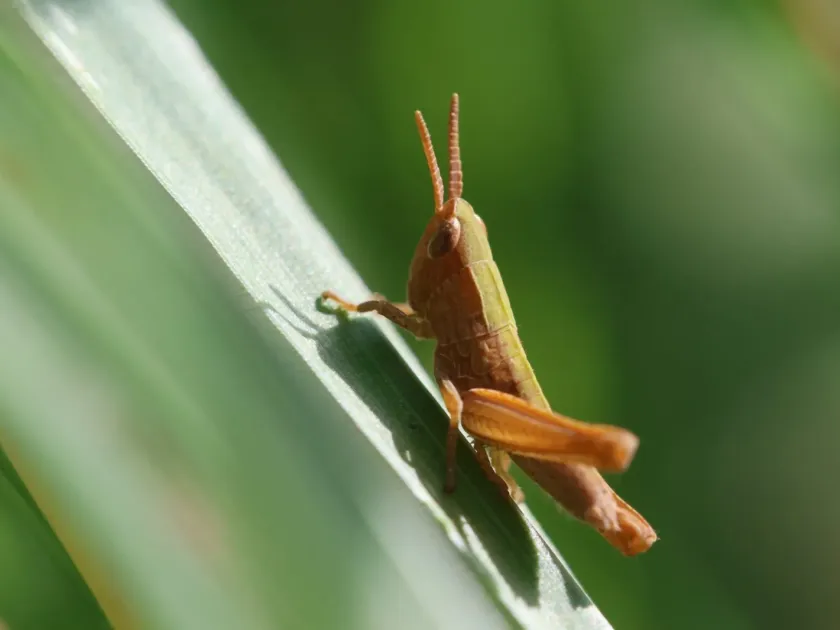
Description
How to identify
The meadow grasshopper (Chorthippus dorsatus) is a species of the Acrididae family within the order Orthoptera. It is a medium-sized insect known for its slender body and variable coloration, typically ranging from bright green to brownish or greyish.
Males of the species are equipped with specialized sound-producing organs, enabling them to create distinct chirping sounds during the breeding season. They possess well-developed wings, allowing for significant mobility and dispersal.
The adult grasshopper typically measures between 15 and 24 mm in length. A key morphological feature is the shape of the pronotum, which features lateral keels that are slightly concave in the prozona.
Nymphs resemble the adults in general shape but are smaller and lack fully developed wings. They pass through several instar stages before reaching maturity, showing constant growth throughout the season.
While the species prefers moist to moderately moist meadows and grasslands, it is highly adaptive and can thrive in agricultural landscapes if moisture levels and food availability remain sufficient.
What it damages
This grasshopper is a polyphagous pest, meaning it feeds on a wide variety of plant species. The primary crops at risk include cereals like wheat, barley, oats, and rye, which suffer from direct leaf consumption.
Pastures and hay meadows are particularly susceptible to meadow grasshopper damage. Extensive feeding by dense populations reduces the biomass of nutritious grasses, leading to significant forage losses.
During outbreaks, these insects may migrate to crops like maize, sunflowers, and various vegetables, especially during the vulnerable seedling stages, where they can cause complete crop loss in localized areas.
The harm caused by the pest includes the destruction of photosynthetic tissue. By eating the leaf blades, the insect limits the plant's ability to produce energy, resulting in stunted growth and lower yields.
Furthermore, the physical damage inflicted by the grasshopper creates entry points for secondary pathogens, such as fungi and bacteria, which can further jeopardize the overall health of the crop.
When it appears
The life cycle of the meadow grasshopper is typically completed in a single generation per year. The winter is spent in the egg stage, with eggs buried in the upper soil layers or within grass sod.
Nymphs emerge in the spring, once soil temperatures rise to 15–20 degrees Celsius. This emergence often coincides with the tillering stage of spring cereals, making the young crops highly vulnerable.
The nymphal stage lasts for approximately 40 to 50 days. During this period, the insects feed voraciously, growing rapidly as they consume large amounts of vegetation in and around the fields.
Adults typically appear in late summer, usually starting from mid-July. This period marks the peak of their activity, as they mate and prepare to deposit eggs into the soil to ensure the next year's generation.
As autumn approaches and temperatures drop, adult activity diminishes and they eventually die off, leaving the eggs in the soil to undergo a period of diapause until the following spring cycle begins.
Signs of infestation
The first signs of a meadow grasshopper infestation include irregular, ragged leaf edges on cereal plants. In severe cases, the entire leaf blade may be consumed, leaving only the central midrib.
Field infestations are easily confirmed by the sight of grasshoppers leaping away as one walks through the crops. Their characteristic chirping on warm, sunny days is another indicator of high population density.
Patches of sparse or missing vegetation, looking like bald spots in the field, are common symptoms of localized feeding. These spots often grow as the grasshoppers continue to forage.
Observing the plants in the early morning hours can help identify the pests, as they are less active when cooler and often rest on the stems or the undersides of leaves.
It is advisable to check the field margins first, as infestations frequently originate from adjacent wild grasslands or uncultivated borders before spreading inwards toward the main crop area.
Control measures
Cultural control is the most effective approach for long-term management. Deep autumn or early spring plowing helps to destroy egg pods located in the soil and reduces the survival rate of the next generation.
Maintaining clean fields by removing weeds from borders and ditches is essential, as these areas often serve as primary reservoirs and breeding grounds for the grasshopper population.
When the economic threshold of damage is reached, the application of chemical insecticides belonging to the pyrethroid or organophosphate groups can be necessary to prevent widespread crop loss.
Biological control methods involve promoting natural predators, such as insectivorous birds and parasitic insects, which help keep grasshopper populations in check under natural conditions.
Regular monitoring using sweep nets helps farmers track population trends early in the season, allowing for timely, targeted applications that minimize environmental impact and protect the crop yield.
Taxonomy
- Latin name
- Chorthippus dorsatus
- Order
- Orthoptera (locusts)
- Family
- Acrididae
- EPPO code
- CHOHDO
Discussion
No discussions yet — be the first.