
Chorthippus biguttulus
Chorthippus biguttulus
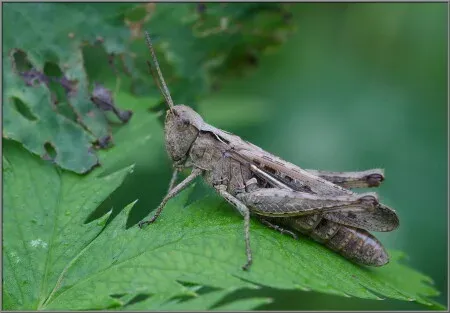
Description
How to identify
Chorthippus biguttulus, commonly known as the common field grasshopper, belongs to the order Orthoptera and the family Acrididae. It is a medium-sized insect typically measuring between 13 and 22 mm in length.
The species exhibits significant color polymorphism, ranging from bright green to brown or grayish tones, which serves as an effective camouflage within cereal fields and grasslands.
A key identification characteristic is the shape of the pronotum, which features lateral carinae that are clearly incurved in the middle, setting it apart from similar species.
Male specimens are well-known for their distinct stridulation, a sound produced by rubbing their hind legs against the tegmina, which helps in identifying their presence during surveys.
The species has a hemimetabolous development cycle, meaning it passes through nymphal stages that resemble smaller versions of the adults before reaching reproductive maturity.
What it damages
As a polyphagous pest, Chorthippus biguttulus primarily feeds on various cereal crops, including wheat, barley, and oats, as well as several species of wild grasses.
Both nymphs and adults consume the green foliage of the host plants, which leads to reduced photosynthetic capacity and overall weakening of the crop health.
In cases of high infestation density, the grasshoppers can completely defoliate young cereal seedlings, often resulting in significant economic losses and thin crop stands.
Apart from leaf tissue, they may also feed on the developing ears of grain, directly impacting grain filling and reducing the final yield weight at harvest time.
The damage is most severe in drought-prone areas where plant growth is already stressed, making the recovery of affected cereal plants much slower and less efficient.
When it appears
The hatching of nymphs typically begins in late spring, usually May, coinciding with the warming of the topsoil layers to levels favorable for egg development.
The nymphal development phase lasts for several weeks, during which they undergo multiple molts, increasing their size and daily caloric intake significantly.
Adult grasshoppers typically appear by mid-summer, reaching their peak activity levels during the warmest weeks of the year, usually throughout July and August.
Reproductive activity and egg-laying occur in late summer and early autumn, with the females depositing egg pods in the soil to survive the winter season.
The daily cycle of activity is strongly linked to weather conditions, as these insects prefer warm, sunny days to optimize their metabolic rate and foraging efficiency.
Signs of infestation
The first indicator of an infestation is often the observation of irregular, jagged feeding marks along the edges of cereal leaves during routine crop inspections.
Disturbance of the crop canopy by a person walking through the field causes many grasshoppers to leap or fly away, providing a quick estimate of the population density.
Small fecal pellets left on the leaves and stems are another diagnostic sign, confirming that the grasshoppers have been actively feeding in those specific areas.
Increased patchiness or reduced density of the crop stands, particularly near field margins or abandoned meadows, is a strong indicator of localized pest pressure.
If left unmanaged, the cumulative damage leads to a yellowing of the foliage and premature drying of the plants, which can be seen from a distance during severe outbreaks.
Control measures
Cultural control is highly effective, with deep autumn plowing being the primary method to destroy egg pods stored in the soil before they can hatch in spring.
Maintaining clean field margins and controlling weeds around the farm is crucial to eliminate the preferred breeding and sheltering habitats for this grasshopper species.
If economic thresholds are exceeded, targeted applications of approved insecticides during the early nymphal stages provide the most efficient control with minimal environmental impact.
Early sowing helps the crop establish robust growth before the nymphal population reaches its most destructive stage in mid-summer.
- Regular monitoring using sweep nets to assess population density.
- Preservation of natural predator habitats like hedgerows.
- Selective use of biological control agents where appropriate.
Taxonomy
- Latin name
- Chorthippus biguttulus
- Order
- Orthoptera (locusts)
- Family
- Acrididae
- EPPO code
- CHOHBI
Discussion
No discussions yet — be the first.