
Say's stink bug
Chlorochroa sayi
Description
How to identify
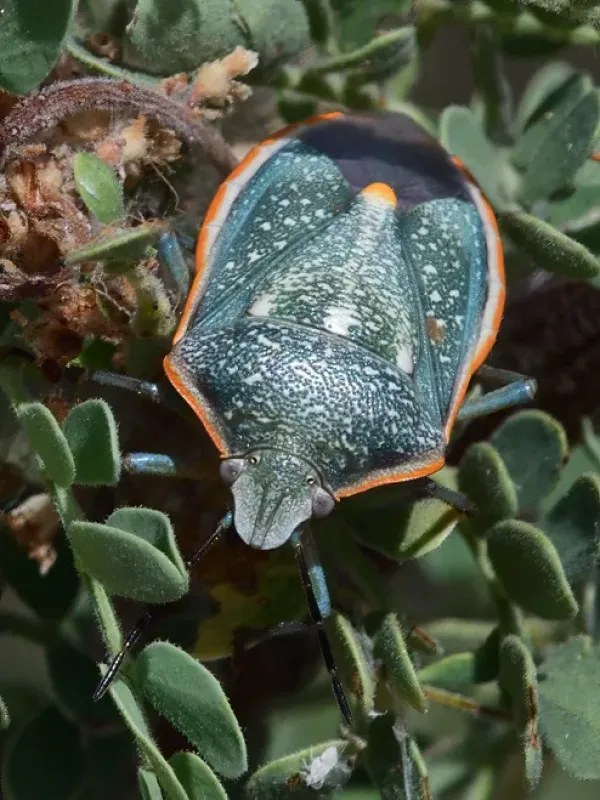
Say's stink bug (Chlorochroa sayi) is a member of the Pentatomidae family, commonly known as shield bugs. Adults are characterized by their distinct shield-like shape and typically reach a length of 10 to 12 millimeters.
The coloration of these insects can range from bright green to an olive-brown hue, often changing based on the season or the life stage of the individual. Light-colored margins along the edges of the pronotum and scutellum serve as key identifying features for field scouts.
The life cycle includes five nymphal instars. As the nymphs develop, they grow in size and may exhibit different color patterns, often appearing darker or mottled to blend into the foliage of their host plants.
Eggs are typically laid in clusters, often arranged in neat rows on the underside of leaves. The egg shape is somewhat barrel-like, and their color shifts as the embryo inside develops, providing a visual cue for approaching hatching.
Equipped with a piercing-sucking mouthpart, or rostrum, these bugs are highly efficient at feeding on plant sap. They are mobile insects capable of flight, which allows them to disperse easily across agricultural landscapes in search of suitable food sources.
What it damages
Both adults and nymphs cause damage by feeding on plant tissues and developing seeds. Say's stink bug has a broad host range, posing a significant threat to wheat, barley, alfalfa, and various other leguminous and cereal crops.
When feeding, the bug injects saliva containing digestive enzymes into the plant. This process breaks down proteins and starches within the seed, resulting in severe quality degradation and yield loss.
Seeds damaged during the grain-fill stage often become shriveled and lightweight, lacking the vigor required for germination. In severe infestations, feeding can lead to sterile grain heads or entire portions of the crop dying off prematurely.
The damage extends beyond mere physical destruction; the puncture wounds created by the bug act as entry points for secondary pathogens. Fungal infections and molds frequently colonize damaged plant parts, further reducing the overall value and safety of the harvest.
Under favorable weather conditions, populations can surge, leading to widespread field damage. Farmers must monitor crop stages closely, as the window of susceptibility is often tied to the grain-filling period.
When it appears
The life cycle of Say's stink bug is highly temperature-dependent. Adults overwinter in sheltered locations, such as leaf litter, ditch banks, or near dense vegetation where they remain dormant during the colder months.
As spring temperatures rise, the overwintered adults emerge and begin moving into crops or weeds to feed and mate. This movement usually aligns with the early growth stages of cereal crops, marking the beginning of the annual cycle.
Throughout the summer, generations develop in succession. The rate of development is directly linked to the ambient temperature, with warmer conditions typically resulting in faster maturation from egg to adult.
The peak activity and population density often coincide with the flowering and grain-filling phases of the crops. This is the period when the bugs are most concentrated and causing the most significant economic impact.
As autumn approaches and temperatures drop, adults begin a migration back toward overwintering sites. They gather in protected areas to survive the winter, entering a state of diapause until the following spring season.
Signs of infestation
Initial indicators of an infestation include small chlorotic or necrotic spots on leaves where the bugs have been feeding. A careful examination of the lower canopy can reveal the presence of egg masses or clusters of nymphs.
Damaged grain heads often show visible signs of distress, such as uneven filling or dark, sunken spots on the kernels. If the infestation is widespread, the entire field may show signs of yellowing or stunted growth.
- Presence of shield-shaped adults on the plant stems and grain heads.
- Visible spotting on the grain kernels upon close inspection.
- Accumulation of cast skins left behind by molting nymphs.
- Increased prevalence of secondary mold or fungal infections on the crop.
- Irregular, patchy growth patterns within the field.
Field scouting using an insect sweep net is the standard method for detection. Regular counts help identify population trends and determine if the numbers are approaching the economic injury level for the specific crop.
Monitoring the edges of fields is particularly important, as Say's stink bug often congregates there before moving deeper into the crop canopy, providing an opportunity for early, targeted intervention.
Control measures
Cultural control practices are fundamental, including the removal of weeds and debris around field borders that serve as overwintering sites or early-season hosts. Maintaining clean field edges significantly reduces population reservoirs.
Crop rotation is another vital strategy to break the life cycle of the pest. By planting non-host crops, farmers can prevent the buildup of stink bug populations and create a barrier to their movement.
Chemical control becomes necessary when scouting reveals population levels exceeding the economic threshold. Applying registered insecticides during the nymphal stages is generally most effective, as younger nymphs are highly susceptible to chemical treatments.
Application timing is critical to success. Spraying during the early morning or evening helps minimize the risk of drift and protects beneficial pollinators, which are essential for the health of the broader ecosystem.
Integrated Pest Management (IPM) encourages the use of biological control agents, such as egg parasitoids, to keep stink bug numbers in check. Encouraging these natural enemies can reduce the need for repeat pesticide applications.
Taxonomy
- Latin name
- Chlorochroa sayi
- Order
- Hemiptera (bugs, aphids, leafhoppers)
- Family
- Pentatomidae
- EPPO code
- CHLOSA
Discussion
No discussions yet — be the first.