
Pine shield bug
Chlorochroa pinicola
Description
How to identify
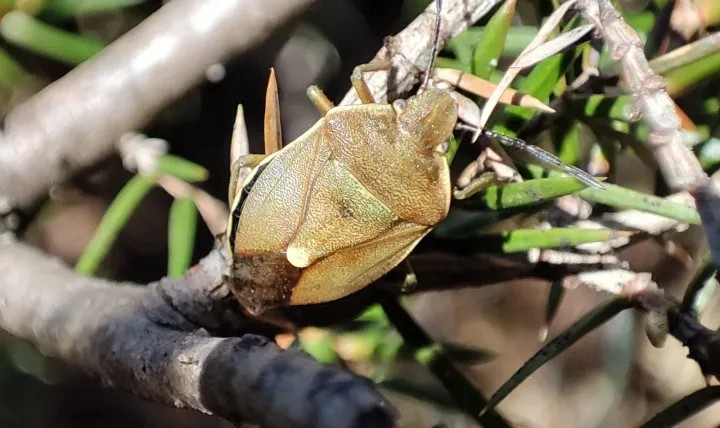
Chlorochroa pinicola, known as the pine shield bug, belongs to the family Pentatomidae within the order Hemiptera. Adult insects typically measure between 9 and 12 mm in length.
The insect possesses a distinctive shield-shaped body, with coloration ranging from bright green to yellowish-green, providing effective camouflage against pine needles.
The head is equipped with a piercing-sucking mouthpart, which the bug uses to extract vital nutrients from the host plant's tissues.
Nymphs of this species resemble adults but are generally smaller and lack fully developed wings, progressing through several molting stages throughout the season.
They are specialized inhabitants of conifer forests, thriving in the canopy where they spend most of their life cycle.
What it damages
The primary hosts for Chlorochroa pinicola are pine trees, particularly Pinus sylvestris. They feed on the sap of young shoots, needles, and developing cones.
Feeding activities cause physical damage to the plant cells, leading to localized needle discoloration and reduced vigor in young trees.
In forest nurseries, infestations can cause significant stunting, as the removal of sap stresses the developing seedlings, making them more susceptible to drought.
Large populations in mature forests can cause premature needle drop and contribute to the physiological decline of host trees during extreme weather events.
Furthermore, the physical wounds created by the bugs act as entry points for various fungal pathogens, potentially leading to bark and needle diseases.
When it appears
The pine shield bug overwinters as an adult, finding shelter under leaf litter, debris, or within crevices in the pine bark.
Activity resumes in late spring as temperatures rise, signaling the transition to feeding and mating phases on the host trees.
The life cycle is generally univoltine, meaning there is one generation per year, with nymphal stages peaking during the warmth of early and mid-summer.
As autumn approaches, the newly matured adults begin seeking hibernation sites to survive the cold winter months.
Environmental factors such as high humidity and early spring warmth can significantly influence the speed of development and population density.
Signs of infestation
One of the first signs of infestation is the physical presence of the bugs on the underside of branches or hidden amongst needles.
Small, chlorotic spots or white stippling on the surface of needles are clear indicators of bug feeding, resulting from the extraction of cellular content.
In cases of severe infestation, needles may turn yellow and eventually brown, leading to a thin and sickly appearance of the affected branches.
Sticky resin spots on the young shoots are common, as the tree responds to the mechanical damage caused by the bug's proboscis.
The presence of fine, dark excrement droplets on the needles and branches serves as a secondary diagnostic feature for identifying an active colony.
Control measures
Management of the pine shield bug focuses on integrated pest management practices to maintain the health of coniferous plantations.
Cultural control involves removing debris and maintaining healthy soil conditions to reduce suitable overwintering sites for the adults.
Chemical intervention should be considered only when populations exceed economic damage thresholds, utilizing targeted insecticides during the nymphal stages.
- Use of pheromone traps for early population monitoring.
- Encouragement of natural predators, such as birds and predatory insects.
- Systemic insecticide application for high-value seedlings.
Adherence to application schedules is critical to avoid non-target impact, particularly on beneficial insects that reside in forest ecosystems.
Taxonomy
- Latin name
- Chlorochroa pinicola
- Order
- Hemiptera (bugs, aphids, leafhoppers)
- Family
- Pentatomidae
- EPPO code
- CHLOPI
Discussion
No discussions yet — be the first.