
Green stink bug
Chinavia hilaris
Description
How to identify
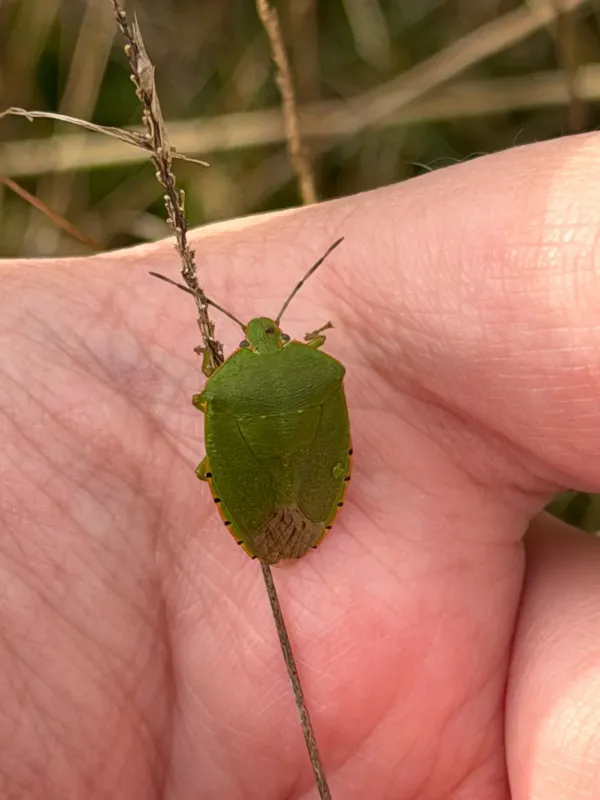
The green stink bug, Chinavia hilaris, belongs to the Pentatomidae family within the order Hemiptera. Adult bugs are characterized by their distinct shield-like body shape and bright green coloration.
Adults typically measure between 12 and 18 millimeters in length. They are easily identified by the dark, membranous tips of their wings and their ability to release a strong, pungent odor from their thoracic glands when disturbed.
Eggs are barrel-shaped and are usually deposited in neat clusters on the undersides of host plant leaves. Each cluster typically contains several dozen eggs.
Nymphs, or immature bugs, undergo several molting stages, gradually growing and changing their color patterns, often displaying bright spots that act as warning coloration.
These insects are highly thermophilic, preferring warm and sunny environments where they can efficiently move between host plants during the daylight hours.
What it damages
This pest is a major polyphage, meaning it feeds on a wide variety of plants including legumes, cereal crops, fruit trees, and various vegetable species.
By using their piercing-sucking mouthparts, these bugs feed on developing seeds, pods, and fruits, which frequently results in fruit distortion and premature shedding.
In soybean and other bean crops, feeding damage can lead to shriveled seeds and pod abortion, which significantly decreases the overall yield and market quality.
During the feeding process, the bugs inject digestive enzymes into the plant tissue, causing localized tissue necrosis and creating entry points for secondary infections.
Fruit that has been attacked often develops unsightly pitting or corky areas internally, which negatively affects flavor, shelf life, and commercial value.
When it appears
The life cycle begins in spring when overwintered adults emerge from sheltered sites such as leaf litter, tree bark, or debris to feed and begin mating.
Reproductive activity continues throughout the summer months, with the species capable of completing one to two generations annually depending on the local climate.
Population levels often peak in mid-to-late summer, when the latest generation of nymphs and young adults are most active and feeding heavily to prepare for hibernation.
Warm, dry weather conditions accelerate the development of nymphs from one instar to the next, significantly increasing the potential for rapid population growth.
As autumn temperatures drop, the bugs seek out suitable overwintering sites, such as wooded areas or protected structures, to enter a period of diapause.
Signs of infestation
Key indicators of infestation include localized pale or necrotic spots on the surface of fruits and pods, which are caused by the bug's feeding punctures.
Early-stage infestations can be detected by inspecting the undersides of leaves for egg clusters or by observing the colorful, mobile nymphs on stems and foliage.
Heavily infested fields may show signs of yellowing leaves, stunted growth, and a reduction in the overall vigor of the crop due to excessive sap loss.
In corn or cereal crops, the "stink bug blast" symptom may appear, where the developing ear or grain head fails to fill out properly, leading to empty or shriveled grains.
- Distorted or "pitted" fruit texture.
- Premature flower and fruit drop.
- Presence of bug excrement on foliage.
- A characteristic unpleasant odor present in the field.
Control measures
Cultural control strategies include removing host weeds that provide early-season food sources and practicing proper field sanitation to eliminate overwintering sites.
Biological control involves conserving or introducing natural predators and parasitoids, such as specific species of egg-parasitizing wasps that help regulate populations.
Chemical intervention should be based on scouting and economic threshold assessments to ensure that insecticide application is timed correctly for maximum effect.
The use of pheromone traps is highly recommended for monitoring seasonal movement and density of the bug population within the cropping area.
Integrating chemical control with resistant crop varieties and crop rotation can help mitigate long-term pressure from this pest in affected agricultural regions.
Taxonomy
- Latin name
- Chinavia hilaris
- Order
- Hemiptera (bugs, aphids, leafhoppers)
- Family
- Pentatomidae
- EPPO code
- NEZAHI
Discussion
No discussions yet — be the first.