
Chinavia armigera
Chinavia armigera
Description
How to identify
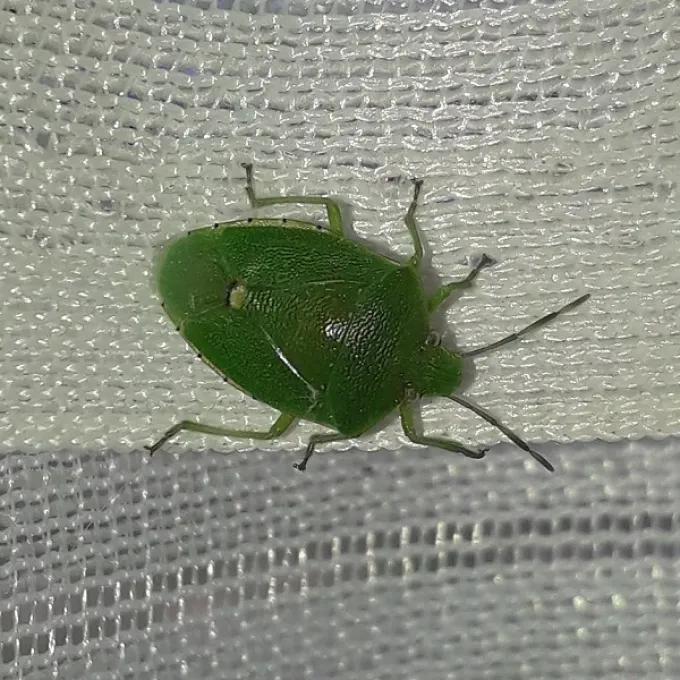
Chinavia armigera is a prominent member of the Pentatomidae family, commonly known as stink bugs. These insects possess a characteristic shield-shaped body, which is a hallmark of this diverse order of true bugs.
The adults are typically bright green, an adaptation that allows them to blend seamlessly with the foliage of their host plants, providing excellent camouflage against potential predators.
Their life cycle includes the egg stage, five nymphal instars, and the adult stage. The nymphs undergo gradual metamorphosis, where the younger instars often stay aggregated in groups, while older instars disperse.
Like many other stink bugs, this species has specialized glands that emit a strong, pungent odor when disturbed, serving as a defensive strategy against predators like birds or other insects.
Females lay their eggs in clusters, usually on the underside of leaves, which makes early detection a key challenge for integrated pest management programs in commercial crops.
What it damages
The primary hosts for Chinavia armigera are various legume species, with soybeans being among the most economically significant crops affected by this pest's feeding activities.
The bugs use their piercing-sucking mouthparts to penetrate plant tissues. They extract nutrients from young shoots, leaves, and particularly from the reproductive organs like flowers and developing pods.
Feeding damage often results in deformed pods and shriveled seeds. In severe infestations, the loss of developing seeds leads to a substantial reduction in total harvest yield and quality.
Furthermore, the physical wounds caused by the feeding process serve as entry points for various bacterial and fungal pathogens, which can cause secondary decay of the pods and stems.
In high-pressure years, the damage can become widespread across entire fields, significantly affecting the profitability of soybean cultivation and the viability of the harvested crop.
When it appears
The seasonal activity of Chinavia armigera is highly dependent on temperature and seasonal changes. They emerge from their overwintering sites, such as leaf litter and debris, as spring temperatures begin to rise consistently.
Depending on the climatic zone, the pest can complete multiple generations within a single growing season, leading to persistent pressure on crops throughout the vegetative and reproductive stages.
The highest population densities typically coincide with the critical periods of pod formation and seed filling, which are the moments when the host plants are most sensitive to nutrient loss.
Environmental factors, particularly temperature, influence the speed of development; warmer weather generally accelerates the life cycle, potentially leading to faster population growth.
As autumn approaches, decreasing day length and temperatures trigger the insects to enter a period of diapause, during which they seek sheltered areas to survive the winter months.
Signs of infestation
Field diagnosis includes looking for yellowing spots on leaves at the site of puncture wounds, which indicate that the insects have been feeding on the plant's sap.
Damaged pods often show small, dark, or sunken spots, which are visual indicators of internal tissue damage caused by the stink bug's feeding apparatus.
Regular field scouting may reveal the presence of egg clusters on the lower surfaces of leaves, which is a definitive sign of an active infestation in the field.
A distinctive, unpleasant smell noticed while working in the fields is often a strong indicator of a high concentration of stink bugs, especially in dense or lush vegetation.
Stunted growth or premature shedding of flowers and pods can also signify a heavy infestation, impacting the plant's ability to allocate resources to seed production.
Control measures
Effective management begins with integrated approaches, including the destruction of weed hosts around the fields that can harbor the insects before they migrate onto the crops.
Cultural practices, such as deep plowing after harvest, can help bury and destroy the overwintering population, thereby reducing the starting density of the pest for the next season.
Chemical control should be implemented based on economic injury thresholds, utilizing insecticides that provide adequate protection for the reproductive parts of the plants.
The use of biological control agents and biopesticides can help suppress the population while minimizing negative impacts on beneficial insects in the field ecosystem.
- Deploy pheromone traps to monitor adult flight activity.
- Implement crop rotation to break the pest's host cycle.
- Use resistant crop varieties if available in the region.
- Conduct systematic scouting to detect early instar nymphs.
Taxonomy
- Latin name
- Chinavia armigera
- Order
- Hemiptera (bugs, aphids, leafhoppers)
- Family
- Pentatomidae
- EPPO code
- ACSTAR
Discussion
No discussions yet — be the first.