
Chinavia
Chinavia
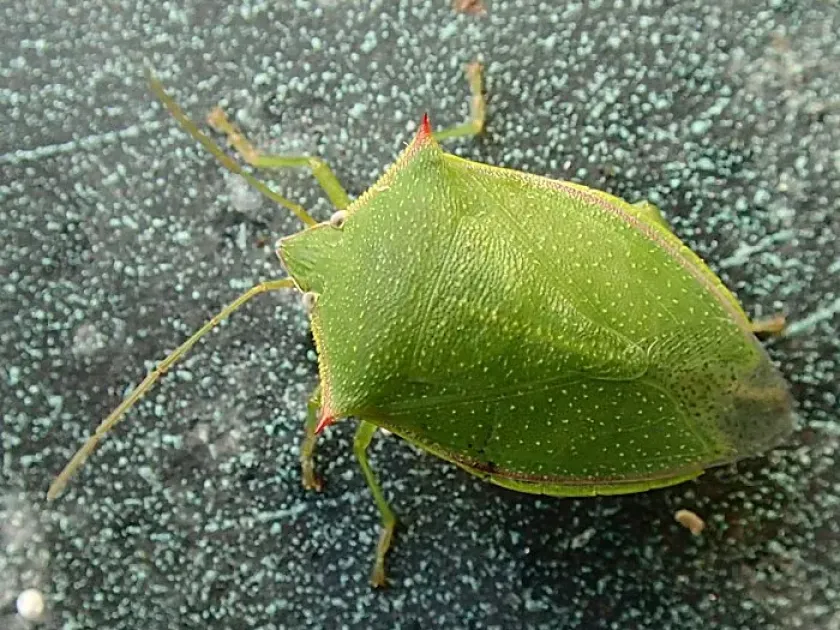
Description
How to identify
Chinavia is a genus of insects belonging to the family Pentatomidae, commonly known as stink bugs. These insects are characterized by their shield-shaped bodies and often exhibit green or brownish coloration, providing excellent camouflage within foliage.
Adult specimens typically range from 10 to 15 mm in length. They possess a flattened head, and the lateral margins of the pronotum can vary in shape, which is a key trait used in distinguishing different species within the genus, such as the well-known Chinavia hilaris.
Identification often requires careful examination of genitalia and pronotal patterns. In the field, their presence is frequently betrayed by the pungent, unpleasant odor they release from specialized glands when threatened or crushed.
Their life cycle involves incomplete metamorphosis. Females lay eggs in neat, organized rows, usually on the underside of leaves. These eggs are barrel-shaped and display specific color patterns depending on the species.
Nymphs resemble smaller, wingless versions of the adults. They progress through five distinct instars, gradually changing their color and markings as they grow toward the final adult stage.
What it damages
Chinavia species are polyphagous, causing significant damage to a wide variety of agricultural commodities. Key affected crops include soybeans, cereals, various vegetables like tomatoes, and several types of fruit trees.
Economic damage is most severe in soybean cultivation, where the bugs pierce developing pods and extract fluids from the seeds. This leads to shriveled seeds, reduced germination rates, and lower overall yields.
On fruit trees, these pests damage both blossoms and ripening fruit. Feeding punctures cause localized necrosis, internal tissue hardening (corking), and visible deformation, rendering the produce unmarketable.
In vegetable production, they feed on succulent stems and fruits. On tomatoes, the damage manifests as hard, yellowed spots at the puncture sites, which significantly diminish the shelf life and quality of the harvest.
Beyond mechanical injury, feeding wounds serve as entry points for secondary pathogens, including bacteria and fungi, which can lead to fruit rot and further degrade the health of the entire plant.
When it appears
The life cycle of Chinavia is highly dependent on regional temperatures. Adults overwinter in protected areas, such as leaf litter, under bark, or within unheated structures, entering a state of diapause.
As spring temperatures consistently rise to 15–20 degrees Celsius, the overwintered adults emerge. They initially colonize wild host plants and weeds before migrating to more attractive agricultural crops.
Mass reproduction usually peaks during mid-summer, when weather conditions are optimal for multiple generations to develop. Activity often aligns with the flowering and fruit-setting stages of the host plants.
In autumn, as day length shortens and temperatures decline, activity wanes. Adults seek out sheltered locations to endure the winter, often congregating in large numbers to improve survival rates through the dormant season.
The number of generations per year varies significantly by latitude; in warmer climates, these pests are more aggressive and exhibit faster reproductive rates compared to cooler temperate regions.
Signs of infestation
A primary indicator of a Chinavia infestation is the appearance of distinct, sunken spots on fruits. These spots often harden and darken over time, serving as clear evidence of the bug's piercing-sucking feeding habits.
Foliage may show signs of chlorosis, where yellowing occurs around the feeding sites. In cases of high infestation, severe physiological stress can cause premature blossom or fruit drop.
Visual inspections conducted in the early morning or late evening are most effective, as the bugs tend to remain on the undersides of leaves or on stems, preferring to stay hidden during the heat of the day.
Finding egg masses on the underside of leaves is a definitive sign that the population has established itself and reproduction is underway, necessitating immediate scouting and management actions.
Other signs include the presence of small, dark fecal spots on the plant surface and, in cases of high population density, a detectable, unpleasant scent lingering around the crop.
Control measures
Cultural management is essential and includes the removal of plant debris and weed control. Eliminating overwintering sites during the off-season significantly reduces the initial pest population in the spring.
Biological control, including the use of native predators or parasitoids that target the eggs and nymphs, can be highly effective in maintaining pest populations below economic injury levels without chemical input.
When populations exceed threshold levels, the application of systemic or contact insecticides may be necessary. It is crucial to select products that are labeled for the specific crop and to follow all safety guidelines.
Targeting younger nymphal stages is most effective, as these stages are generally more susceptible to insecticide treatments than the hardy, chitin-covered adults.
- Implementing crop rotation strategies.
- Maintaining spatial isolation between susceptible crop fields.
- Using light or pheromone traps for early population monitoring.
- Timely removal of weed hosts surrounding the main production areas.
Taxonomy
- Latin name
- Chinavia
- Order
- Hemiptera (bugs, aphids, leafhoppers)
- Family
- Pentatomidae
- EPPO code
- CHINSP
Discussion
No discussions yet — be the first.