

Description
How to identify
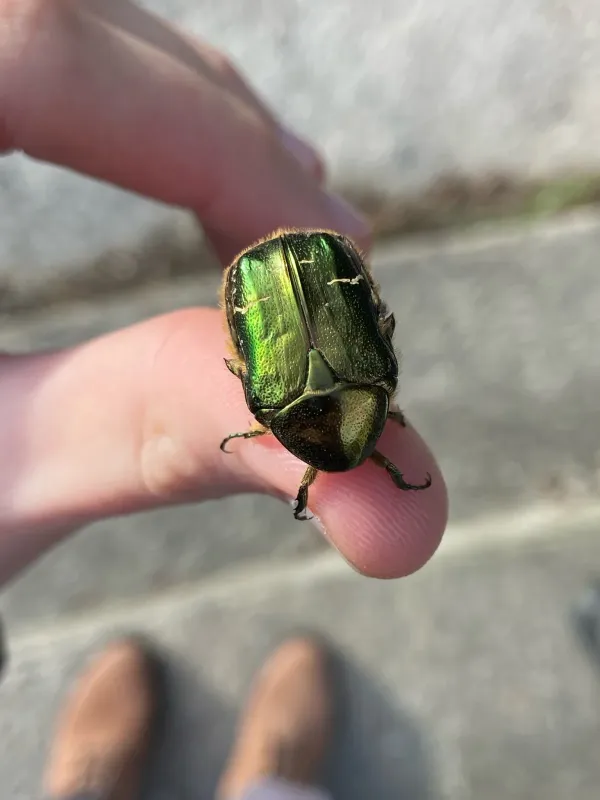
The rose chafer (Cetonia aurata) is a beetle belonging to the family Scarabaeidae. Adult beetles are 14–20 mm long and feature a distinct metallic green or copper-green sheen.
The elytra (wing covers) are typically marked with irregular white transverse lines and dots, making them easy to identify among other garden insects.
The larvae are C-shaped, white-colored grubs that develop in decaying wood, compost heaps, and humus-rich soil, where they consume organic matter.
The adult beetle is a strong flier and is most active during warm, sunny days, often congregating in large numbers on blooming vegetation.
The life cycle of the beetle is long, spanning two to three years, with most of this time spent in the larval stage in the soil.
What it damages
Adult beetles are the primary cause of damage, specifically targeting the flowers of various ornamental and fruit-bearing plants during their blooming stage.
They consume stamens, pistils, and petals, rendering the flowers incapable of pollination and significantly reducing the fruit set.
Key affected crops include pome fruits like apples and pears, stone fruits like plums and cherries, and ornamental species such as roses and peonies.
In high populations, these beetles may also feed on young foliage, buds, and the epidermis of ripening fruits, leading to necrotic spots and cosmetic damage.
Economic impact is most severe in commercial orchards where flower destruction translates directly into reduced yields and financial losses.
When it appears
The flight period for adult beetles begins in late spring, usually May, and continues through August, overlapping with the main flowering season.
Adults emerge from the soil after pupation. The overwintering stage is usually the larva, which stays dormant in the soil or organic debris during winter.
Weather conditions heavily dictate activity levels; beetles are sluggish and hide in foliage during cloudy or rainy days, only becoming active under sunlight.
The long developmental cycle implies that a well-managed garden with fewer organic debris sites is less likely to support large, recurring populations.
Monitoring for adults should be prioritized during the peak blooming period of the most sensitive cultivars to intervene before massive damage occurs.
Signs of infestation
The most obvious sign of an infestation is the presence of metallic green beetles sitting deep inside the blooms of flowers or fruit tree blossoms.
Damaged flowers will show ragged petals, eaten-away stamens, and visible lesions on the reproductive structures, often leading to rapid petal drop.
Finding large, white grubs within compost piles or decaying root systems during soil cultivation indicates the presence of a developing population.
A loud buzzing sound in the canopy during sunny hours is a hallmark of a large swarm of rose chafers feeding on the trees.
Malformed flowers and an unusually high rate of blossom drop are secondary indicators of heavy feeding pressure on the affected plants.
Control measures
Manual collection of the beetles early in the morning, when they are less active and easier to shake off trees, is an effective small-scale control method.
Good sanitation practices, such as removing old wood, clearing piles of leaf litter, and properly managing compost, help eliminate favorable breeding habitats.
Insecticide use during the flowering period is strongly discouraged to prevent the collateral killing of essential pollinators like honeybees and bumblebees.
Light traps and scent-based lures can be used to monitor and reduce adult populations without resorting to systemic chemical sprays.
Biological controls or very selective biorational pesticides applied late in the evening can be used if infestations reach critical economic thresholds.
Content graph
Connections · Rose chafer
Most often together:
Marketplace
Products · 2
Biology
Taxonomy
- Latin name
- Cetonia aurata
- Order
- Coleoptera (beetles)
- Family
- Scarabaeidae
- EPPO code
- CETOAU
Community
Discussion
No discussions yet — be the first.