
Cerostoma vitellum
Cerostoma vitellum
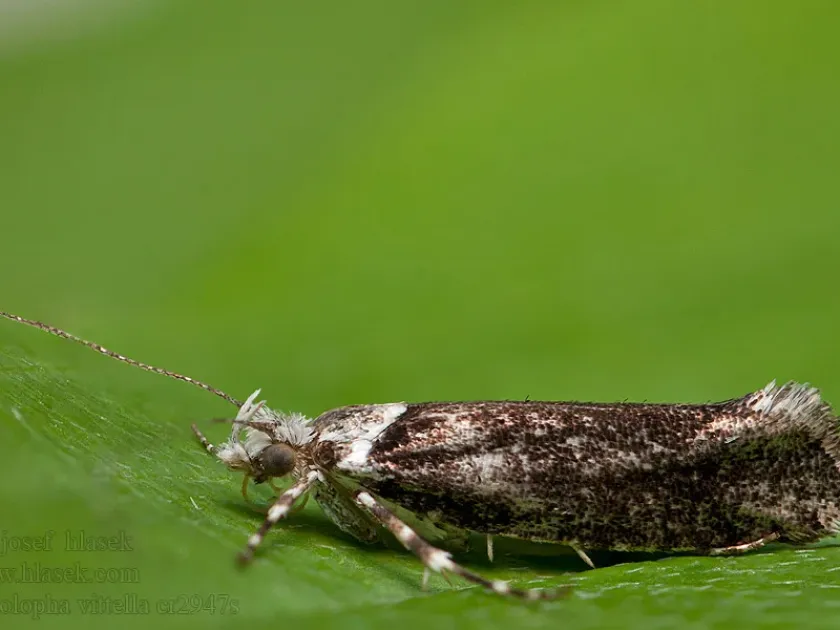
Description
How to identify
Cerostoma vitellum, commonly known as a type of hook-tip moth, belongs to the Plutellidae family within the order Lepidoptera. Adults are small moths characterized by narrow, pointed wings that provide excellent camouflage against tree bark or dry leaves.
The adult moth typically displays a cryptic coloration that blends seamlessly with its environment. When at rest, the moth folds its wings tightly against its body, adopting a posture that mimics a small twig or a flake of loose bark, making it difficult to detect.
The larvae of this species undergo several developmental stages, shifting in color from light green to a brownish hue as they grow. They possess well-developed mouthparts capable of consuming both foliage and buds efficiently.
Eggs are typically deposited by females on the underside of leaves or near the base of developing buds. Due to their microscopic size, they are often overlooked during routine orchard inspections until the larvae begin to emerge.
Pupae of Cerostoma vitellum are protected by a dense, silken cocoon. These are usually woven within bark crevices, underneath fallen leaves, or inside folded leaf margins, providing a secure shelter for overwintering or summer pupation.
What it damages
The primary hosts for Cerostoma vitellum are woody plants, particularly members of the Rosaceae family. In orchards, this pest can cause significant damage to apple, pear, and plum trees, affecting both vegetative and generative organs.
Early in the spring, larvae feed actively on developing buds, which often results in the destruction of potential blooms and a subsequent reduction in fruit set. High populations can cause extensive damage to young shoots.
During the growing season, the larvae consume leaf tissue. They skeletonize the leaves, feeding on the soft parenchyma while leaving the larger veins intact, which substantially reduces the photosynthetic capacity of the tree.
Damage to terminal shoots is particularly concerning for nursery trees. By feeding on growth points, larvae cause deformation, curvature, and improper branching, which compromises the structural integrity and growth habit of young saplings.
Heavy infestations weaken the trees overall, reducing their vigor and winter hardiness. This makes the affected plants more susceptible to environmental stress and secondary infections by pathogens or other pests.
When it appears
The life cycle of Cerostoma vitellum is closely synchronized with the phenology of its host plants. Larval emergence typically coincides with the bud-break stage in spring, which is the most critical window for crop protection.
Depending on climatic conditions, the moth can produce multiple generations throughout the growing season. Activity is highest during warm, humid periods, which facilitate rapid development and population growth.
The flight period of adult moths is often protracted, requiring strategic timing for control measures. As the season progresses, overlapping generations can lead to a sustained presence of larvae in the orchard.
Overwintering occurs in the pupal or adult stage, hidden in protected areas within the orchard. Activity resumes once consistent positive temperatures are reached in the spring, initiating the next cycle.
Hot summer temperatures accelerate the moth's metabolic processes, often resulting in an exponential increase in population numbers if appropriate monitoring and management are not implemented.
Signs of infestation
Early signs of infestation include damaged buds that fail to open or appear hollowed out internally. This is the first indicator that larval activity has begun in the spring.
Visible skeletonized leaf patches, where the epidermis is consumed leaving a transparent membrane, are diagnostic signs. Leaves may also appear curled or bound together with silk webbing produced by the larvae.
The presence of silken cocoons between leaves or in branch crotches is a clear indicator of the pest's activity. A careful inspection of the undersides of leaves will often reveal the presence of small, active larvae.
High numbers of moths attracted to light traps at night are a clear signal for agronomists to begin intensive monitoring. Pheromone traps can also be utilized to track flight peaks and determine optimal application dates.
During the dormant season, winter inspections of trunk bark and debris can help assess the overwintering population, allowing for proactive planning of the next season's control strategies.
Control measures
Effective management of Cerostoma vitellum requires an integrated pest management (IPM) approach that combines cultural, biological, and chemical methods to keep populations below the economic injury level.
- Removing loose bark from tree trunks to eliminate overwintering sites.
- Sanitary pruning and destruction of infested shoots during the growing season.
- Encouraging natural predators, such as birds and beneficial insects, within the orchard.
- Application of biological insecticides during the early larval stages for maximum efficacy.
- Strategic use of chemical insecticides only when monitoring confirms that economic thresholds have been exceeded.
The most critical application timing is during the green-tip phase and immediately post-bloom, when larvae are most susceptible to control agents and the risk of damage is highest.
Utilizing pheromone and light traps allows for precise timing of interventions, reducing the total volume of chemical applications and protecting beneficial non-target organisms in the orchard.
It is essential to rotate insecticides from different chemical classes to prevent the development of resistance in the moth population and ensure long-term control efficacy.
Taxonomy
- Latin name
- Cerostoma vitellum
- Order
- Lepidoptera (butterflies)
- Family
- Ypsolophidae
- EPPO code
- CRSTVI
Discussion
No discussions yet — be the first.