
Oak sickle-winged moth
Cerostoma sylvella
Description
How to identify
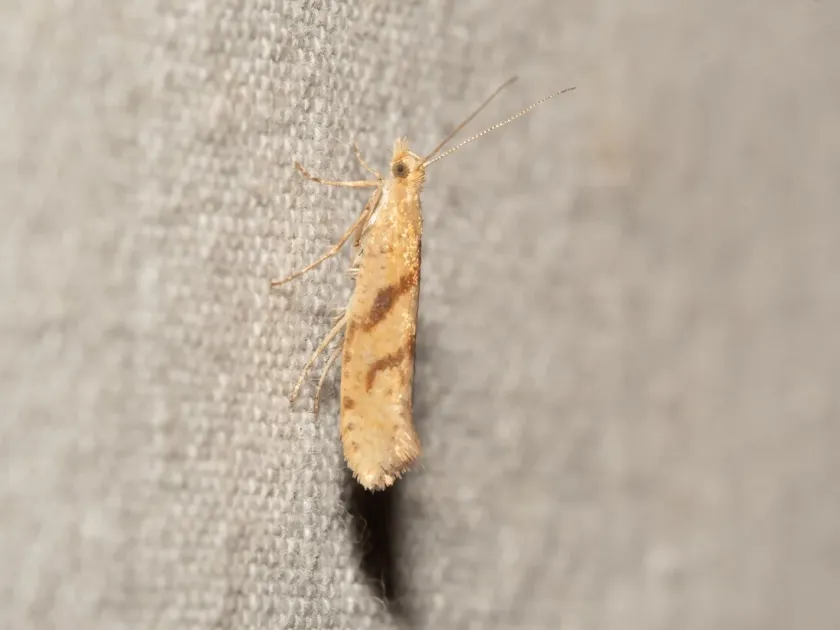
The oak sickle-winged moth (Cerostoma sylvella) is a member of the Ypsolophidae (formerly Plutellidae) family. The adult moth is characterized by its distinct wing shape, with pointed tips that curve like a sickle, providing effective camouflage.
The wingspan typically ranges from 15 to 20 mm. The coloration is usually a blend of greyish-brown and ochre tones, which allows the moth to blend seamlessly into the rough bark of oak trees during its resting phase.
The larvae, or caterpillars, have a slender, spindle-shaped body, typically light green or yellowish, which helps them remain inconspicuous while feeding on the leaf undersides or within folded leaf shelters.
Pupation occurs within a firm, spindle-shaped cocoon, often crafted from silk and debris, tucked into leaf folds or bark crevices. The pupal stage is a critical period for biological monitoring of the species.
As part of the Lepidoptera order, this moth has evolved specific synchronized feeding habits with oak tree phenology, making it a well-adapted specialist in forest and woodland ecosystems.
What it damages
The primary hosts for this moth are Quercus species. The damage is inflicted primarily by the larvae, which feed on the leaf tissue, causing aesthetic and physiological stress to the tree.
Early-stage larvae typically skeletonize leaves, consuming the green matter while leaving the veins intact. As they grow, they move on to chew irregular, larger holes in the leaf blades.
Caterpillars often use silk to web leaves together or fold them, creating protected environments for feeding. This leaf-rolling activity leads to visible distortion of the foliage and premature leaf drop.
Severe infestations can lead to significant defoliation, which impairs the tree's ability to undergo photosynthesis and store reserves, potentially stunting growth and weakening the overall health of the tree.
Repeated annual damage makes oak trees more susceptible to secondary attacks from wood-boring insects and opportunistic fungal infections, which can jeopardize the tree's longevity.
When it appears
The flight period for the adult moths generally commences in late spring, following the warming of the climate. They are primarily nocturnal, spending daylight hours hidden on tree trunks.
Eggs are laid near emerging buds or fresh leaves. Larval activity peaks in early summer, coinciding with the rapid growth phase of the oak foliage, which provides ample nutrition for the development of the caterpillars.
Depending on the climatic zone and temperature variables, the moth may complete one or two generations per year. The larval phase usually lasts for several weeks under favorable temperature conditions.
The species survives the winter as an adult moth, hibernating in protected locations such as bark crevices or forest floor detritus, ensuring high survival rates for the following season.
Precision in tracking the onset of the moth's life cycle is essential, as the timing of control measures must coincide with the early larval stages for maximum efficacy.
Signs of infestation
The most immediate sign of an infestation is the presence of silk webbing on the ends of branches or folded leaves. This is usually visible during routine inspections of the canopy.
Skeletonized leaves with irregular bite marks are clear indicators of caterpillar feeding. When a branch is disturbed, larvae may descend on fine silken threads, making their presence obvious.
Frass (larval excrement) appearing on lower foliage or in the area under the tree crown is a strong indicator of an active, high-density population of caterpillars feeding above.
The discovery of light-colored, spindle-shaped pupal cocoons on leaf undersides or in bark cracks confirms that the moth has successfully completed a generation in the area.
In mid-summer, premature yellowing or wilting of the foliage on apparently healthy branches can indicate that the internal tissues have been damaged by larval feeding.
Control measures
Chemical control involves the application of insecticides during the early larval stage. Systemic or contact-based insecticides are most effective when applied at the time of egg hatching.
Biological control is highly recommended for sensitive areas like parks. The use of Bacillus thuringiensis (Bt) products effectively targets caterpillars while sparing most beneficial non-target insects.
Silvicultural practices, including the removal of heavily infested deadwood during the winter, can significantly reduce the overwintering population density of the moth.
Enhancing natural biodiversity by encouraging insectivorous bird populations and predatory insects, such as lacewings and parasitic wasps, provides long-term natural suppression of the moth population.
- Monitoring moth flight periods with pheromone or light traps.
- Implementing precise timing for insecticide applications to minimize environmental impact.
- Maintaining healthy tree vigor through proper site conditions and management.
Taxonomy
- Latin name
- Cerostoma sylvella
- Order
- Lepidoptera (butterflies)
- Family
- Ypsolophidae
- EPPO code
- CRSTSY
Discussion
No discussions yet — be the first.