
Apple fruit moth
Cerostoma asperella
Description
How to identify
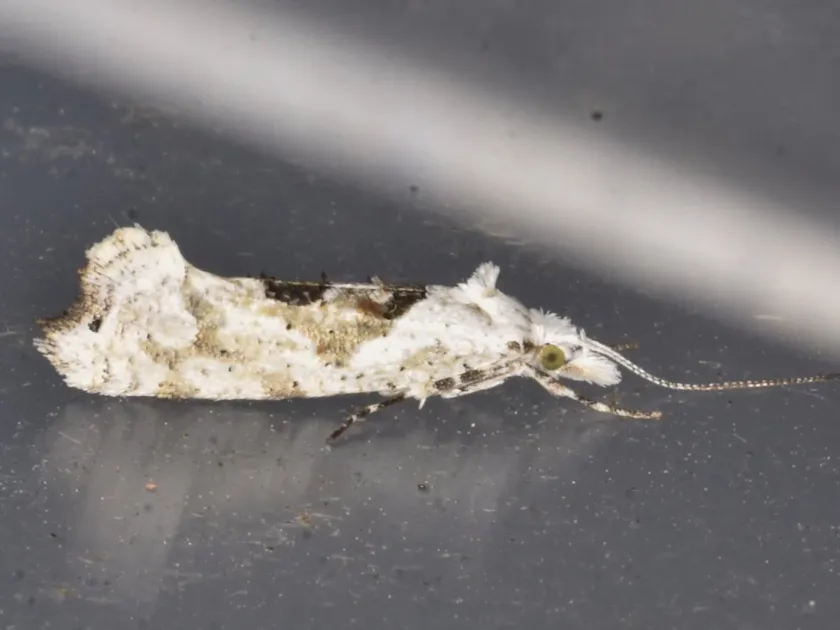
The apple fruit moth (Cerostoma asperella) is a member of the Plutellidae family within the Lepidoptera order. The adult moths are small, typically characterized by their resting posture where the wings are held close to the body, often camouflaging them against tree bark.
What it damages
This pest primary affects apple trees (Malus species). During their larval stage, they feed on the foliage, which leads to significant leaf damage, reduced tree vigor, and potential physiological stress on the plant during critical growth periods of the season.
When it appears
The biological cycle is strictly seasonal, corresponding with the apple tree's vegetative development. Overwintering occurs in the adult stage in protected areas such as bark crevices. Activity peaks during the spring when the larvae hatch and start feeding on developing buds and leaves.
Signs of infestation
Signs of infestation include rolled or webbed leaves on the terminal branches of the tree. If checked closely, one can observe the presence of larvae inside these silk structures, along with the distinct patterns of leaf tissue removal where the caterpillars have been actively feeding.
Control measures
Integrated Pest Management (IPM) practices are recommended for effective control. These include maintaining clean orchard conditions, pruning infested shoots, and utilizing biological control agents or targeted insecticides when monitoring indicates that the population threshold has been reached.
Taxonomy
- Latin name
- Cerostoma asperella
- Order
- Lepidoptera (butterflies)
- Family
- Ypsolophidae
- EPPO code
- CRSTAS
Discussion
No discussions yet — be the first.