
Cerostoma scabrella
Cerostoma scabrella
Description
How to identify
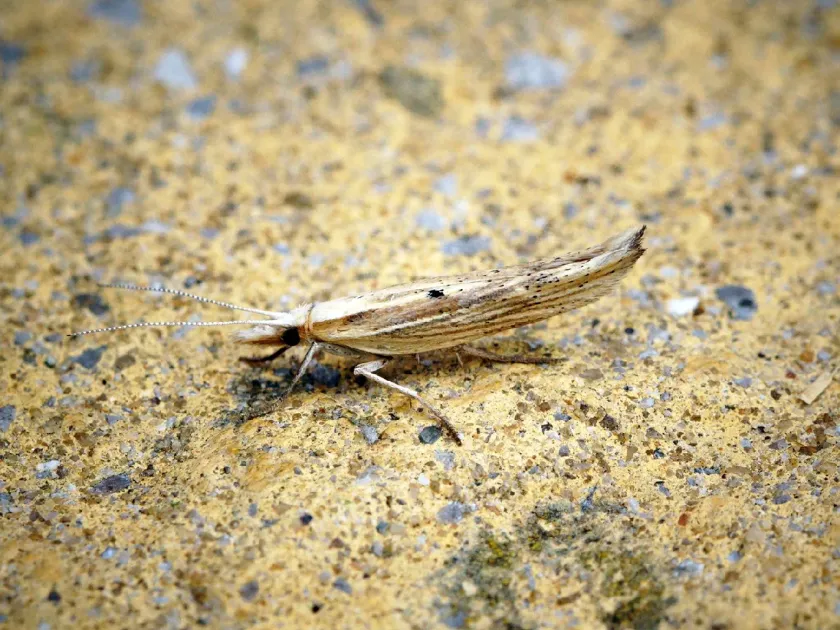
Cerostoma scabrella is a moth species belonging to the order Lepidoptera and the family Yponomeutidae. This insect is recognized by its distinctively curved wings when at rest, which provide it with an excellent camouflage against tree bark.
The adult moth typically has a wingspan of approximately 15 to 20 mm. Its forewings exhibit a complex pattern of grey, brown, and sometimes white markings that allow the insect to blend seamlessly into its natural environment during the day.
The larvae, or caterpillars, are the primary life stage causing damage to host plants. They possess a slender, elongated body, often displaying colors that range from light green to brownish, helping them stay hidden among the leaves.
Pupation occurs within a silken cocoon constructed by the larva. These cocoons are often found on the underside of leaves or within crevices in the bark, where they are protected from environmental fluctuations and natural predators.
Because these moths are primarily nocturnal and the larvae lead a hidden life within rolled leaves, the species can be difficult to detect in an orchard until significant damage has already occurred.
What it damages
This pest primarily attacks fruit trees within the Rosaceae family, with a strong preference for apple trees. The damage is caused by the caterpillars as they feed on the foliage during their growth stages.
The larvae consume the internal tissues of the leaves, a process known as skeletonization, leaving only the veins intact. This destruction reduces the leaf's photosynthetic capacity and weakens the tree overall.
In cases of severe infestation, caterpillars may also feed on developing buds and blossoms, directly affecting the yield and potentially causing significant economic losses for commercial fruit growers.
The cumulative stress from foliage loss can lead to premature leaf drop, which impairs the tree's ability to store energy for the winter, ultimately reducing its vigor and hardiness for the following year.
Damaged trees are more susceptible to secondary attacks by other pests and environmental stressors, making the management of this moth crucial for maintaining healthy and productive orchard ecosystems.
When it appears
The development of Cerostoma scabrella is closely tied to the phenology of its host plants. The flight of adult moths usually begins in late spring, coinciding with the flowering period of apple trees.
The moth species typically undergoes multiple generations throughout the growing season. The first generation of larvae emerges in spring, followed by subsequent generations that continue feeding through the summer months.
The most intensive periods of larval activity occur during late spring and throughout the summer, corresponding with the tree's main vegetative growth phases when fresh foliage is most abundant.
The species survives the winter months as either pupae or adults in protected locations such as bark cracks or under leaf litter, waiting for favorable temperatures to resume activity in the following spring.
Environmental factors, particularly temperature and humidity, play a significant role in determining the speed of development and the size of the population for each subsequent generation.
Signs of infestation
The most prominent sign of infestation is the presence of leaves rolled or bundled together with silk webbing. Inside these nests, the larvae reside and feed, protected from external threats.
Symptoms of leaf skeletonization, where the soft tissues are consumed and only the vein structure remains, are clearly visible upon inspection. These patches eventually turn brown and wither.
A high density of webbing in the tree canopy during late spring is a strong indicator of an active population. Such observations should trigger an immediate assessment of the infestation severity.
The presence of adult moths can be detected using pheromone traps or light traps installed in the orchard, which are essential tools for monitoring population trends and timing control measures.
General signs of tree distress, such as partial defoliation or reduced shoot growth, can indicate that the orchard has been subjected to prolonged feeding by the larvae of this species.
Control measures
Effective management of Cerostoma scabrella requires an integrated approach that combines cultural, biological, and chemical methods to ensure sustainable control of the population.
- Manual removal and destruction of infested leaf bundles.
- Pruning and cleaning of old tree bark to destroy overwintering sites.
- Good orchard hygiene, including the removal of leaf litter in autumn.
- Use of biological control agents and bacteria-based insecticides.
- Targeted application of approved systemic insecticides when population thresholds are exceeded.
Encouraging natural predators, such as parasitic wasps and predatory beetles, can help suppress the population naturally, reducing the need for intensive chemical applications in the orchard.
Using monitoring traps provides data to determine the optimal timing for interventions, ensuring that control efforts are precise and effective while minimizing environmental impact.
By maintaining a diverse orchard environment and conducting regular health inspections, growers can keep pest levels manageable and ensure the longevity and productivity of their fruit trees.
Taxonomy
- Latin name
- Cerostoma scabrella
- Order
- Lepidoptera (butterflies)
- Family
- Ypsolophidae
- EPPO code
- CRSTSC
Discussion
No discussions yet — be the first.