
Ypsolopha moth
Cerostoma
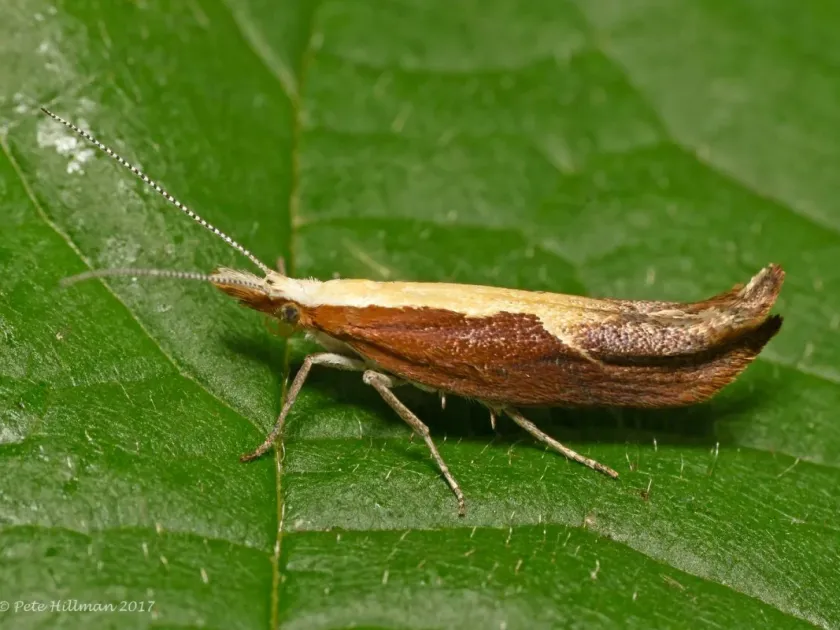
Description
How to identify
The Ypsolopha moth (genus Cerostoma, family Ypsolophidae) is a group of moths known for their distinctively pointed and sickle-shaped wing tips. These insects are classified within the order Lepidoptera and include several species that can pose threats to agricultural crops.
Adult moths typically have a wingspan of 15 to 20 mm. Their coloration is usually cryptic, featuring shades of grey, brown, or ochre that allow them to blend into natural backgrounds like bark or withered leaves, effectively hiding them from predators.
The larvae, or caterpillars, possess a slender, spindle-shaped body covered with fine setae. As they progress through their developmental stages, their color shifts, providing camouflage while they feed on the underside of leaves or within spun shelters.
Pupation occurs within a spindle-shaped, silken cocoon. These cocoons are often constructed on the undersides of leaves or within folded leaf margins, serving as a protective casing during the transformation from larval to adult form.
The biological cycle typically consists of several generations per year, depending on regional temperatures and humidity levels. Successful wintering usually occurs in the pupal stage, hidden within plant debris or soil crevices.
What it damages
Ypsolopha moths are primarily associated with the Brassicaceae family. They frequently infest cabbage, radish, rapeseed, and mustard, causing economic damage by reducing both the vegetative biomass and the yield quality of these crops.
Larval feeding is the primary cause of damage. Young caterpillars begin by skeletonizing the leaf surface, while older larvae consume entire sections of the leaf lamina, leaving only the primary veins intact and significantly weakening the plant.
In cases of high infestation, the larvae may feed on the terminal buds or growing points. This can lead to stunted growth, deformation of the head in cabbage, or total failure of the inflorescence in seed crops, resulting in substantial losses.
Beyond direct consumption, the feeding sites create entry points for secondary infections. Pathogenic fungi and bacteria often exploit these damaged tissues, leading to rot and further degrading the quality of the harvested product.
Agricultural productivity is directly threatened when these moths appear in large numbers, as the cumulative damage prevents the crop from reaching its full physiological potential, thus impacting overall farm profitability.
Signs of infestation
One of the most reliable indicators of infestation is the presence of delicate silken webbing on the foliage. The larvae use these threads to pull leaf edges together, creating a sheltered environment for feeding and protection.
The observation of irregular holes or skeletonized leaf patches is a hallmark of larval activity. Small dark pellets, which are the larval frass, are often found deposited on the leaves below the feeding sites, serving as a clear sign of an active pest population.
Yellowing of leaf tissue surrounding the damaged areas is another key symptom. As the larvae continue to feed, these spots may dry out and become necrotic, signaling a progressive deterioration of the plant's photosynthetic efficiency.
Monitoring for adults is essential during the evening hours. Being nocturnal, these moths are most active at dusk and can often be observed flying near host plants, providing a baseline for assessing potential future infestation levels.
- Presence of silken webs between leaf folds.
- Skeletonization and irregular holes in leaf laminas.
- Accumulation of dark larval frass on foliage.
- Deformation of terminal buds and stunted crop development.
- Discovery of spindle-shaped cocoons on stems or leaves.
Control measures
Integrated pest management (IPM) is the most effective approach for controlling Ypsolopha moth populations. Cultural practices, such as the destruction of wild cruciferous weeds, are essential to remove alternative food sources and breeding grounds.
Strict adherence to crop rotation is crucial for breaking the moth's lifecycle. By spacing out the cultivation of brassicas on a given field, farmers can significantly reduce the pressure from overwintering larvae and pupae.
Pheromone traps serve as an excellent monitoring tool. By tracking the population peaks of the adult moths, agronomists can determine the optimal timing for intervention, ensuring that control measures are both targeted and cost-effective.
Biological control using Bacillus thuringiensis-based products offers a safe and potent alternative to chemical sprays. These bio-insecticides specifically target the larvae while preserving beneficial insect populations, aligning with sustainable farming practices.
Chemical intervention should be reserved for scenarios where the economic threshold is exceeded. When necessary, insecticides should be applied with careful rotation of modes of action to manage the risk of developing resistance within the moth population.
Taxonomy
- Latin name
- Cerostoma
- Order
- Lepidoptera (butterflies)
- Family
- Ypsolophidae
- EPPO code
- CRSTSP
Discussion
No discussions yet — be the first.