
Anisoplia austriaca
Celes
Description
How to identify
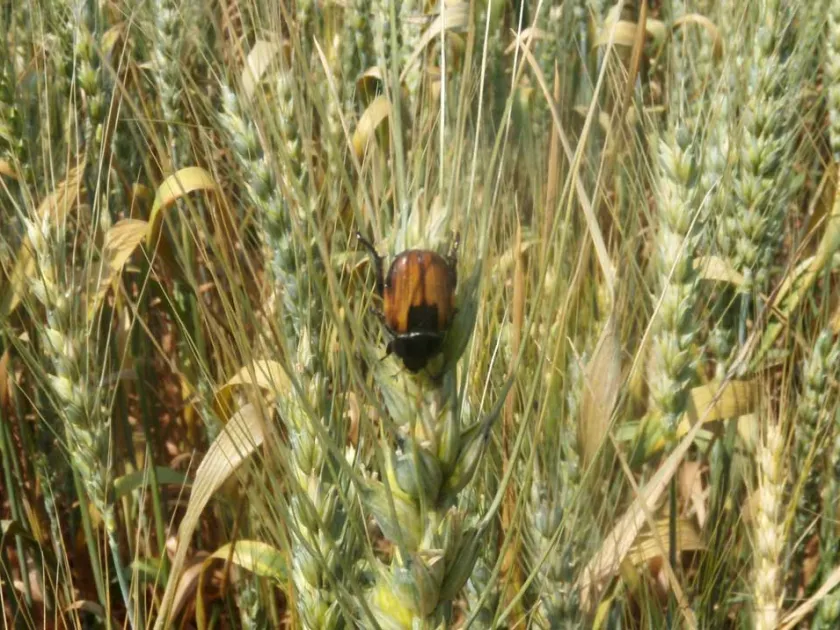
Anisoplia austriaca, commonly known as the bread beetle, is a significant pest of cereal crops belonging to the Scarabaeidae family.
Adult beetles typically measure 12 to 16 mm in length and feature a metallic sheen with colors ranging from green to dark brown.
The larvae are white, C-shaped grubs with a well-developed head and legs, typically found in the soil where they spend their development stages.
The life cycle of this beetle covers two years, with the larval stage being the longest and most persistent part of their biological development.
Adults emerge from the soil during the summer months to mate and feed, which coincides with the critical grain-filling period of wheat and other cereals.
What it damages
Adults cause severe damage by consuming the soft endosperm of developing grains in the milk and dough stages, often leaving only empty husks behind.
The primary hosts include winter and spring wheat, barley, and rye, although they can also infest various wild grass species surrounding the crop fields.
Larvae living in the soil feed on the roots of plants, which can cause stunted growth, reduced plant density, and general weakening of the crop stand.
The resulting damage, often referred to as "white heads," significantly reduces the final grain yield and overall quality of the harvested produce.
Large infestations can lead to substantial financial losses, as the beetles can destroy a large portion of a field if conditions are favorable for them.
When it appears
Adult beetles appear in late June and early July, with their activity levels peaking during warm, sunny weather conditions.
They are most active during the middle of the day, while they tend to seek shelter in the soil or lower plant parts during cooler or cloudy conditions.
The reproduction cycle involves laying eggs in the soil, which leads to the emergence of larvae that develop over two subsequent seasons.
The transformation from pupa to adult occurs in the spring of the second year, following the completion of the larval development period.
Environmental factors, especially temperature and humidity, play a crucial role in the timing of emergence and the intensity of the pest's activity.
Signs of infestation
The most obvious sign of infestation is the presence of adult beetles on the ears of cereal crops during daylight hours.
Damaged grains show characteristic chewed edges, with much of the starch removed by the mandibles of the adult feeding insects.
A reduction in plant density in early spring often points to soil-level root damage caused by the larvae during their growth stages.
Fields may appear patchy, with specific areas showing higher levels of grain damage, which often start from the field margins.
Manual inspection of the ears reveals empty kernels and damaged spikes that look dry and bleached compared to healthy plants.
Control measures
Effective crop rotation is a primary cultural control method to break the two-year life cycle of the beetle and prevent build-up in the soil.
Deep autumn plowing is highly effective in bringing larvae to the surface, where they become vulnerable to natural predators and weather extremes.
Chemical control using systemic or contact insecticides is recommended when population numbers exceed the economic threshold for the region.
Accelerating the harvest process, particularly through windrowing, can significantly reduce the window of time for beetles to damage the grain.
- Use of insecticidal seed treatments for early protection.
- Regular field monitoring using traps or visual counts.
- Destruction of wild grass patches that harbor larvae near fields.
Taxonomy
- Latin name
- Celes
- Order
- Orthoptera (locusts)
- Family
- Acrididae
- EPPO code
- CELXSP
Discussion
No discussions yet — be the first.