
Catantops melanostictus
Catantops melanostictus
Description
How to identify
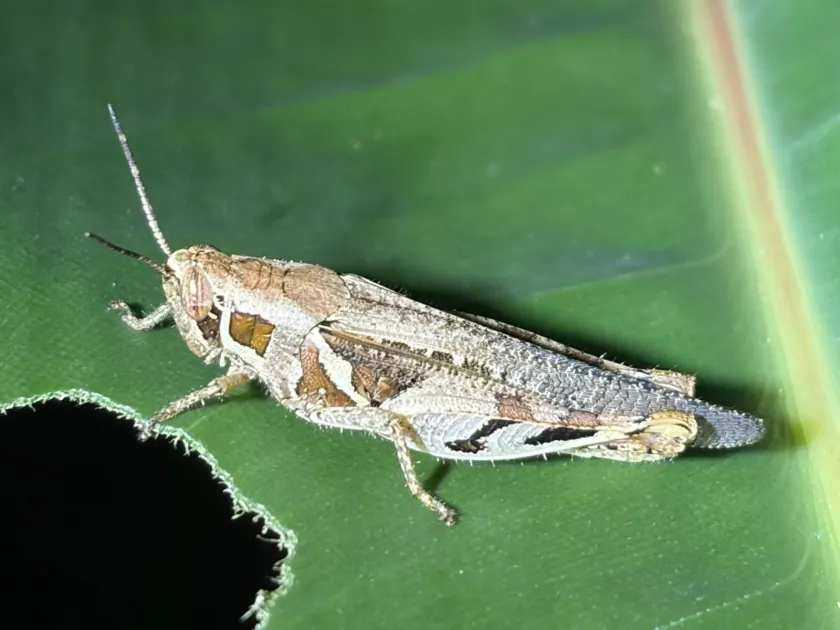
Catantops melanostictus is a species of grasshopper belonging to the family Acrididae. These insects are well-adapted to tropical and subtropical climates, where they can reach significant population densities.
The adult insect typically displays a brownish or yellowish-green coloration with distinct dark spots on the tegmina (forewings) and femora of the hind legs. These markings act as a camouflaging mechanism against diverse vegetation backgrounds.
Like other grasshoppers, this species undergoes incomplete metamorphosis. The life cycle comprises egg, nymphal, and adult stages, with nymphs passing through several instars before achieving maturity.
The mouthparts of Catantops melanostictus are categorized as mandibulate or chewing. These are highly efficient at consuming plant foliage, making them formidable pests during periods of high activity.
Their life cycle timing is often synchronized with seasonal rainfall patterns, which trigger the hatching of eggs buried in the soil, ensuring that nymphs have access to fresh vegetation.
What it damages
This pest is known to attack a variety of agricultural crops, including cereals like maize and sorghum, as well as legumes such as cowpea and peanuts. It is considered a generalist feeder.
Nymphs and adults cause damage by feeding on leaves, often starting from the margins and consuming the entire blade down to the midrib. This defoliation reduces the plant's capacity to photosynthesize.
In cases of heavy infestations, the damage can lead to stunted plant growth, significant yield losses, and, in severe scenarios, the total destruction of young seedlings.
Beyond leaves, the grasshoppers may also feed on developing flowers or pods, directly affecting the reproductive output of the host crop and reducing harvest quality.
The impact is particularly severe in areas with monocultural farming systems, where the lack of biodiversity allows the pest population to expand rapidly without natural checks.
Signs of infestation
Visible signs of infestation include ragged leaf margins and missing tissue, which leave a characteristic "notched" appearance on the foliage of affected crops.
When infestation levels are high, plants appear skeletonized. Growers may also notice the presence of fecal pellets on the ground or in the leaf axils of the damaged plants.
The sudden appearance of jumping insects when walking through a crop field is a primary indicator of presence. They often flee from disturbance in short, erratic jumps.
Stunted growth or wilting of young seedlings can indicate feeding on the stems, which interferes with water and nutrient transport within the plant.
Observing birds or other natural predators gathering in the field can sometimes serve as an indirect sign of a high population of grasshoppers in the area.
Control measures
Cultural control is essential. Tillage practices, such as plowing, are highly effective because they disturb the soil and expose egg pods to desiccation and predation.
Maintaining clean fields by removing weeds eliminates the alternative host plants that grasshoppers rely on during their early developmental stages.
Chemical control remains a critical tool. Targeted application of contact or systemic insecticides should be executed when nymphal counts exceed the economic injury level.
Biological control, including the use of entomopathogenic fungi (e.g., Metarhizium species), can be employed to manage populations in an environmentally sustainable manner.
Early detection through regular field scouting and the use of light traps can assist in preventing wide-scale outbreaks, allowing for localized treatments before the population spreads.
Taxonomy
- Latin name
- Catantops melanostictus
- Order
- Orthoptera (locusts)
- Family
- Acrididae
- EPPO code
- CANPME
Discussion
No discussions yet — be the first.