
Carpocoris purpureipennis
Carpocoris purpureipennis
Description
How to identify
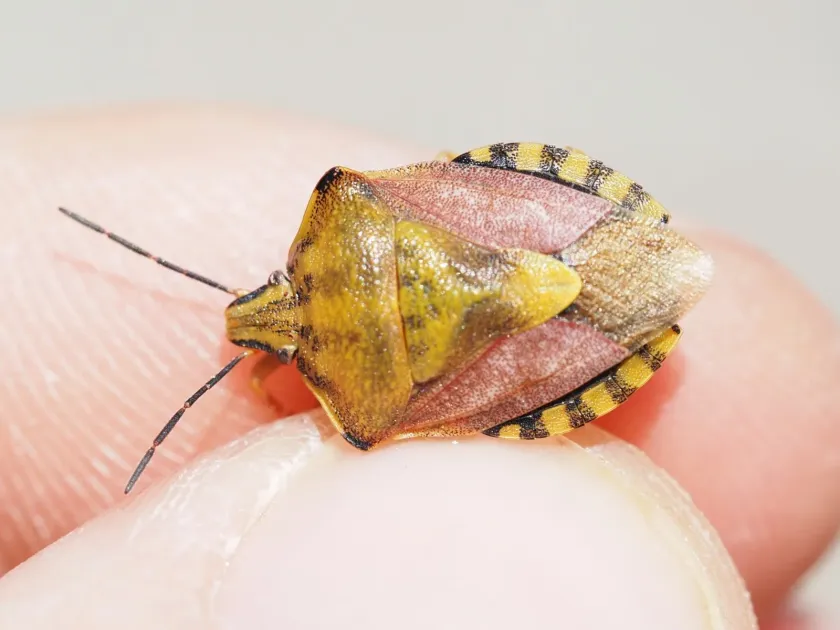
Carpocoris purpureipennis is a shield bug belonging to the Pentatomidae family, characterized by its distinct shield-shaped body, typically measuring 10 to 14 mm in length.
The coloration of the adult bug can range from yellowish-brown to a deep purple-brown, often featuring numerous tiny black punctures across the dorsal surface.
The head is triangular with a robust piercing-sucking proboscis, which is specifically evolved to feed on plant vascular tissues and developing seeds.
The eggs are barrel-shaped and are usually laid in tight, organized clusters, primarily located on the underside of the host plant leaves.
Nymphs undergo several instars, gradually increasing in size and developing distinct wing pads as they approach the final adult stage.
What it damages
This species is a polyphagous pest, meaning it feeds on a wide range of agricultural crops, including cereals, vegetables, and various wild herbaceous plants.
In cereals like wheat and barley, the bug inserts its mouthparts into the developing kernels, sucking out nutrients and causing significant yield loss.
Vegetable crops such as tomatoes and peppers are also highly susceptible, as the bug's feeding causes localized soft spots and tissue discoloration on the fruit.
The primary damage results from the injection of digestive enzymes during feeding, which degrades grain quality and renders vegetables unmarketable.
High populations can lead to severe stunting, leaf wilting, and premature dropping of flower buds or young fruit in sensitive crops.
When it appears
Carpocoris purpureipennis overwinters as an adult, typically seeking refuge in leaf litter, debris, or under the topsoil layer during the dormant season.
As spring temperatures rise, the adults emerge from hibernation and begin to feed on early-season weeds and wild grasses before migrating to crops.
The breeding period is generally prolonged throughout the early and mid-summer months, resulting in staggered development of different generations.
The highest levels of pest activity are typically observed during the grain-filling stages of cereal crops and the maturation of vegetables in mid-summer.
As day length shortens and temperatures decrease in late summer and autumn, the adults move towards sheltered areas to prepare for winter hibernation.
Signs of infestation
A key indicator of infestation in cereal fields is the appearance of white, shriveled spots on grains at the exact point where the insect fed.
In vegetable gardens, infested fruit often shows dark, necrotic spots or soft areas, often leading to secondary infections by pathogens.
Visual observation of the bugs themselves on the leaves or stems, particularly in the morning, is a reliable way to assess current infestation levels.
Presence of egg clusters on the underside of leaves or small dark fecal spots on the foliage indicates active feeding and reproduction.
Plants may also exhibit signs of stress, such as yellowing, twisted leaves, or reduced fruit set if the population density is high enough.
Control measures
Cultural control strategies involve the removal of weed hosts in and around fields to break the bug's early-season development cycle.
Post-harvest plowing of fields helps to disrupt overwintering sites, significantly reducing the survival rate of the adult population.
If economic thresholds are met, the application of registered contact or systemic insecticides is necessary to prevent large-scale crop damage.
Applications are most effective when timed during the early nymph stages and should be performed when weather conditions favor pesticide contact.
Integrated pest management (IPM) practices, such as crop rotation and monitoring, are essential for long-term reduction of Carpocoris purpureipennis numbers.
Taxonomy
- Latin name
- Carpocoris purpureipennis
- Order
- Hemiptera (bugs, aphids, leafhoppers)
- Family
- Pentatomidae
- EPPO code
- CARRPR
Discussion
No discussions yet — be the first.