
Carpocoris pudicus
Carpocoris pudicus
Description
How to identify
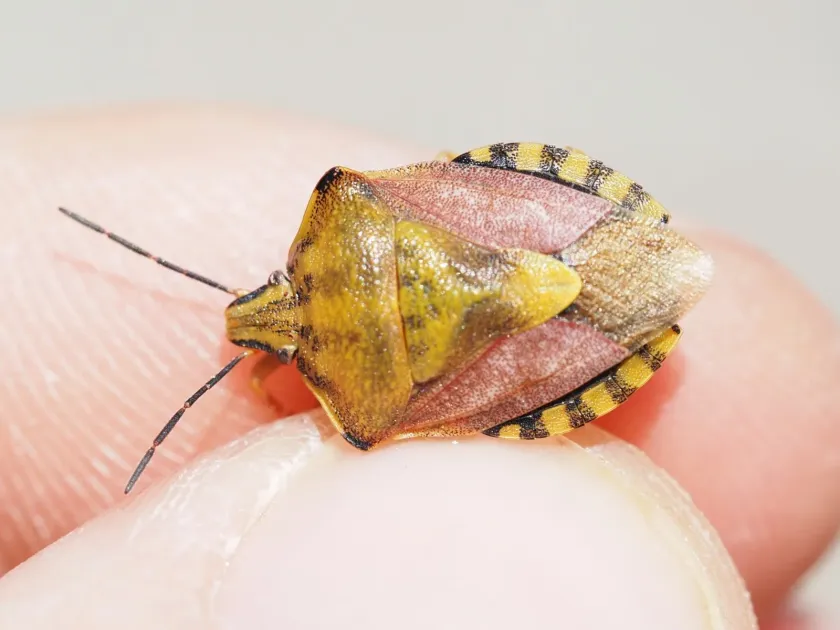
Carpocoris pudicus is a species of shield bug belonging to the family Pentatomidae, order Hemiptera. Adult bugs typically reach 10–13 mm in length, possessing a characteristic shield-like body shape with a color palette ranging from yellowish-brown to reddish.
Identification is aided by the shape of the pronotum, which features sharp lateral angles. The scutellum is large and covers most of the abdomen, which is a hallmark of this family of insects.
The life cycle involves eggs, five larval stages (instars), and the adult stage. Eggs are often laid in clusters on the underside of leaves of host plants, exhibiting a barrel-like shape.
Larvae develop throughout the summer, progressively resembling adults as they mature and grow. They are less mobile than adults but are equally capable of feeding on plant sap.
Hibernation is a critical phase, where adults survive the winter in leaf litter, debris, or near woodland edges. They emerge in spring as soon as temperatures become favorable for activity.
What it damages
This bug primarily infests cereal crops such as wheat, barley, and rye. It is also known to feed on legumes including soybeans, peas, and alfalfa, impacting both vegetative and reproductive parts.
The pest uses its piercing-sucking mouthparts to extract sap from stems, leaves, and developing grains. During feeding, it injects salivary enzymes into the grain, causing structural damage to plant tissues.
The harm is most pronounced during the grain filling stage. Damaged grains become shriveled, lighter in weight, and lose their germination capacity due to biochemical changes caused by the bug's saliva.
Flour produced from infested wheat is of poor quality. The introduced enzymes degrade gluten proteins, making the flour unsuitable for high-quality baking and industrial processing.
Severe infestations can lead to substantial yield losses if not managed during the critical early stages of grain development.
When it appears
Emergence from hibernation typically occurs in early spring, as temperatures rise. During this period, they initially feed on wild grasses before moving to cultivated crops.
The peak period for egg-laying and larval development is late spring to early summer. This timeline often coincides with the booting and heading stages of cereals, when crops are most vulnerable.
A single generation usually develops over several months. Adults of the new generation appear by mid-to-late summer and remain active until cooler autumn temperatures signal the need for hibernation.
Environmental factors, such as warm and humid conditions, can accelerate development and increase population density, necessitating closer field monitoring.
In autumn, as the daylight shortens and temperatures drop, the bugs migrate toward overwintering sites, remaining dormant until the cycle restarts the following year.
Signs of infestation
The primary sign of infestation is the presence of adult bugs or larvae on the ears of cereal crops. Small, dark, puncture marks on the grains are typical symptoms of feeding activity.
Visual inspection often reveals withered or discolored grain kernels in the spike. A distinct, unpleasant odor can sometimes be detected near infested areas due to the bug's defense glands.
Plant health may appear compromised, with potential yellowing or stunted growth in areas with high insect pressure. Stems may show small dark spots from the insect's waste.
Field scouting using a sweep net is a standard procedure to detect early populations. Finding individuals on the ears during the grain-filling stage indicates an immediate need for control.
In cases of severe infestation, the grain quality is visibly degraded, making it easily distinguishable from healthy samples during harvest inspections.
Control measures
Integrated Pest Management (IPM) is essential for controlling Carpocoris pudicus. Cultural practices, such as clearing weeds along field margins and early harvest, help reduce population levels.
Biological control plays a key role through the protection of natural enemies, particularly egg parasitoids of the genus Trissolcus, which can significantly regulate bug populations.
If population densities exceed economic thresholds, chemical intervention with appropriate insecticides may be required. Selective products are preferred to minimize impact on non-target beneficial insects.
- Implement crop rotation to disrupt the pest's life cycle.
- Monitor fields regularly during the heading stage of cereals.
- Use insecticide applications only when necessary and strictly follow safety intervals before harvest.
By combining mechanical, biological, and chemical strategies, farmers can effectively protect their yields while minimizing the overall ecological footprint on the field.
Taxonomy
- Latin name
- Carpocoris pudicus
- Order
- Hemiptera (bugs, aphids, leafhoppers)
- Family
- Pentatomidae
- EPPO code
- CARRPU
Discussion
No discussions yet — be the first.