
Red-legged shield bug
Carpocoris fuscispinus
Description
How to identify
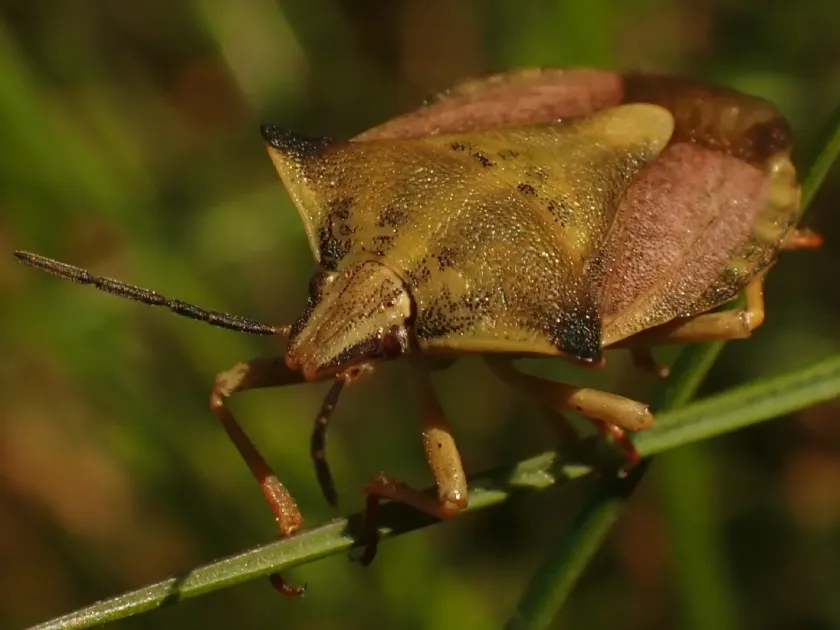
The red-legged shield bug, scientifically known as Carpocoris fuscispinus, belongs to the family Pentatomidae. It is characterized by its distinct shield-shaped body and sharp, pointed corners on its pronotum.
Adult insects typically measure between 11 and 14 millimeters in length. Their coloration ranges from yellowish-brown to reddish-brown, often featuring black dots across the body.
The bug gets its common name from the reddish appearance of its legs, which is a key identification feature for distinguishing it from other shield bug species.
The life cycle encompasses the egg stage, five nymphal instars, and the adult phase. Depending on the geographical region, they may produce one or two generations per year.
These bugs are highly mobile, possessing wings that allow them to migrate between fields and various host plants as the season progresses.
What it damages
This species is a generalist feeder, meaning it attacks a wide range of cultivated plants, including cereals, vegetables, and ornamental garden species.
In cereal crops, such as wheat and barley, the bugs puncture developing grains to feed on the sap, leading to stunted grain development and reduced yield quality.
Vegetable gardens are frequently targeted, with tomatoes, peppers, and cucumbers showing signs of damage such as deformed fruits and internal tissue necrosis.
Berries, particularly raspberries and strawberries, are also susceptible to attacks, resulting in poor flavor and reduced shelf life due to the toxic saliva injected by the bugs.
Leguminous plants like soybeans and peas may suffer from the loss of pods and seeds if infestation levels reach a significant threshold.
When it appears
Adults emerge from their overwintering sites in late spring, typically when temperatures consistently remain above 12–15 degrees Celsius.
The period of peak activity and breeding usually occurs throughout the summer months, specifically in June and July, when host crops are most vulnerable.
A new generation emerges in late summer, feeding heavily to build up energy reserves before seeking shelter for the winter months.
Extended, warm autumn weather can significantly increase the survival rate of the population, leading to a larger number of insects the following spring.
As temperatures drop and winter approaches, the bugs search for hibernation spots, such as plant debris, woodpiles, or soil crevices.
Signs of infestation
The most common indicator of infestation is the appearance of light-colored spots on leaves and fruits, which eventually turn into dark, necrotic lesions.
In grains, damage is marked by the presence of shriveled, empty seeds or whiteheads, making the crop unfit for commercial use or flour production.
Affected vegetables often show lumpy, distorted surfaces with soft spots that may attract secondary infections like fungal rot or bacteria.
A foul, pungent odor is often associated with the presence of these bugs, as they release defensive secretions that can taint the taste of fruits and berries.
Plants heavily infested by the red-legged shield bug may exhibit general wilting, slowed growth, and premature shedding of blossoms or young fruit.
Control measures
Effective management begins with strict field hygiene, including the removal and destruction of crop residues where the insects typically overwinter.
Controlling weed populations around the farm is crucial, as many wild plants serve as primary breeding grounds for the shield bugs before they migrate to crops.
Chemical control involving insecticides is recommended if the population exceeds the economic threshold, ensuring application aligns with local regulations.
Integrated pest management strategies often include fostering natural predators, such as parasitic wasps that target shield bug eggs.
- Use of pheromone traps for monitoring;
- Implementing balanced crop rotation;
- Maintaining healthy soil for stronger crop resilience;
- Targeted application of insecticides during the nymphal stages.
Taxonomy
- Latin name
- Carpocoris fuscispinus
- Order
- Hemiptera (bugs, aphids, leafhoppers)
- Family
- Pentatomidae
- EPPO code
- CARRFU
Discussion
No discussions yet — be the first.