
Cardiaspina
Cardiaspina
Description
How to identify
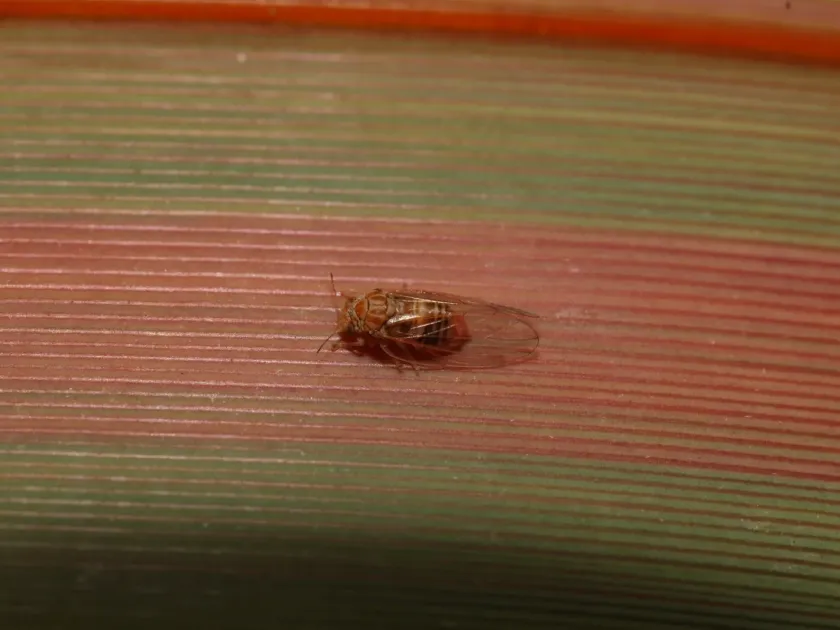
Cardiaspina is a genus of psyllids (jumping plant lice) belonging to the family Psyllidae, within the order Hemiptera. These small insects undergo a life cycle consisting of egg, nymph, and adult stages.
Adults are characterized by their ability to jump and their well-developed wings, allowing for significant dispersal. Their coloration typically ranges from green to brown, providing excellent camouflage against the leaves of their host plants.
Nymphs are sedentary and often construct protective coverings known as "lerps," composed of their own excreta and waxy secretions. These structures resemble small scales or bumps on the surface of the leaf.
The genus displays high species diversity, with many species being highly host-specific, often limited to particular eucalyptus varieties. Accurate identification usually requires microscopic examination of the adult genitalia.
The life cycle is closely synchronized with the phenology of the host plant, ensuring that nymphs have access to optimal nutrition during periods of active shoot growth. Females insert eggs into plant tissues or lay them on the leaf surface using an ovipositor.
What it damages
Eucalyptus trees (Eucalyptus spp.) are the primary food source for Cardiaspina. In regions where these trees have been introduced, this pest can cause massive damage to forest stands and ornamental plantings.
Nymphs extract cell sap from leaf tissues, disrupting normal photosynthesis and general plant metabolism. This significantly weakens the tree, making it susceptible to secondary pests and various pathogens.
Young seedlings and trees in active vegetative growth phases are most vulnerable. Persistent feeding results in stunted growth, deformed shoots, and a significant reduction in timber quality.
Severe infestations lead to premature leaf drop, which is critical for evergreen species. Mass defoliation during the summer can lead to the dieback of large portions of the canopy.
Economic losses include both lost biomass increment and the costs associated with implementing pest management programs in commercial forestry and nursery operations.
Signs of infestation
One of the most characteristic signs of a Cardiaspina infestation is the presence of lerps—protective capsules built by nymphs on either the underside or upper side of the leaf. They appear as white, yellowish, or brown structures.
Damaged leaf areas often develop chlorotic spots that eventually turn brown and necrotize. These necrotic zones may vary in size depending on the density of the feeding nymphs.
During heavy infestations, trees often exhibit "honeydew" deposits—sticky, sugary secretions left by the nymphs. This substrate frequently supports the growth of sooty mold, which covers leaves in a dark, unsightly layer.
Deformation of leaf blades and curling of young shoots are clear indicators of intense insect activity. The overall appearance of the plant becomes sickly, and the canopy may become sparse.
When inspecting stands, the observation of numerous adults taking flight when branches are shaken serves as a primary signal of a critical infestation level.
Control measures
Biological control remains the primary strategy on a commercial scale. Introducing natural enemies, such as parasitic Hymenoptera (wasps), has proven effective in significantly reducing population densities.
In nurseries and ornamental landscapes, systemic insecticides are commonly employed. These chemicals are absorbed by the plant and translocated into the sap, making the leaves toxic to the feeding nymphs.
Cultural practices, including maintaining optimal tree health through proper irrigation and fertilization, are essential. Robust trees generally possess better immunity to pest attacks and show faster recovery after damage.
Monitoring population levels using pheromone or sticky traps allows for the early detection of outbreaks, enabling prompt implementation of control measures before populations reach critical thresholds.
Pruning and destroying heavily infested branches during the early stages of an infestation can help contain the spread of the pest in park areas and younger plantations.
Taxonomy
- Latin name
- Cardiaspina
- Order
- Hemiptera (bugs, aphids, leafhoppers)
- Family
- Aphalaridae
- EPPO code
- CRDISP
Discussion
No discussions yet — be the first.