
Prussian carp
Carassius gibelio
Description
How to identify
The Prussian carp (Carassius gibelio) is a member of the Cyprinidae family and is widely recognized as a highly invasive fish species in freshwater environments.
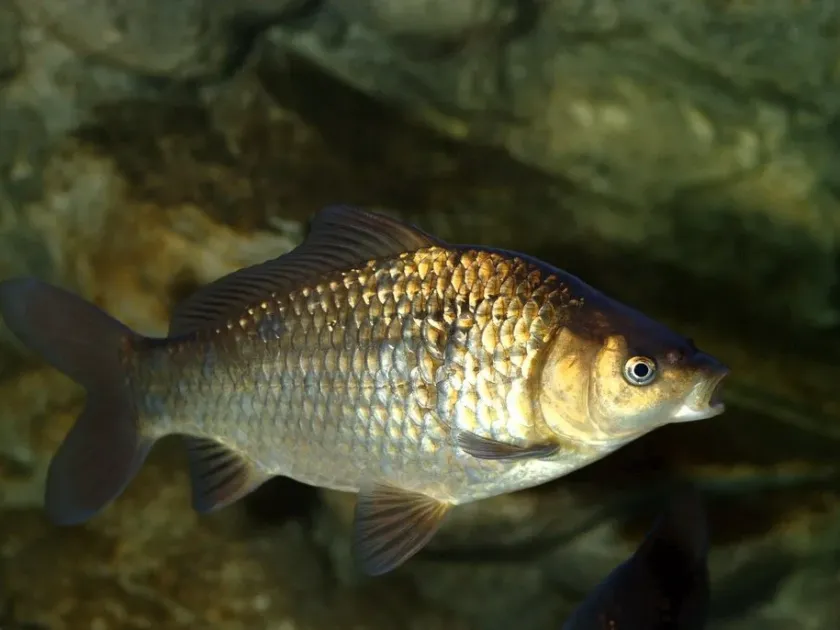
Morphologically, it possesses a deep, laterally compressed body covered in large, firm scales, often with a silvery or bronze-grey luster.
One of its most notable biological traits is its ability to reproduce through gynogenesis, allowing it to colonize new environments rapidly with minimal genetic diversity required.
It is exceptionally hardy, capable of surviving in hypoxic (low-oxygen) water and polluted conditions that would be lethal to most other aquatic species.
In agricultural settings, it frequently infiltrates irrigation networks and flooded fields, where it acts as an unintended pest rather than a managed stock.
What it damages
The primary economic damage caused by the Prussian carp occurs in flooded rice cultivation systems where it disrupts the crop at its most vulnerable stages.
As a benthic feeder, the fish digs into the soil, disturbing the root zones of germinating rice seedlings and causing them to dislodge and float away.
This mechanical destruction of the root structure inevitably leads to reduced plant density and significant yield losses for farmers.
The fish's foraging behavior increases water turbidity significantly, which restricts sunlight penetration and impairs the photosynthetic processes of submerged crops.
Furthermore, their burrowing and grazing activities can compromise the integrity of irrigation canals and earthen embankments, leading to costly maintenance needs.
When it appears
The Prussian carp's most destructive period coincides with the spring flooding and planting season of the rice crop.
During the spawning season, the fish seek out shallow, vegetation-rich waters typical of rice paddies, which creates a direct conflict with crop growth cycles.
Throughout the summer, the fish remain active, continuing to forage in the nutrient-rich sediments of the flooded fields until the harvest period.
Autumn brings a shift in behavior as the fish move towards deeper channels to prepare for winter, though they remain within the irrigation system.
Early spring marks a reactivation phase as they move from overwintering sites back into shallow areas, coinciding with the preparation of new rice crops.
Signs of infestation
The presence of Prussian carp is indicated by visible patches of sparse or missing rice seedlings across the flooded field.
Observers may notice clusters of floating, uprooted seedlings with damaged or missing roots, a clear sign of fish foraging activity.
Chronically turbid water in irrigation zones, despite stagnant weather conditions, provides a strong indicator of an established fish population.
The degradation of soil embankments and the presence of eroded edges around irrigation channels are classic signs of this fish's presence.
Suboptimal plant vigor and growth rates in affected paddies compared to protected ones confirm the detrimental impact of the population.
Control measures
Installing physical barriers such as fine-mesh screens on irrigation inlets is the most effective way to prevent the fish from entering rice fields.
Winter management involving the drainage of paddies and allowing the soil to freeze can effectively destroy eggs and larvae residing in the substrate.
Biological control, including the stocking of predator fish such as pike or pike-perch in reservoirs, helps to maintain the carp population at low levels.
Regular monitoring and selective removal of fish within the irrigation network can prevent population spikes during the critical spring period.
Proper hydrological design and infrastructure maintenance are essential to eliminate unnecessary shallow areas that serve as breeding grounds for the species.
Taxonomy
- Latin name
- Carassius gibelio
- Family
- Cyprinidae
- EPPO code
- CRSSAG
Discussion
No discussions yet — be the first.